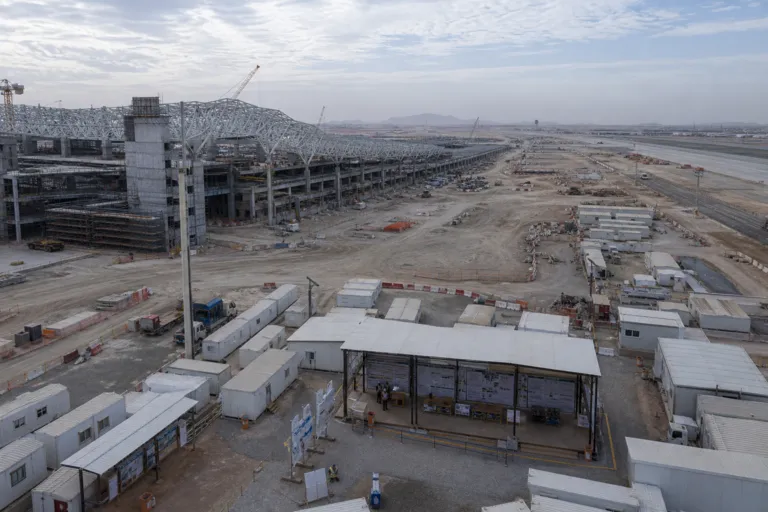
King Salman International Airport (KSIA) is being developed on the existing King Khalid International Airport site across roughly 57 square kilometres. Multiple sources describe an airport planned around six parallel runways and an unusually large terminal program. One reference frames the master plan as including nine terminals, while another describes a minimum of seven terminals, including six commercial terminals plus one iconic terminal as an architectural centerpiece. The same reporting also notes about 12 square kilometres of supporting facilities tied to residential, retail, recreational, and logistics real estate. In scale terms, it is also described as covering 22 square miles (57 square km), putting it among the world’s largest airport developments.
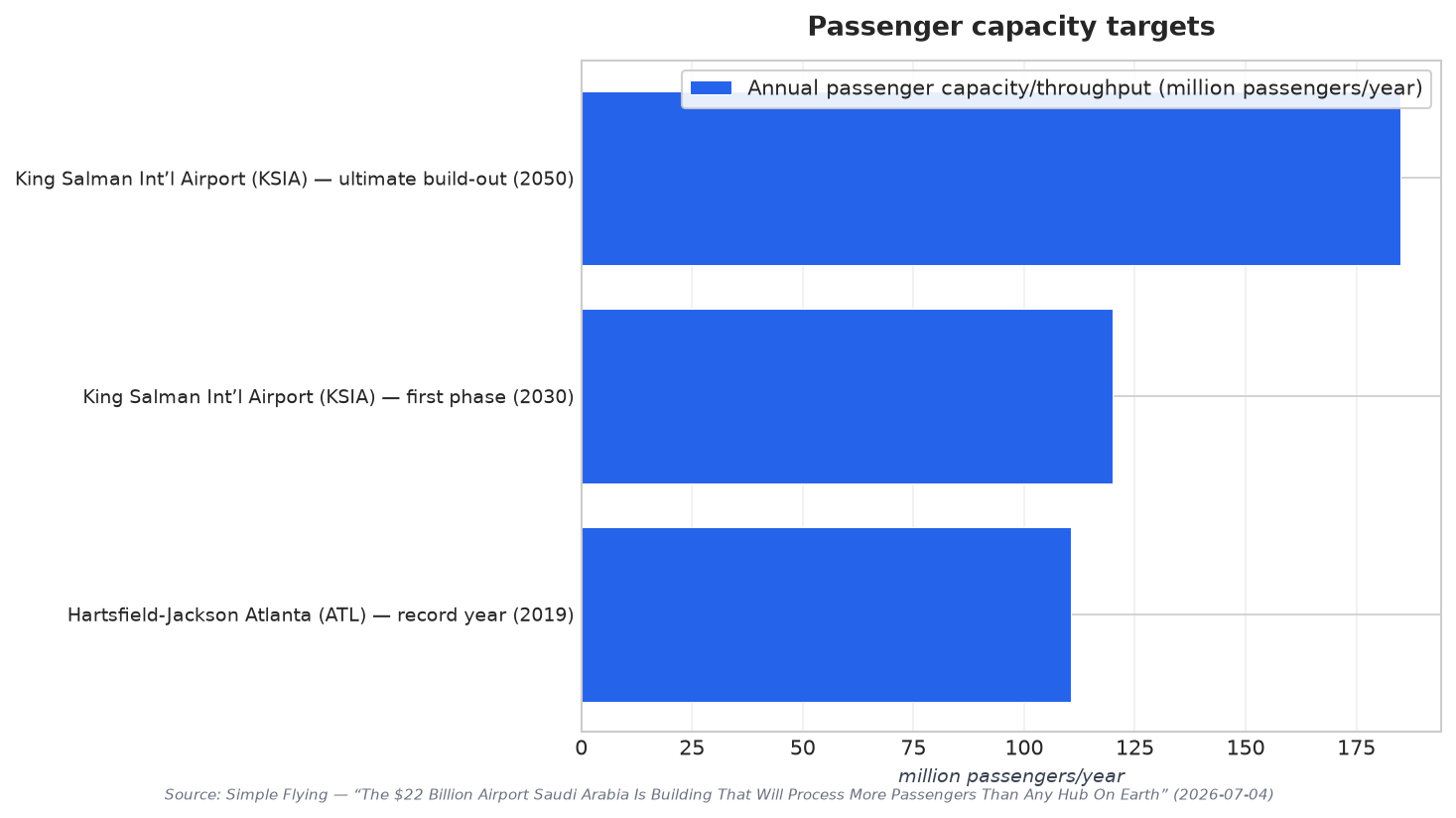
The capacity targets set the pace for procurement. KSIA is designed for a first-phase throughput of 120 million passengers annually by 2030, with longer-run scaling toward 185 million passengers a year by 2050. One comparison point in the sources is the all-time annual passenger record of 110.5 million, set by Hartsfield-Jackson Atlanta International Airport in 2019. Another snapshot states the site handles 42 million passengers today, underscoring the size of the step-change implied by the 2030 and 2050 specifications. Construction is already underway, and the third runway broke ground in January 2026.
What the 2026 Contracting Wave Covers
The 2026 push is shaped around procurement packages and early-stage delivery. Contractors have submitted prequalification documents for several key construction packages covering runway and terminal scopes, with an Early Contractor Involvement (ECI) approach referenced for the terminal package. The asset list in the prequalification reporting includes the Iconic Terminal, Terminal 6, a private aviation terminal, cargo facilities, hangars, landside transport, central runway infrastructure, and related real estate developments. This package structure is where the King Salman International Airport terminal packages become the operational tool for translating master plan scale into awardable work, sequenced to hit the 2030 capacity milestone.
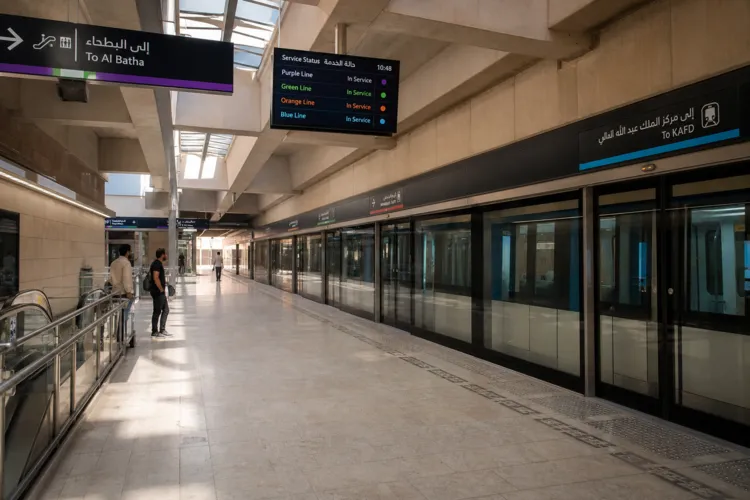
Terminal 6 is already moving into defined contract activity. A joint venture of China Civil Engineering Construction Corporation and Mofarreh AlHarbi & Partners has won a deal for enabling and substructure works for Terminal 6, awarded by King Salman International Airport Development Company (KSIADC). MEED reports Terminal 6 will boost the airport’s capacity by 40 million passengers and is expected to be delivered before the start of Expo 2030 Riyadh. Separately, another source describes a mega passenger terminal construction scheduled to begin in 2026, designed to handle up to 40 million passengers annually and to include biometric check-in, extensive retail, premium lounges, and a direct connection to the Riyadh Metro network.
Regionally, baggage handling and biometrics procurement signals how early packages can surface. An industry report notes that dedicated baggage-handling packages are among the earliest to be procured for the KSIA project, and it places KSIA alongside Dubai’s Al Maktoum International Airport in a combined capacity target of over 445 million passengers annually. The same report states Dubai Aviation Engineering Projects confirmed in 2025 that contracts exceeding AED 55 billion (USD 14.97 billion) for Al Maktoum International Airport were scheduled to be awarded in 2026, with baggage-handling among early packages there as well. In Saudi Arabia, adjacent expansion context comes from Jeddah, where JEDCO confirmed in 2025 a roughly $31 billion (SR115 billion) multi-phase expansion program designed to lift capacity to 114 million passengers per year, with the expansion scheduled to start in 2026 and complete by 2031.
What passenger capacity is KSIA targeting for 2030 and 2050?
Which terminal contract is already awarded in 2026, and what does it add?
What do the 2026 King Salman International Airport terminal packages include?
When did the third runway construction start at KSIA?
How does KSIA’s planned throughput compare with a cited global benchmark?