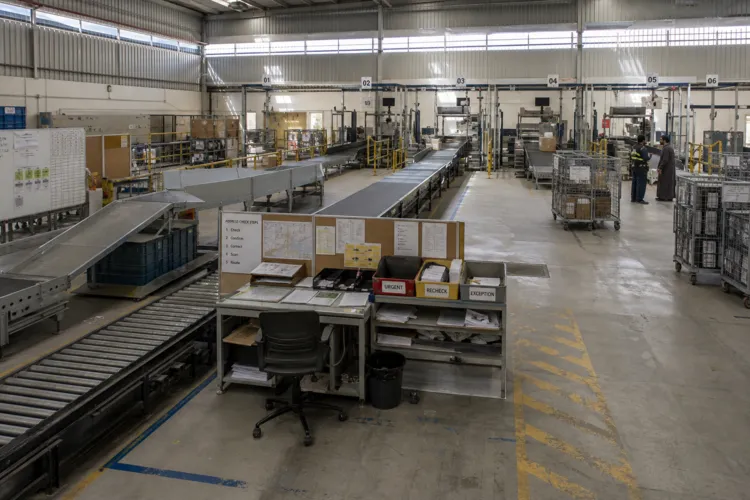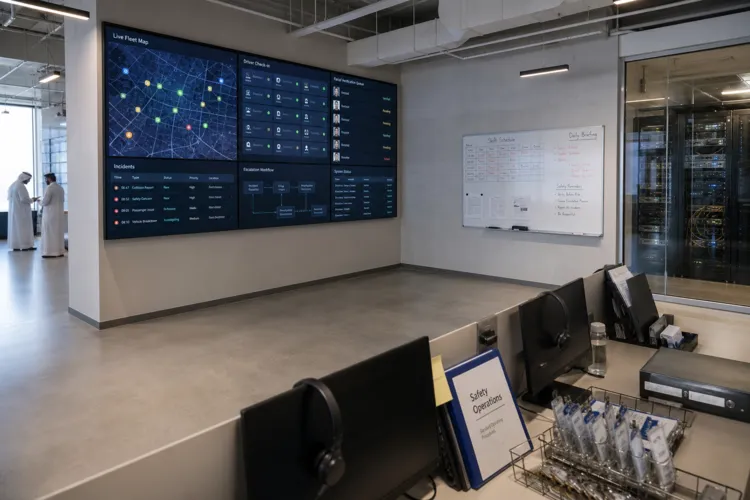
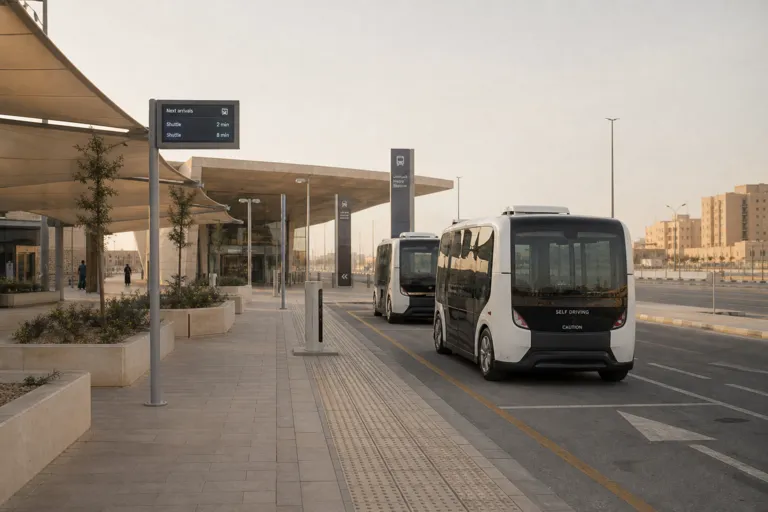
Solving the last mile around Riyadh Metro stations is not only a transit design problem. It is also a demand problem created by fast-growing, time-sensitive urban movement. In Saudi Arabia, e-commerce orders climbed 49% year-on-year to 118 million transactions in Q1 2026, and Riyadh alone generated 44% of orders. These flows make dense, repetitive routes. That is where autonomous feeder shuttles can fit: frequent, short trips that connect riders from station areas to nearby districts and activity nodes without needing a private car for the final stretch.
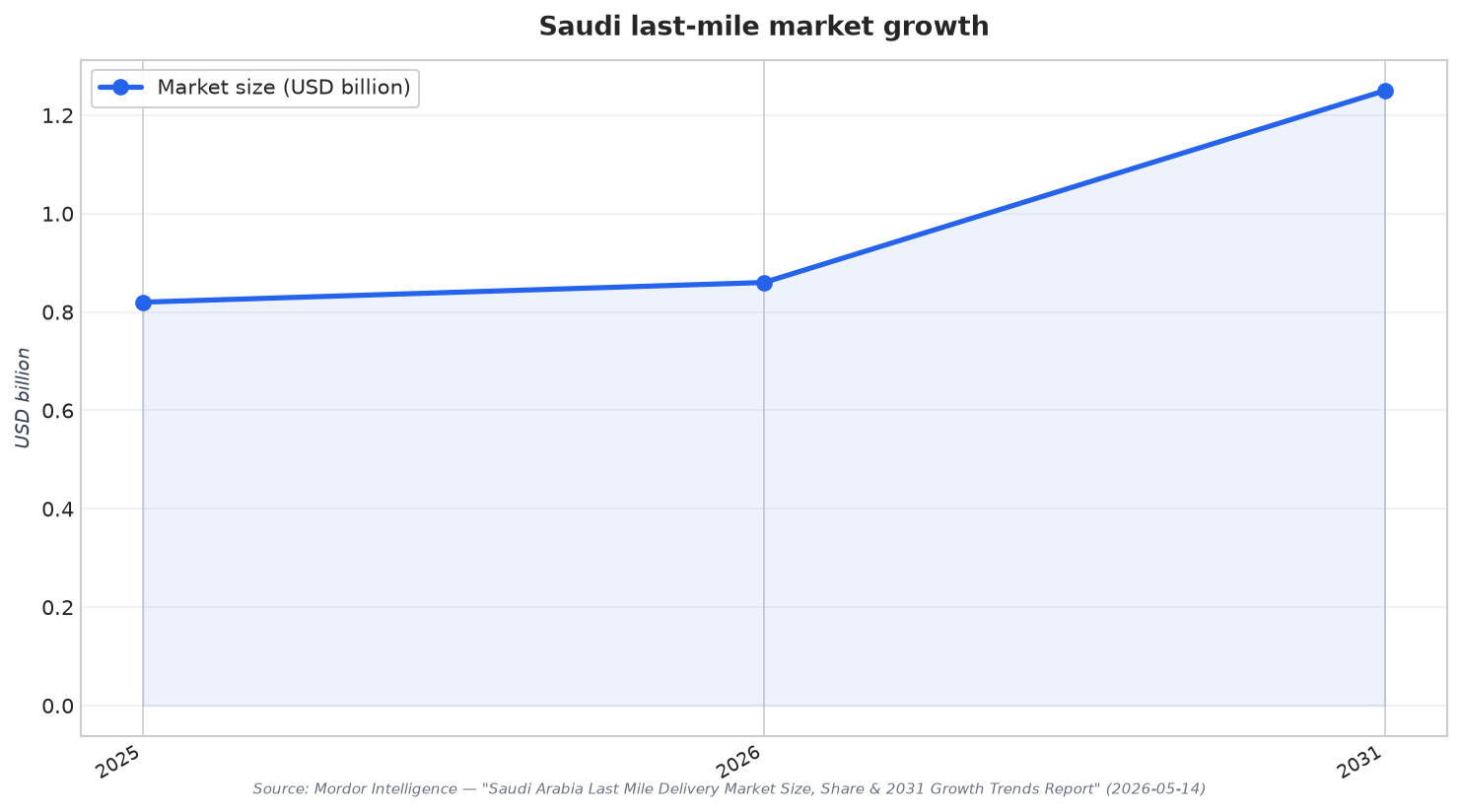
Market signals support the logic of bringing automation into short-range urban movement. Mordor Intelligence projects the Saudi Arabia last mile delivery market at USD 0.86 billion in 2026, reaching USD 1.25 billion by 2031, at a 7.81% CAGR from 2026 to 2031. In parallel, Grand View Research estimates Saudi Arabia’s autonomous last mile delivery market generated USD 6.4 million in 2024 and could reach USD 28.7 million by 2030. While delivery is not public transport, both share the same constraint: the last segment is often the hardest to serve efficiently at high frequency.
Why Station-to-Door Matters More in Riyadh’s High-Volume Corridors
Riyadh’s concentration of orders and routes is a reminder that the “last mile” is also a “first mile” for many daily trips. If riders cannot comfortably reach a station, ridership potential is harder to capture. The Central region accounted for 45.76% of deliveries in 2025 in the Saudi last-mile delivery market, which signals where volume is already clustering. That same clustering is where feeder shuttles are most likely to deliver clear value: structured loops, predictable headways, and reliable transfers at metro nodes that can reduce friction for everyday travel.
Service expectations are also tightening, and they spill over into mobility expectations. In Saudi Arabia’s last-mile delivery market, standard delivery held 62.57% share in 2025, but same-day delivery is projected to expand at a 9.46% CAGR through 2031. Regional context points the same way: the Middle East last mile delivery transportation market is projected to rise from USD 17.12 billion in 2026 to about USD 41.01 billion by 2035, at a 10.12% CAGR. As speed becomes the norm in commerce, riders similarly expect short waits and dependable connections to rapid transit.
A practical planning approach for a Riyadh autonomous shuttle metro feeder concept is to prioritize places where demand density and service reliability are already measurable. Digital payments account for 79% of transactions in Saudi Arabia, and 96% of point-of-sale interactions are contactless, reducing transaction friction and supporting faster boarding and smoother transfers in digitally managed services. The broader investment narrative also matters. Vision 2030 includes a commitment to invest SAR 280 billion (USD 74.6 billion) in transport and logistics corridors, digital customs platforms, and special economic zones, which frames why integrated, tech-enabled feeder systems can be positioned as part of a larger connectivity upgrade.
How can autonomous feeder shuttles support Riyadh Metro stations?
What Saudi market signals suggest rising pressure on last-mile connectivity?
Is automation in last-mile services growing in Saudi Arabia?
What regional context supports faster, more tech-enabled last-mile service models?