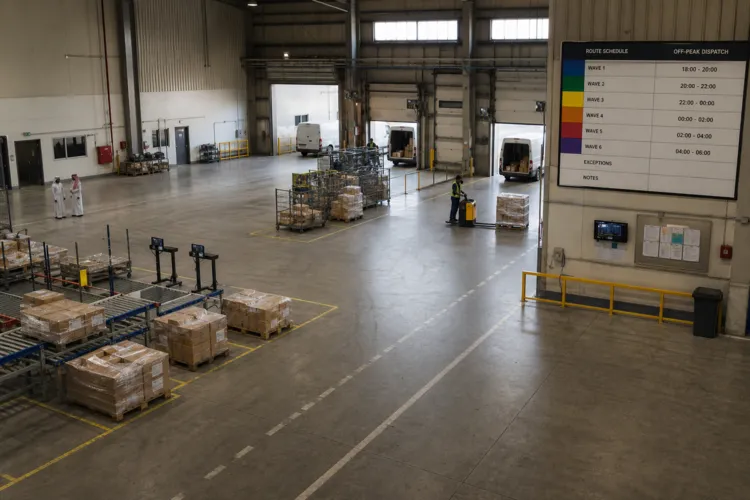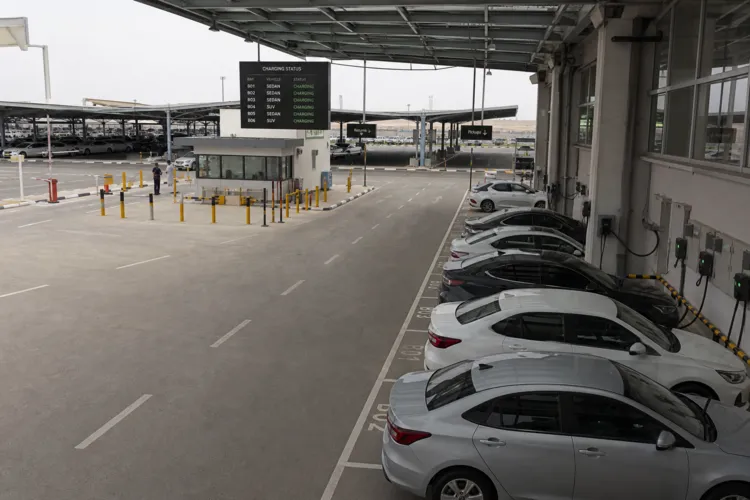
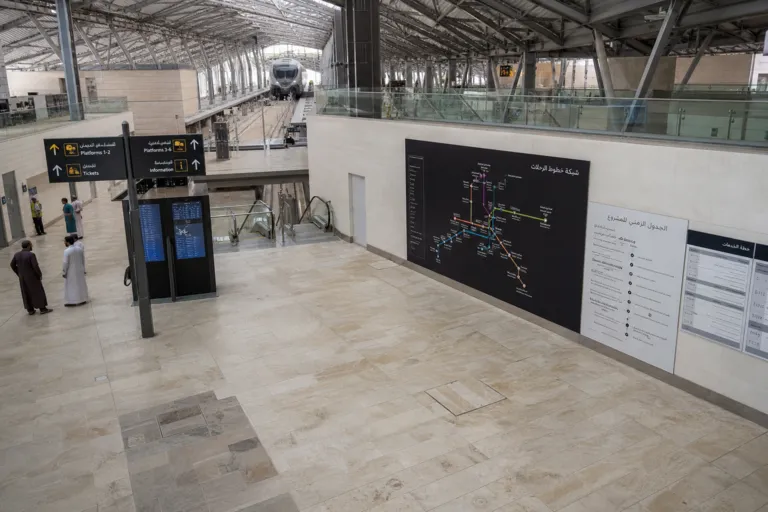
Saudi Arabia was confirmed as host of the 2034 FIFA World Cup at an Extraordinary Congress on December 11, 2024. Preparation runs from that announcement through kickoff in 2034, with sources describing an eight-year program and a roughly decade-long window depending on how it is framed. The tournament will be hosted entirely by Saudi Arabia, and the plan spans five host cities: Riyadh, Jeddah, Al Khobar (often referenced with Al Khobar/Dammam), Abha, and NEOM. The mobility challenge is not small, because the host cities are described as being separated by hundreds of kilometers. This is where the Saudi 2034 World Cup transport program becomes a practical make-or-break layer that must move fans between cities as well as within them.
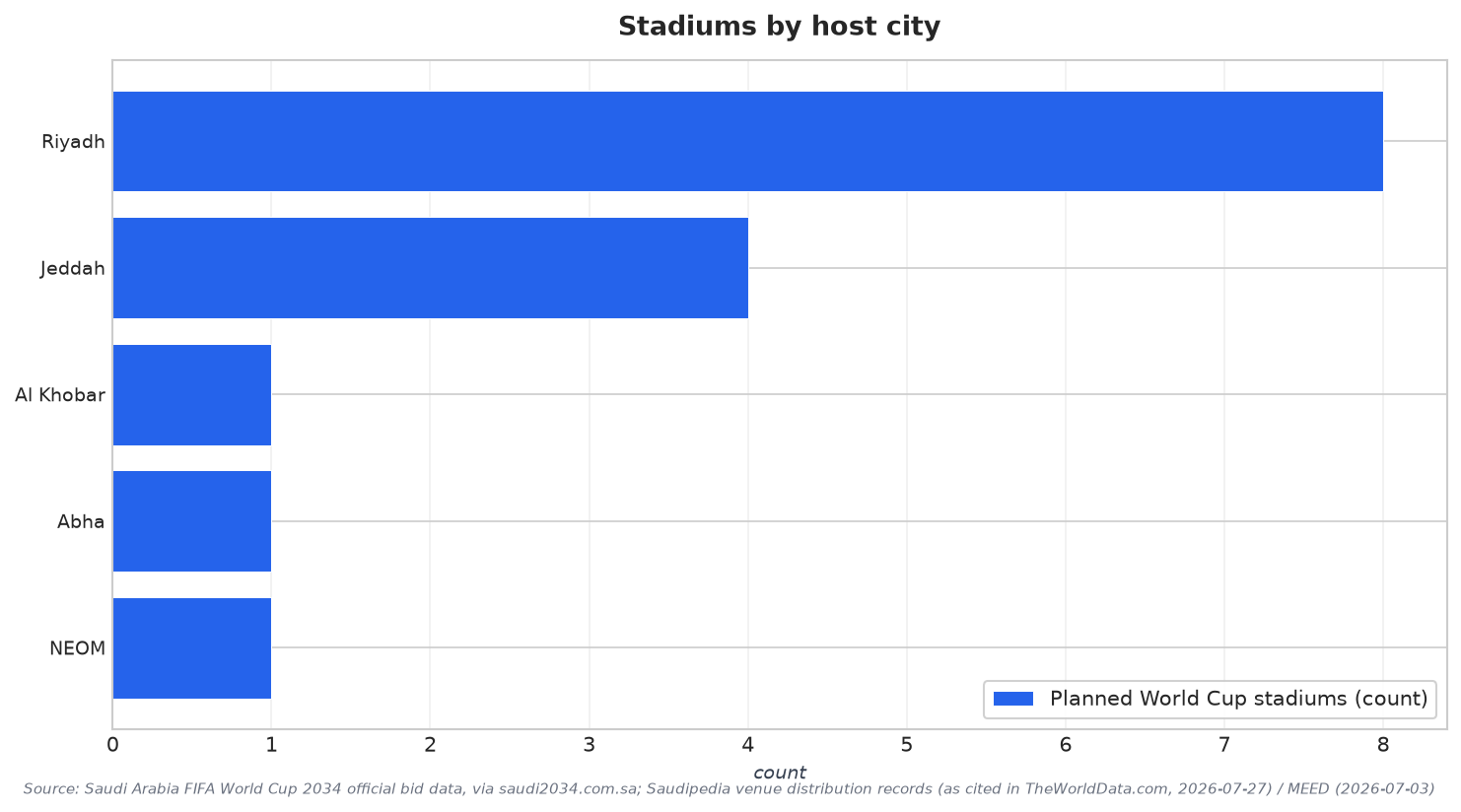
The stadium map sets the demand pattern that transport must serve. The bid structure is built around 15 stadiums spanning the Kingdom, with four refurbishments and 11 new builds or venues under construction, according to Roland Berger. Multiple sources also specify the city distribution: eight stadiums in Riyadh, four in Jeddah, and one each in Al Khobar, Abha, and NEOM. Riyadh therefore acts as the center of gravity, hosting eight of the 15 venues, while the other four host cities concentrate smaller clusters. An intelligence assessment adds that 11 stadiums must be built from scratch and that the new-build program represents approximately 544,000 seats across eleven stadiums. This concentration-and-spread structure is why city-to-city connectivity and airport capacity have to be planned as one system.
What Will Actually Connect the Host Cities
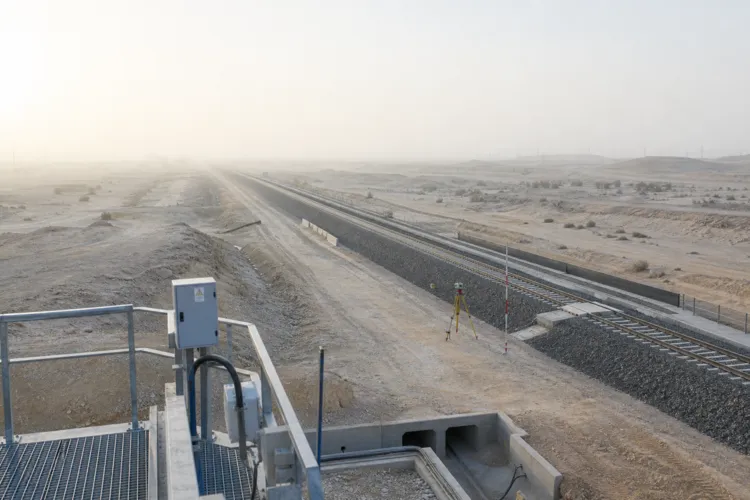
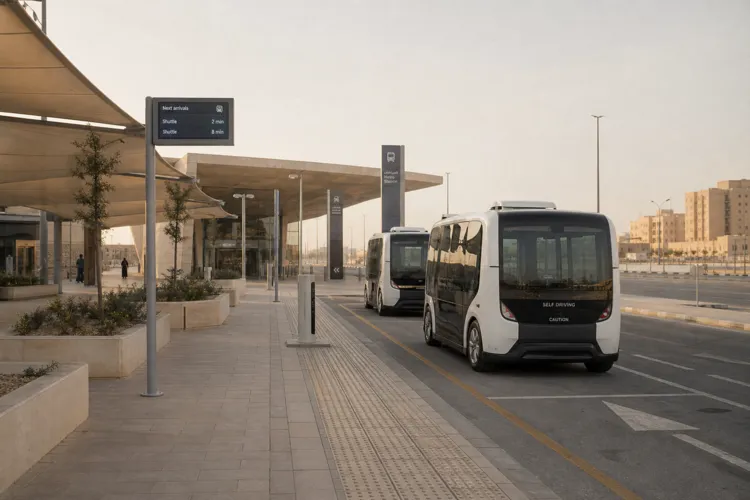
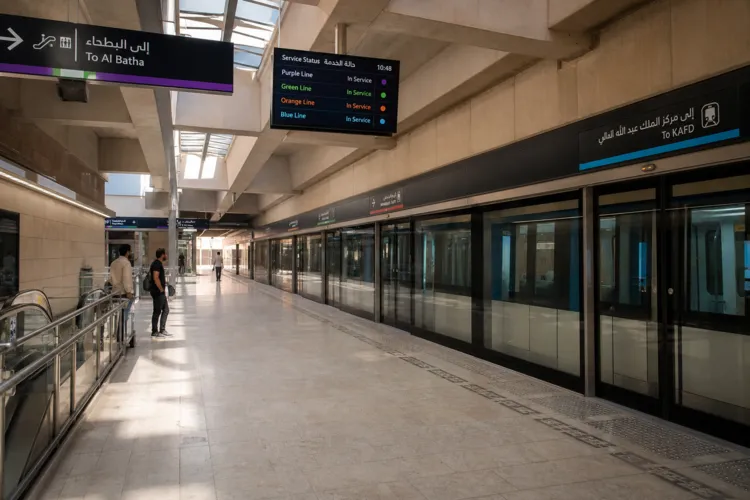
Sources point to a mix of urban transit expansion and intercity links. Alpha Consultancy highlights transport as a particular focus, stating that Riyadh’s metro and bus rapid transit networks are being extended, a high-speed rail link between Riyadh and Jeddah is planned, and King Salman International Airport is designed to handle the visitor load. The Middle East Insider similarly frames the transport legacy around metro extensions, high-speed rail connections, airport expansions, and highway upgrades. Taken together, these elements describe a layered network: metro and BRT for last-mile movement inside Riyadh’s large stadium footprint, plus rail and air capacity to shift demand between Riyadh and Jeddah, and road upgrades to support movement across the wider five-city footprint that includes Abha, Al Khobar, and NEOM.
Budget estimates in the sources show how significant transport is within the wider delivery plan, without requiring a single headline number. The Middle East Insider estimates total costs are projected to exceed $50 billion, with transportation estimated at $15–18 billion, alongside stadiums at $15–20 billion, hospitality at $8–10 billion, and operations at $5–7 billion. Alpha Consultancy separately estimates total infrastructure spend associated with the tournament at $20 billion, excluding giga-projects being accelerated to align with the 2034 timeline. MEED emphasizes that Saudi Arabia is building most tournament infrastructure from new rather than adapting an existing base, and it flags sequencing risk: stadiums, hotels, and transport links must be ready in advance of 2034. That sequencing logic is central to how transport capacity must ramp in step with venue delivery across the five host cities.
Milestones and dependencies matter because transport does not operate in isolation. The World Data notes intermediate benchmarks such as the Aramco Stadium’s 2026 completion and the 2027 Asian Cup, and argues that readiness for all 15 stadiums, the full hotel room commitment, and the transport network will become clearer over time. Alpha Consultancy adds a constraint on accommodation: Saudi Arabia currently has approximately 500,000 hotel rooms nationally, while FIFA requires a minimum guarantee of 60,000 rooms per host city across price points. That gap affects travel patterns and pressure on airports, rail, and highways during peak match days. With five host cities and a Riyadh-heavy venue distribution, transport planning has to flex for both concentrated urban surges and long-distance flows between cities described as hundreds of kilometers apart.
How many host cities and stadiums are planned for Saudi Arabia’s 2034 World Cup?
What projects are cited as part of the Saudi 2034 World Cup transport program?
How much transportation spending is estimated in the sources?
Why is intercity connectivity such a major issue for 2034?