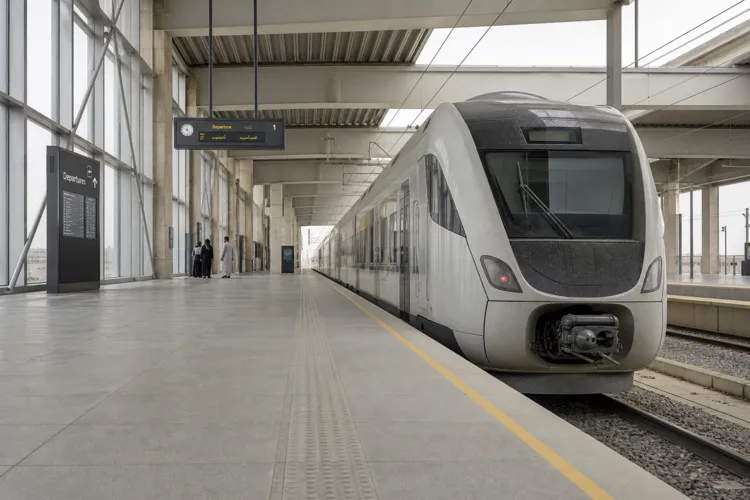
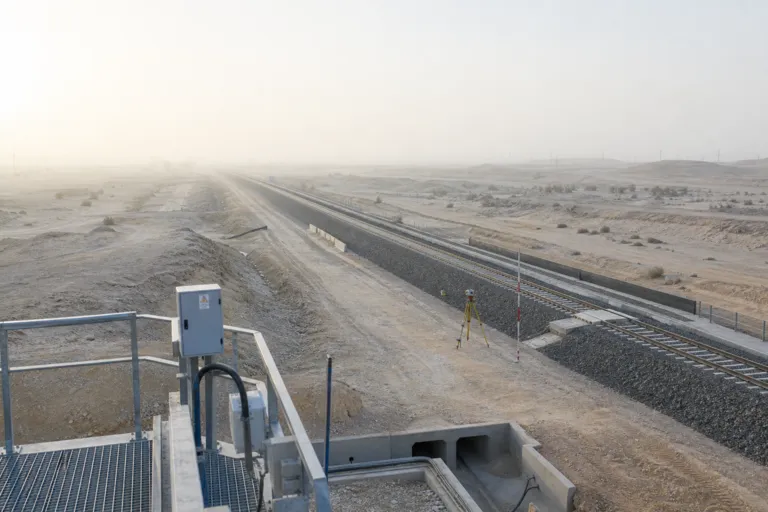
The idea of a Riyadh–Jeddah high-speed corridor keeps resurfacing because the route sits at the center of Saudi Arabia’s internal mobility, logistics, and diversification push under Vision 2030. The most specific public indicator in the sources is Saudi Arabia’s “Land Bridge” rail project, reported at $7 billion and described as linking Jeddah and Riyadh in under four hours. That combination of a defined budget and a defined travel-time target gives any discussion of a new mega-rail corridor a tangible baseline. It also sets expectations: feasibility is not only about engineering, but also about funding, delivery readiness, and integration with other national projects already underway.
From a feasibility lens, the Land Bridge framing matters because it is presented as a strategic infrastructure leap tied to Vision 2030 rather than a standalone rail line. The under-four-hour claim is a service promise that would reshape how the two cities connect, while the $7 billion figure signals the scale of investment being associated with that promise in public reporting. The sources do not provide route length, speeds, or ridership forecasts, so a true high-speed rail business case cannot be quantified here. Still, the presence of a named, priced initiative suggests a corridor concept that has moved beyond pure speculation and into a form that can be assessed against national priorities.
What Makes This Corridor More (or Less) Plausible Right Now
Saudi Arabia’s broader infrastructure agenda is part of the plausibility story. One market report citing Oxford Business Group says GCC nations collectively plan to invest over $500 billion in infrastructure projects by 2030, and that Saudi Arabia alone is allocating more than $180 billion for Vision 2030-related initiatives. While those figures are not specific to a Riyadh–Jeddah line, they indicate the fiscal context in which mega-corridors are being considered. The same report also notes Saudi Arabia was the top performer in the Middle East steel market with 32.1% share in 2025, and that the steel sector contributed over SAR 35 billion ($9.3 billion) to national GDP in 2023, tying industrial capacity to construction demand from megaprojects.
Urban and megaproject delivery experience also shapes corridor feasibility because intercity rail benefits from strong city-side distribution. A construction overview lists Riyadh Metro at a cost of $25 billion, describing six lines spanning approximately 176 km and serving 85 stations, with construction beginning in 2014 and most lines operational or nearing completion. Separately, NEOM’s The Line is described as a proposed 170 km linear smart city, with construction overseen by the Saudi government and the NEOM Company beginning in 2021 and planned in phases. These projects show Saudi Arabia pursuing large, complex transport and city systems at scale, even though they are not direct substitutes for an intercity link.
So, how should readers interpret “Saudi Riyadh Jeddah high-speed rail feasibility” using only what is in the sources? Treat it as an assessment anchored in a reported $7 billion Land Bridge concept and its “under four hours” service target, then stress-test it against delivery realities and competing capital demands from other megaprojects. The sources highlight both momentum and risk signals: they describe major transport buildouts like Riyadh Metro progressing, and they also include an analysis outlet reporting NEOM scaled back in 2026, with The Line suspended and projected costs hitting $8.8 trillion. Within that mixed landscape, feasibility is best read as conditional: enabled by ambition and funding signals, but dependent on execution discipline and prioritization.
What is the clearest public benchmark for a faster Riyadh–Jeddah rail link in the sources?
How does Vision 2030 funding context relate to the Riyadh–Jeddah corridor discussion?
What recent Saudi transport project details support the idea that mega-mobility systems can be delivered?
What risk signal in the sources could affect how people judge Saudi Riyadh–Jeddah high-speed rail feasibility?