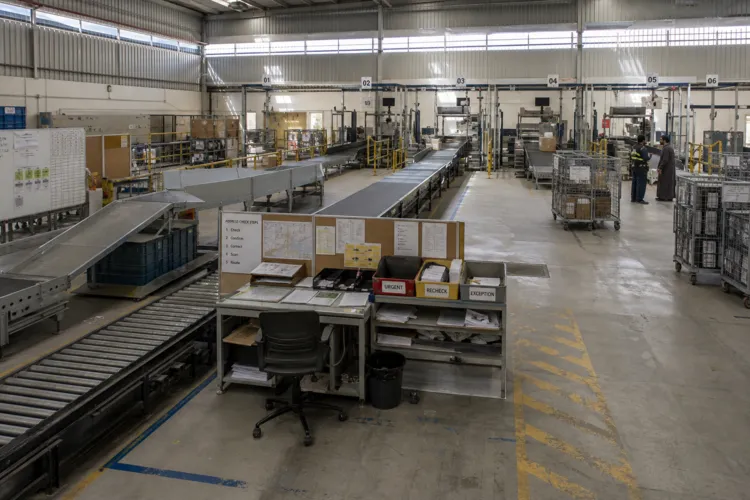
Urban freight pressure is rising in Saudi Arabia as demand shifts from bulk B2B pallets to fragmented B2C parcels. Less-than-truck-load growth is forecast at a 6.19% CAGR (2025-2030), and urban consolidation centers are multiplying around Riyadh and Jeddah as operators look for cleaner handoffs between line-haul and last mile. Major cities including Riyadh, Jeddah, and Dammam concentrate a large portion of freight activities, which makes them the natural testing ground for consolidation and off-peak delivery approaches. At the same time, the Saudi Arabia last mile delivery market is valued at USD 0.86 billion in 2026 and is projected to grow at a CAGR of 7.81% to reach USD 1.25 billion by 2031, raising the stakes for better urban execution.
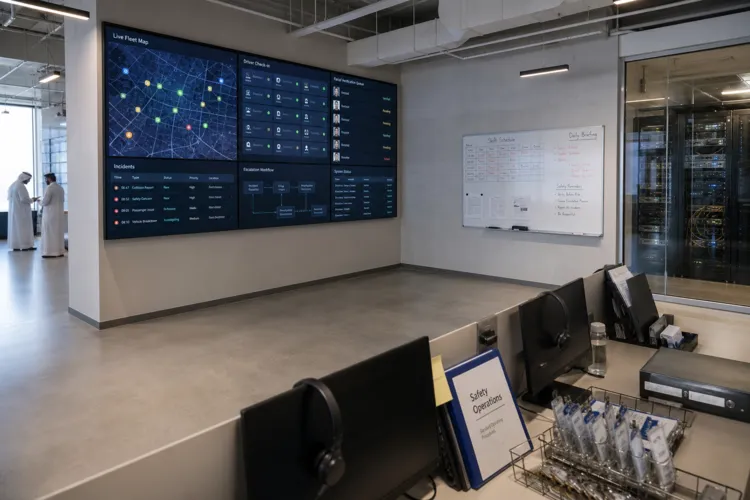
Saudi urban freight consolidation off-peak delivery models work best when they are designed around the realities of the operating environment. Compliance and labor changes matter. The April 2024 decree ended non-Saudi self-employment and pushed drivers into 37 licensed firms, adding uniform plus biometric costs of SAR 500-800 (USD 133.33-213.33) per head. That creates incentives to reduce wasted urban kilometers and failed drops by consolidating loads before they enter dense districts. Digital operations also change the feasibility of off-peak delivery windows. Platforms such as Receipts and Omniful are cited as enabling operators to reduce operational costs by up to 40% through route optimization, real-time tracking, and warehouse automation, which can support tighter night or early-morning delivery planning when staffing and asset availability are constrained.
Where Consolidation Nodes Make the Biggest Difference
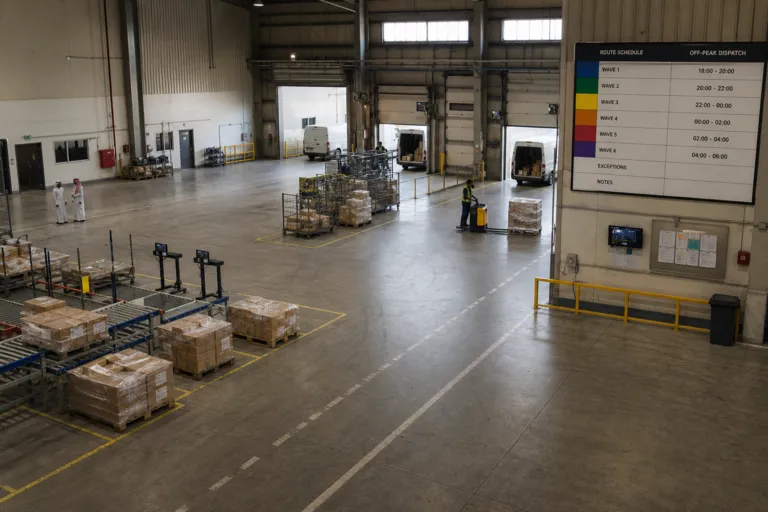
Consolidation and off-peak delivery become easier when staging capacity sits close to demand, and Saudi Arabia is building more logistics nodes that can support that role. The Special Integrated Logistics Zone at King Khalid International Airport spans 32 million ft² and offers duty-deferred storage and automated clearance. The same source notes that average e-parcel customs release times are below two hours, which supports fast replenishment into city-side fulfillment and micro-hubs. Similar bonded nodes near King Salman International Airport are described as creating a China-KSA gateway channeling 20.9% of Saudi inbound trade, reinforcing the case for planned urban handoff points that reduce unstructured truck movements. For providers, these nodes can function as consolidation points where line-haul arrivals are broken into route-friendly waves for off-peak dispatch.
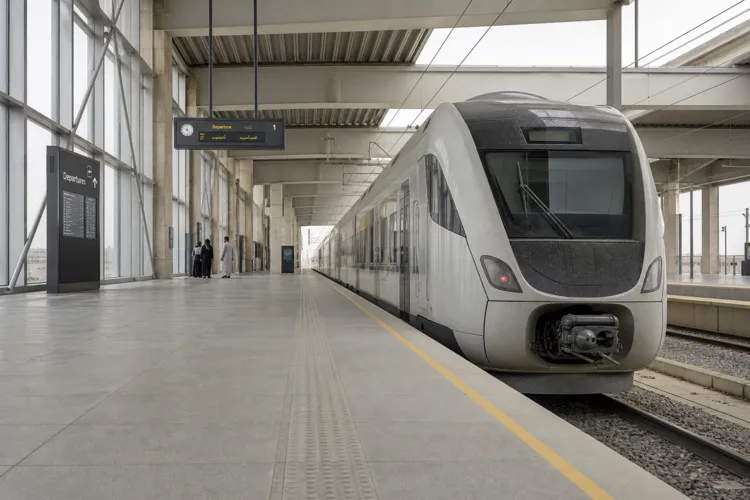
Urban decongestion also depends on shifting heavy movements away from city streets and into intermodal corridors and inland interfaces. Saudi Arabia has 1,018 km of operational rail, and the planned USD 100 billion Gulf Railway is described as expanding connectivity and synching Saudi links with UAE and Oman networks. The Landbridge is also cited as cutting Red Sea-to-Gulf transit by 72 hours, which can reshape when long-haul inventory arrives and how it is buffered before urban distribution. The point for city logistics is not only speed, but predictability: when line-haul and rail schedules are stable, operators can consolidate at inland points and time last-mile departures for off-peak windows rather than pushing everything into daytime peaks.
Finally, consolidation is not just an operational tactic; it matches the broader market direction toward scale and integrated offerings. Industry analysis notes a trend toward consolidation, driven by the desire to gain economies of scale and offer more comprehensive logistics solutions. The last-mile market report also points to consolidation and scale-building, including DHL’s EUR 500 million (USD 587.9 million) minority stake in AJEX to strengthen domestic coverage, alongside a SAR 150 million (USD 40 million) investment to expand its electric vehicle fleet for last-mile deliveries across Saudi Arabia. As providers expand networks, they can standardize consolidation playbooks across Riyadh, Jeddah, and Dammam, and use off-peak delivery to improve reliability without adding more daytime curbside conflict.
How can Saudi urban freight consolidation and off-peak delivery reduce congestion in major cities?
What logistics nodes support faster staging for urban deliveries in Saudi Arabia?
Which Saudi cities are most relevant for freight decongestion models?
What market signals suggest increasing pressure on last-mile operations in Saudi Arabia?
How do labor and compliance shifts affect the case for consolidation?