
Saudi Arabia’s push toward smarter logistics is translating into real automation spending and operational change. IMARC Group’s market overview cited a Saudi Arabia logistics automation market size of USD 635.9 million in 2025, with a forecast of USD 1,112.2 million by 2034 and a 6.41% growth rate for 2026–2034. Ken Research also described a separate Saudi Arabia warehouse automation market reaching about USD 211.0 million in 2025 and projecting USD 493.4 million by 2031 at a 15.2% CAGR. For operators building automated warehouses and dark-store models, the practical focus is the robotics stack that turns demand volatility and each-pick workflows into predictable throughput.
Dark stores shift the warehouse job from pallet handling to fast, order-level execution. That shift is visible in Saudi Arabia’s 3PL warehousing context, where a NielsenIQ full-year 2025 update showed e-commerce gaining 2 percentage points of FMCG share year over year to 5.6%. This change pulls operations toward each-pick, packing, and return-ready flows. In response, the robotics stack increasingly combines mobile robots such as AGVs and AMRs, automated storage and retrieval systems (AS/RS), automated sorting systems, conveyors, and software layers such as Warehouse Management Systems (WMS) and Warehouse Execution Systems (WES). Ken Research’s AI-powered warehouse robotics segmentation for Saudi Arabia lists AMRs, AGVs, robotic arms, AS/RS, drones, and hybrid systems as core solution types used to reduce labor costs and raise operational efficiency.
Robotics Stack in Action: What Saudi Benchmarks Reveal
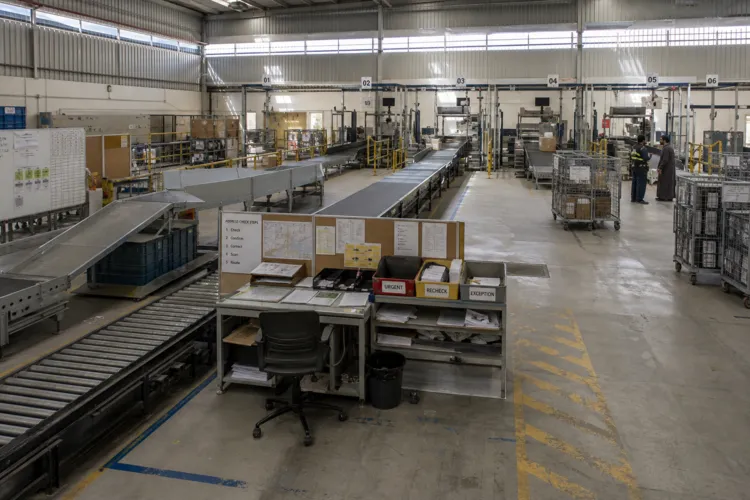
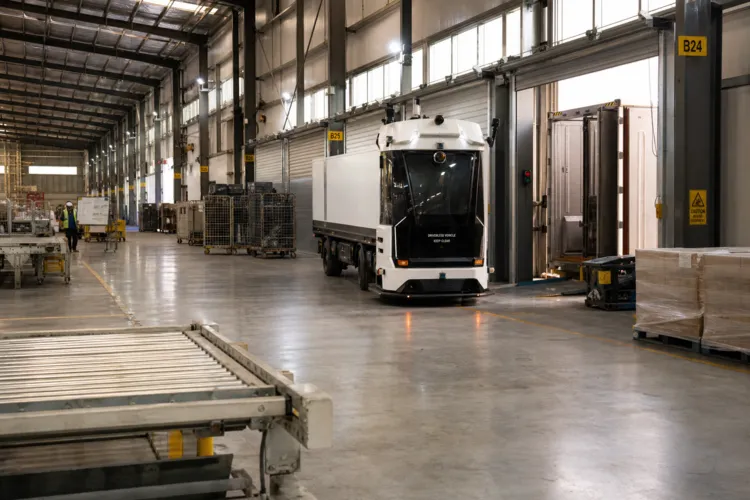
Recent Saudi deployments show what “stacked” automation looks like in practice, from inbound handling to sorting and storage density. Mordor Intelligence reported that Aramex launched a robotic sorting facility at Jeddah Islamic Port in January 2025 with 120 automated guided vehicles and a capacity of 4,000 shipments per hour. The same report highlighted Swisslog’s 2025 AutoStore deployment for Chalhoub Group in Riyadh, designed with 67,000 bins and 42 robots, signaling how high-density storage and robot-driven goods delivery can underpin faster order handling. For cross-border e-commerce, CJ Logistics opened a Global Distribution Center at SILZ in February 2026 using multi-shuttle systems and goods-to-person conveyors, pointing to the growing role of integrated mechanization alongside robots.
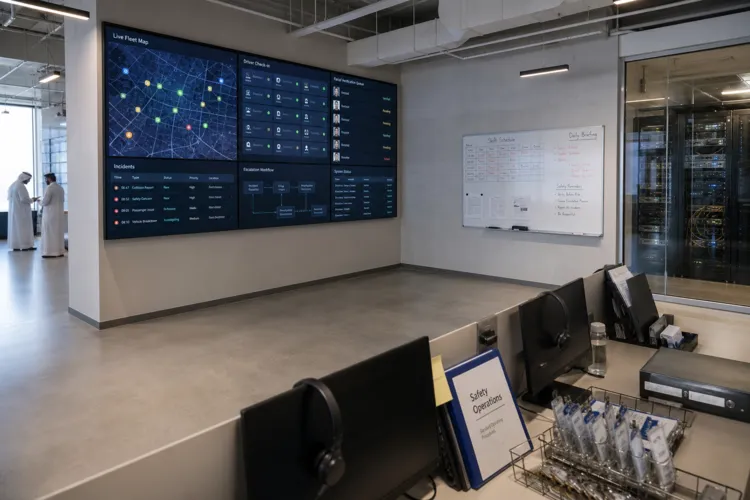
Automation is also changing how facilities are staffed and how long they can run. An IMARC update noted that smart warehouses in Saudi Arabia can boost storage capacity by up to 70% within the same floor space using AS/RS, while reducing workforce needs from 20–25 employees to 1–2 and enabling 24/7 operations. The same source also cited predictive maintenance powered by AI cutting equipment downtime by around 20%, which helps automated fleets and material-handling systems stay available. These outcomes matter for dark-store style operations because the promise is consistent speed, not just peak performance, and reliability depends on both robotics hardware and the orchestration software that schedules work and monitors uptime.
Strategy matters as much as machines, especially because the Saudi 3PL warehousing installed base is still described as dominated by paper-based, labor-intensive, or lightly digitized models. Mordor Intelligence framed semi-automated warehouses as a practical upgrade path for better throughput without a full robotics commitment, while also noting a local talent gap because WMS-skilled engineers remain scarce and can slow early ramp-up. Investment is also flowing into enabling infrastructure: Agility Logistics Parks and ROSHN finalized a SAR 2.5 billion (USD 666.15 million) joint venture in February 2026 to develop a 650,000-square-meter logistics park in Jeddah. For anyone planning a Saudi warehouse automation dark store rollout, the winning approach is to design the robotics stack around measurable benchmarks—shipments per hour, bin and robot capacity, staffing models, and uptime—then scale site by site.
What market figures show momentum for warehouse and logistics automation in Saudi Arabia?
What is a Saudi benchmark for robotic parcel sorting capacity?
How does dense storage automation show up in Saudi operations?
What operating model changes are associated with AS/RS in Saudi smart warehouses?
How should brands think about a Saudi warehouse automation and dark-store approach?