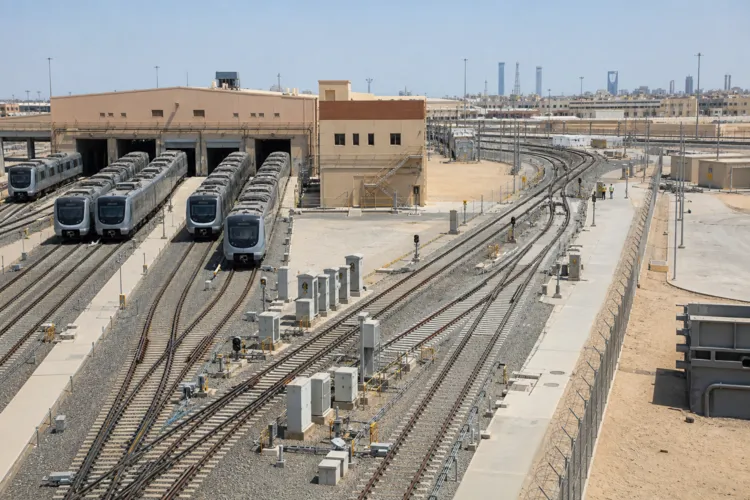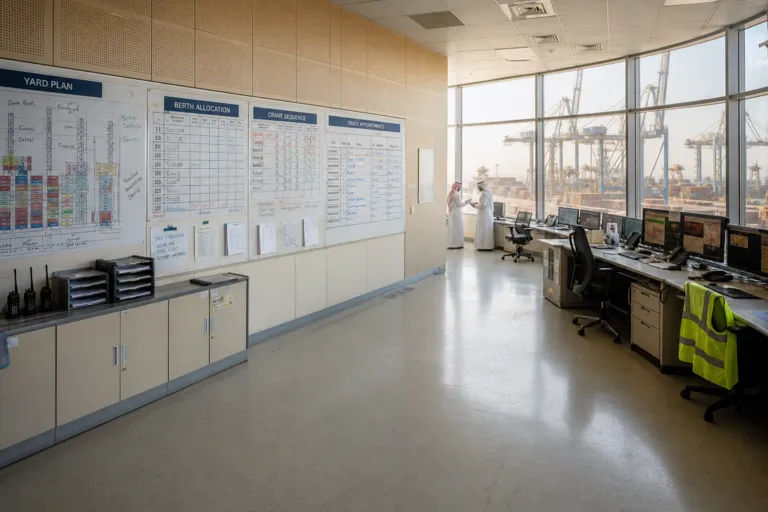
Saudi Global Ports (SGP) and the Saudi Ports Authority (Mawani) have launched a new Terminal Operating System (TOS) for the multipurpose terminals at King Abdulaziz Port in Dammam. Mawani said the goal is to boost cargo-handling efficiency and improve service reliability for customers. Multiple reports describe the platform as a single digital system that integrates terminal activities to support better planning, real-time visibility, and more effective allocation of equipment and resources. Through increased automation and data-driven decision-making, the TOS is also expected to reduce reliance on manual processes and improve coordination across terminal operations.
The rollout matters because King Abdulaziz Port is already positioned as a major eastern-coast gateway with significant physical scale. One report describes the port as having 43 berths and facilities, with handling capacity of up to 105 million tons of cargo and containers. Digital terminal systems are being introduced to make that infrastructure work more predictably day to day, especially where different cargo types share space, equipment, and workflows. In practical terms, the system is designed to help operators monitor movements, spot potential bottlenecks, and respond more effectively to operational challenges that can slow yard and berth performance.
Why a Multipurpose TOS Changes the Throughput Conversation in Dammam
SGP described the deployment as Saudi Arabia’s first dedicated TOS for multipurpose terminals, and Container News noted it is not built primarily around container-only operations. The emphasis is on supporting diverse requirements where different cargo types and handling processes must be managed within the same facility. Mawani said the platform is designed to provide real-time operational data and improve management of the different cargo types handled at multipurpose terminals. That approach targets throughput indirectly by aiming to identify delays earlier, plan cargo movement, and allocate equipment and resources according to operational requirements rather than relying on manual processes.
The new system also sits inside a broader push by SGP to run connected logistics flows, not isolated assets. In an interview cited by FIDI Focus, SGP’s chief executive said the operator now plans and runs container terminals, rail-linked intermodal nodes, and multipurpose facilities “as one connected system,” with end-to-end flows from quay to inland destinations becoming more consistent for customers. FIDI Focus tied this operational step-change to cumulative handling of more than 15 million TEUs at King Abdulaziz Port Dammam since operations began in 2015, and it highlighted smart port capabilities such as real-time tracking, digital gate processes, remote-enabled equipment, connected yard systems, and a 5G smart port network.
Looking ahead, Mawani said King Abdulaziz Port is the starting point for the new TOS and that the technology will be introduced progressively across other multipurpose terminals in Saudi Arabia’s Eastern Province. Coverage also links the deployment to the objectives of the National Transport and Logistics Strategy, including improving connectivity, increasing logistics efficiency, and enhancing competitiveness in international trade. For teams on the ground, the expected benefit is greater visibility across terminal processes and faster operational decisions while accommodating growing cargo volumes. In that sense, the Mawani terminal operating system Dammam SGP rollout is best read as a throughput enabler, built around consistent service and better control of complex, mixed-cargo operations.
What did Mawani and SGP launch at King Abdulaziz Port in Dammam?
How is the new system expected to improve terminal productivity?
Why does a dedicated multipurpose TOS matter for Dammam throughput?
What key scale figures are cited for King Abdulaziz Port?
How does the Mawani terminal operating system in Dammam with SGP fit into a wider rollout?