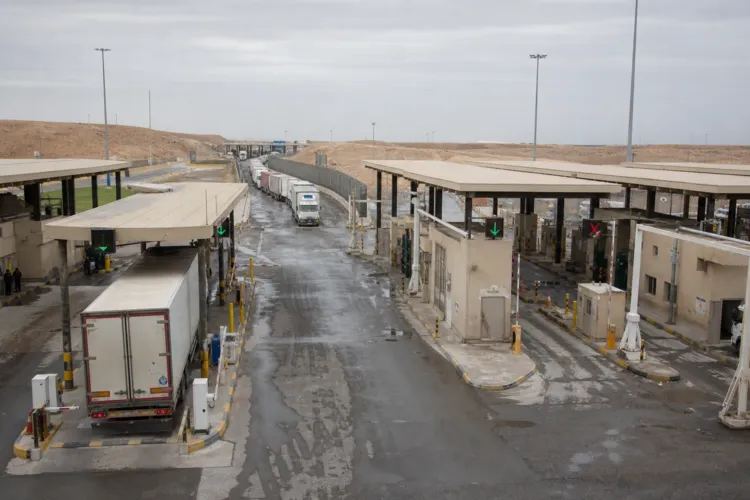
When King Khalid International Airport in Riyadh is disrupted, the problem quickly becomes a surface-transport problem. In October, the scale was stark: Cirium reported 4,071 of 4,736 flights scheduled at KKIA between October 8 and 25 were cancelled, equal to 86% of the airport’s planned operation. The airport was hit during a series of attacks, including an October 10 strike that killed 13 people, and the facility remained closed for several days before a limited reopening. For residents and businesses, this is not just an airline issue. It is a citywide mobility issue that pushes demand onto roads, coaches, and alternate airports.
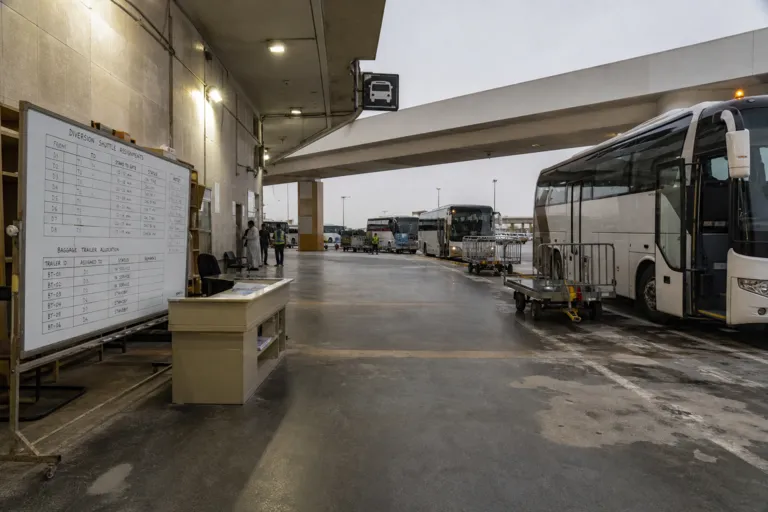
In response, Riyadh Air shifted part of its operation about 250 miles (400 km) north to Al Qassim, starting October 25, covering flights to London Heathrow, Cairo, Jeddah, Dhaka, Lahore, and Islamabad. The carrier built a ground process designed to preserve service for passengers originating in the capital. Travelers can check in and hand over baggage in Riyadh, then ride a coach to Al Qassim Airport. The road journey takes about 4.5 hours. Buses are scheduled to leave Riyadh six hours and 15 minutes before departure, targeting arrival around one hour and 45 minutes before takeoff. This is a clear, operational definition of diversion readiness that depends on precise timing and predictable road capacity.
Building Surge Capacity Between Al Qassim and Riyadh
A surge-capacity plan should start with the bottleneck that diversions create: ground-side throughput. A diversion is not only runway availability. It is also the ability to move large numbers of people and bags reliably from Riyadh to Al Qassim. Reporting shows domestic airlines “scrambled to find alternative routes” for the capital’s seven million residents, with advertisements highlighting flights from Qassim airport “three hours from Riyadh.” The gap between a three-hour marketing message and a 4.5-hour operational coach ride signals why planners need multiple transport layers. Coach fleets, staging areas, check-in points, and clear cutoffs for baggage acceptance become the new terminal infrastructure when the capital’s airport cannot operate normally.
This is also where Saudi airport ground transport resilience diversion planning intersects with long-term aviation transformation. Invest Riyadh’s aviation tracker describes a national transformation program estimated at over $100 billion in total capital deployment. It also notes that King Khalid Airport showed 18% growth, but is approaching capacity constraints at approximately 40 million passengers per year. A new King Salman International Airport is targeted for completion by 2030 with initial capacity of 120 million passengers. Those objectives raise the stakes for continuity: when disruption happens, the system needs an “overflow spine” that can absorb passengers without collapsing schedules, especially when foreign airlines suspend services and cancellations extend into November.
The Al Qassim diversion model provides a checklist that can be standardized and scaled. Riyadh Air’s network had already reached 16 destinations after beginning full commercial operations on June 10, before the crisis interrupted expansion and suspended other routes. The more routes and passengers depend on Riyadh, the more important it becomes to pre-design a diversion playbook: pre-arranged coach capacity, published bus schedules aligned to flight banks, and upstream check-in to reduce congestion at the alternate airport. Separate reporting also shows Riyadh Air published arrangements in which selected services would operate through Al Qassim instead of KKIA, including a complimentary coach service between Riyadh and Al Qassim under carrier instructions. That combination of diversion routing and managed surface links is the core of a resilient response.
How severe were the KKIA flight cancellations during the October disruption?
Which routes did Riyadh Air divert to Al Qassim during the temporary shift?
How did the Riyadh-to-Al Qassim coach operation work for diverted passengers?
What does a Saudi airport ground-transport resilience diversion plan need to prioritize?
What long-term capacity figures shape the urgency of continuity planning in Riyadh?