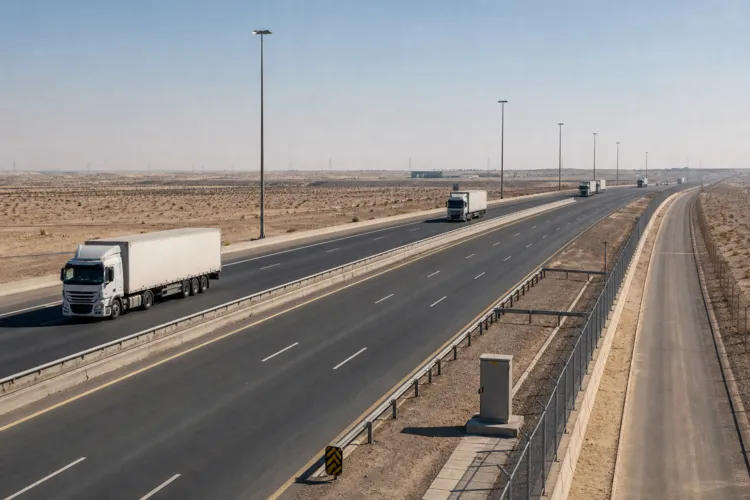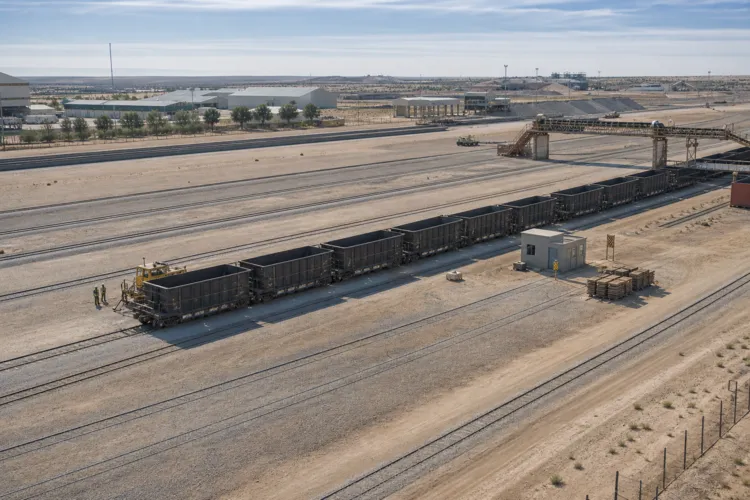
Any Saudi autonomous freight ROI story quickly becomes a utilization story. A global autonomous trucking ROI guide puts per-vehicle costs in a wide band of USD 350,000 to USD 600,000 when sensors, computing infrastructure, and basic integration are included, and it also cites additional facility investments of USD 725,000 to USD 2.6 million. Those numbers are not Saudi-specific, but they anchor the type of upfront hardware-cost thinking behind an autonomous truck business case in Saudi Arabia. In parallel, Goldman Sachs Research projections cited in that same guide estimate cost per mile for autonomous trucks dropping from $6.15 in 2025 to $1.89 by 2030, which makes utilization and corridor fit the deciding variables rather than curiosity about the technology itself.
Saudi Arabia’s clearest public-road commercial evidence is not heavy highway trucking yet. Marqstats sizes the Saudi RoboVan market at USD 3.85 million in 2025, growing to USD 55.48 million by 2030 (a 70.50% CAGR over 2026–2030). It also tracks the active fleet expanding from 54 vehicles to 1,320, described as an 89.51% annual rate. This market definition explicitly includes SAE Level 4 autonomous goods delivery vehicles, plus recurring Delivery-as-a-Service fees for vehicles, remote supervision, connectivity, insurance, and maintenance, while excluding heavy autonomous trucks on highways. That scope matters, because the operational lessons around remote supervision and maintenance economics can still inform future freight planning even when the vehicle class changes.
The ROI Lever Is Utilization, Not Just Purchase Price
Multiple sources quantify why utilization is the main lever in driverless freight math. A Level 4 autonomous freight trucking report says these trucks can reduce per-mile operating costs by 30–45% versus human-driven operations, with primary savings tied to eliminating driver wages of $0.40–$0.50 per mile, reducing idle time, and optimizing fuel use through consistent speed profiling. The same report contrasts potential utilization of up to 22 hours per day against approximately 11 hours under human Hours of Service constraints. Separately, a market outlook on Level 4 highway trucking states that asset utilization doubles when hours-of-service regulations no longer apply. These figures are global context, but they explain why corridor choice, uptime, and dispatch discipline can dominate the payback equation when hardware costs are front-loaded.
Saudi commercial deployments in adjacent Level 4 mobility categories show how per-vehicle revenue can change as fleets scale, which is another utilization-related ROI signal. Marqstats estimates the Saudi robotaxi market at USD 1.80 million in 2025, projected to reach USD 157.50 million by 2030 (a 144.57% CAGR over 2026–2030). It also states revenue per vehicle falling from about USD 120,000 in 2025 to about USD 37,500 in 2030 as pilots shift toward standard ride-hailing pricing, even as total revenue rises with fleet growth from about 15 vehicles to 4,200. The lesson for freight planners is that early-stage economics may be inflated by project and servicing payments, so utilization assumptions must be stress-tested for steady-state pricing.
Finally, ROI also depends on how fleets buy autonomy: own the hardware or consume it as a service. The trucking ROI guide notes Trucking-as-a-Service options priced at $1.20 to $2.50 per mile, designed to eliminate upfront capital requirements for fleets testing autonomous capacity. It also states break-even timelines in the U.S. context: large fleets can reach break-even in 2.5 to 3 years on optimized corridors, mid-size fleets in 3.5 to 4.5 years, and smaller operators in 4.5 to 6 years without managed service models. For Saudi decision-makers building an autonomous freight roadmap, the practical takeaway is to tie any hardware-cost debate to measurable utilization: hours-per-day, route regularity, and the operational overhead of remote supervision and maintenance that Saudi delivery markets already bundle into Delivery-as-a-Service contracts.
What do sources say about autonomous truck hardware costs for an ROI model?
Which utilization numbers most directly influence driverless freight ROI?
What is the size of Saudi Arabia’s Level 4 RoboVan market, and why does it matter for freight?
How does per-vehicle revenue change as Saudi robotaxi fleets scale?
How should a Saudi autonomous truck business case treat hardware cost versus service models?