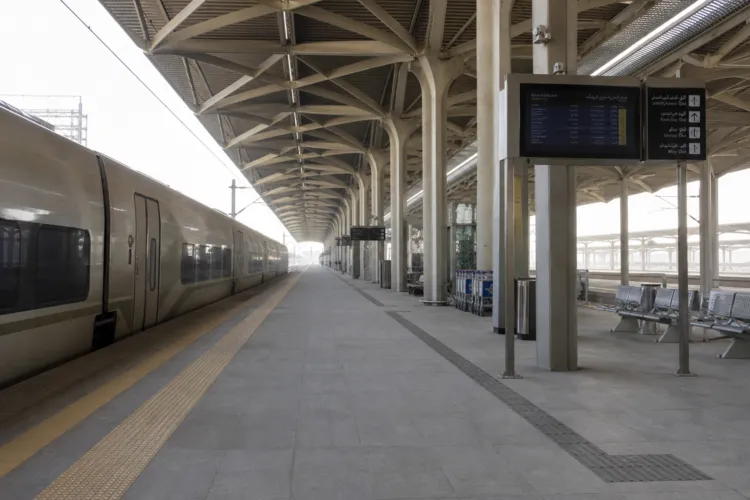
Haramain High-Speed Railway is positioned as a high-capacity corridor for pilgrims and everyday travelers between Makkah, Madinah, and Jeddah, with a branch connection to King Abdulaziz International Airport. Official updates describe the line as operating at speeds of up to 300 km/h and extending 453 kilometers, with a roughly two-hour-and-20-minute journey time between Makkah and Madinah. The system operates 35 electric trains, each designed for 417 passengers across 13 carriages, split into 113 business-class seats and 304 economy seats, plus a restaurant car. That layout matters for pricing and yield management because it creates two distinct inventory pools to allocate during peaks.
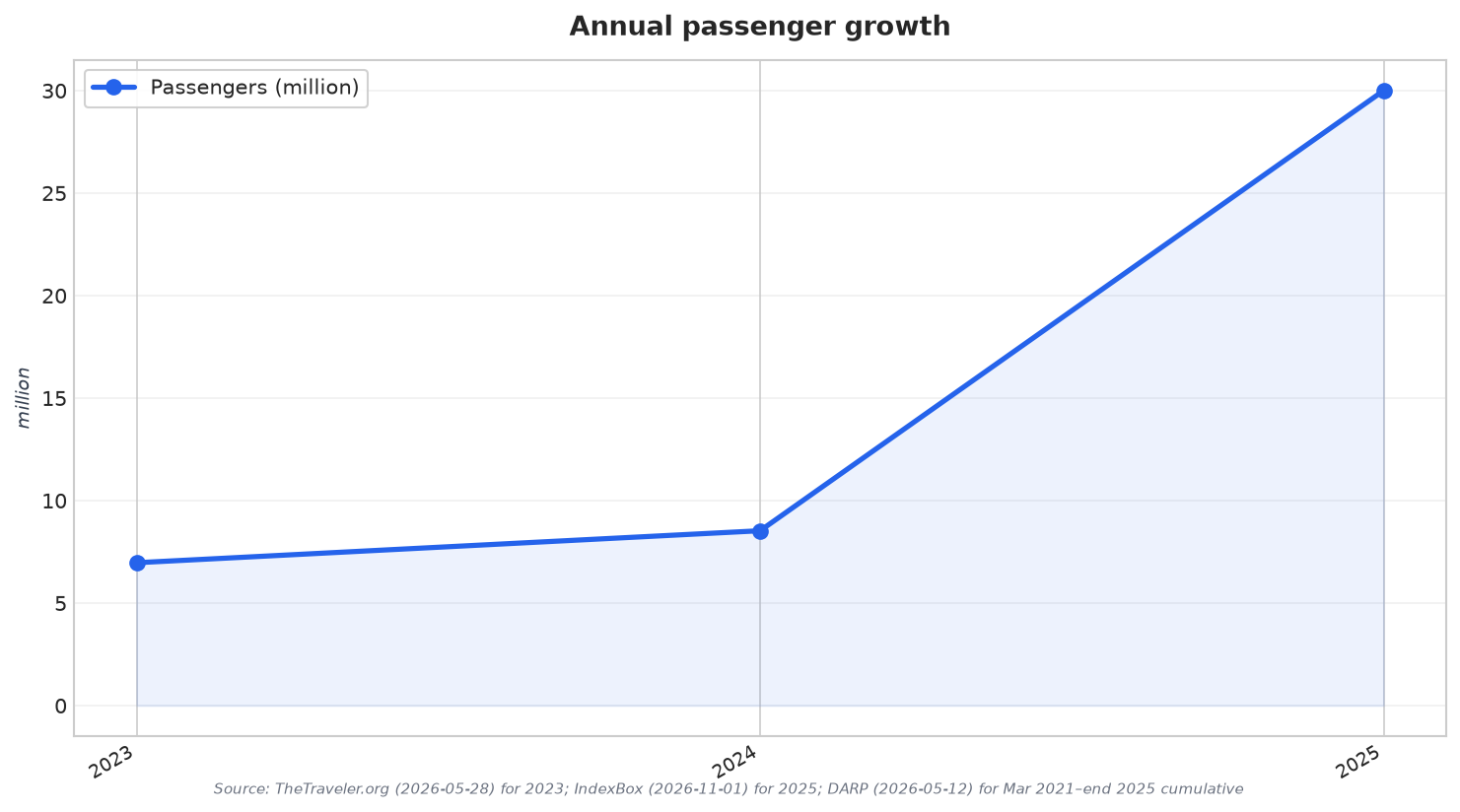
Ridership and utilization metrics in the published record show a line that is already being managed through phased operations and seasonal surges. During its initial operational phase between 2018 and 2020, the railway transported around one million passengers across 3,000 trips. In the full operational phase that began in March 2021 and continued through the end of 2025, it transported more than 30 million passengers. For 2025 specifically, one bulletin cited approximately 8.53 million passengers and an average of 96 trips per day, alongside a rise to 31.5% from 73 trips in 2024. For readers tracking Haramain high speed railway ridership 2026, those baselines frame how operators can tighten or loosen supply in response to demand spikes.
Capacity Planning for Hajj: Seats, Trips, and Peak-Day Frequency
Hajj planning disclosures provide the clearest view into how capacity is “manufactured” for a short, high-demand window. For the period from the 1st to the 20th of Dhu Al-Qidah, more than 5,300 train trips were scheduled with over 2.21 million seats, an increase of more than 210,000 seats compared with the same period last year. After the 1447 AH Hajj operational plan was announced, the railway reported transporting more than 670,000 passengers through over 2,900 trips, and also said daily trips during peak periods will exceed 142 journeys per day. These figures support yield management: when frequency and seat supply increase, the operator gains more flexibility to segment demand and manage crowding across departure times.
Station-level demand also shapes pricing, packaging, and service design. In 2025, Madinah station saw about 6.04 million passengers arriving and departing, a 48% increase from 4.09 million in 2023, equating to roughly 16,600 daily; the same bulletin said this represented 35.4% of all passenger movements across the stations. It also estimated peak monthly demand for supporting services at around 739,000 passengers. These numbers explain why yield tools are not only about fares. They also include connection products such as shuttle services between the station and hotels, door-to-door links to the airport, and Umrah packages combining train tickets, accommodation, and tours.
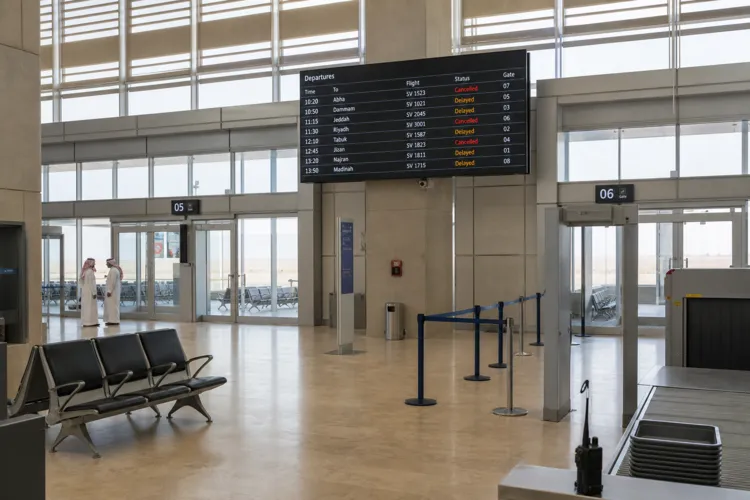
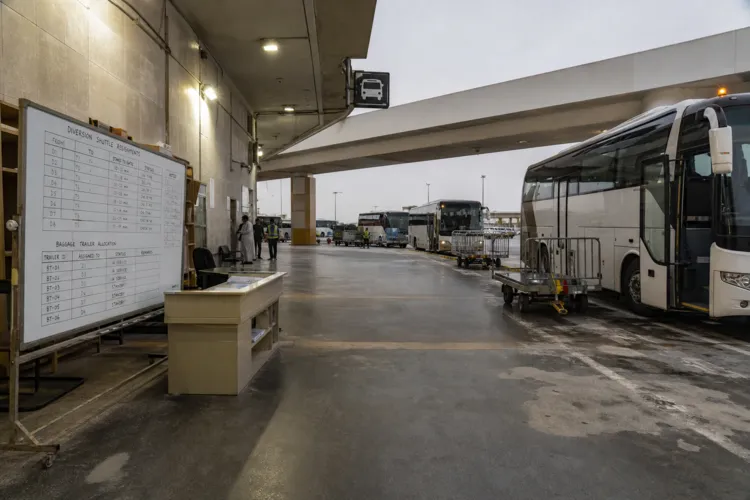
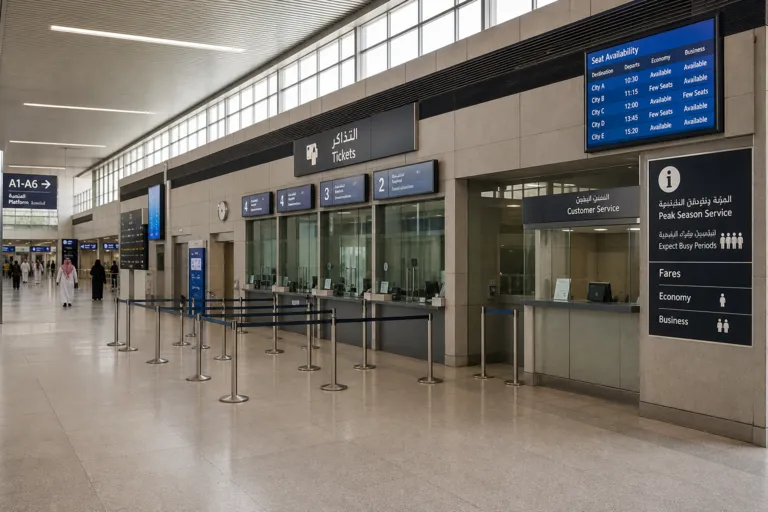
Operationally, the railway has emphasized distribution and customer-flow improvements that support peak-season revenue management, even when specific fare levels are not disclosed. SAR upgraded ticket sales offices at Makkah, Madinah, and Jeddah stations and expanded a broader ticketing system that includes self-service kiosks, a mobile application, an online platform, and a call center. VIP lounges were inaugurated at stations in Makkah, Madinah, and Jeddah’s Al-Sulaymaniyah station, and a temporary camp was established at Madinah station as a backup waiting area, with additional shuttle buses arranged to the Prophet’s Mosque. Together, these steps help protect throughput during intense demand periods, where missed connections or long queues can undermine both ridership and yield.
What figures help track Haramain High-Speed Railway ridership going into 2026?
How much Hajj-period capacity was announced for early Dhu Al-Qidah?
What is the train capacity split between business and economy?
What do station numbers say about demand concentration in Madinah?
What operational changes support pricing and peak-season yield management without publishing fares?