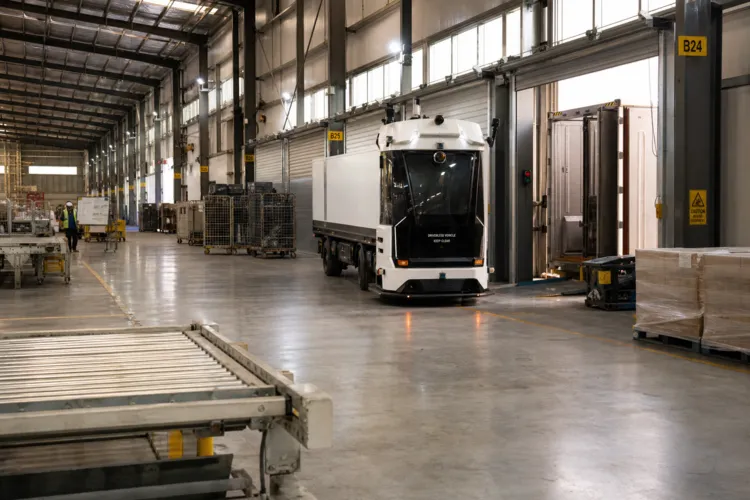
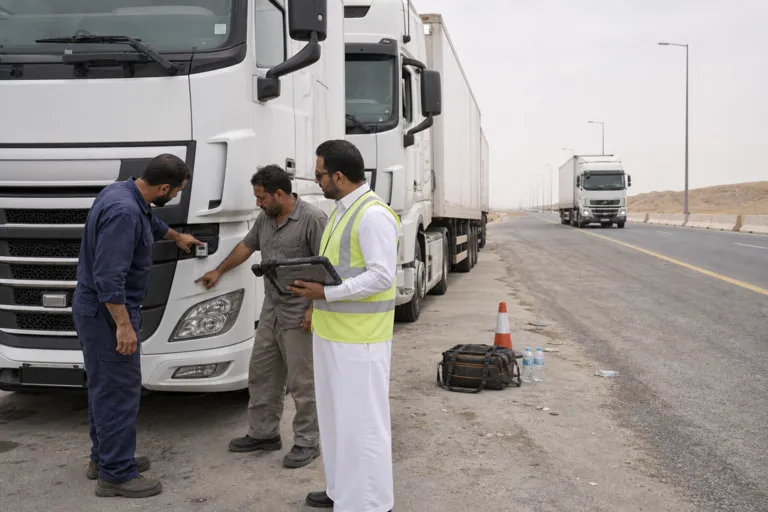
Truck platooning Saudi Arabia is a practical way to rethink long highway freight. Platooning connects two or more trucks so they drive in close proximity as a convoy. A “leader” truck is driven by a human, while the following truck or trucks react to the leader’s movements through a specialized computer system. The system aligns speed, acceleration, and braking, and drivers monitor and step in when needed.
The push toward smarter trucking is tied to real pressures. One future-mobility review points to the urgent need to decarbonize freight, a chronic shortage of skilled drivers, and the explosive growth of e-commerce. In this shift, trucks are becoming more connected and software-driven. Platooning is often described as a key stepping stone toward higher autonomy, because it depends on reliable sensing, fast decision-making, and tight coordination between vehicles.
Real-world pilots show what makes platooning different. In an Ohio–Indiana project, a lead truck links to a follower truck through encrypted, military-grade communications. Signals from the lead truck control the follower truck’s steering, acceleration, and braking, so the follower mimics the leader. The same project describes dual-channel, frequency-hopping communications with 256-bit advanced encryption standard, using 915 megahertz and 2.4 gigahertz, with no Wi‑Fi, cellular, or Bluetooth.
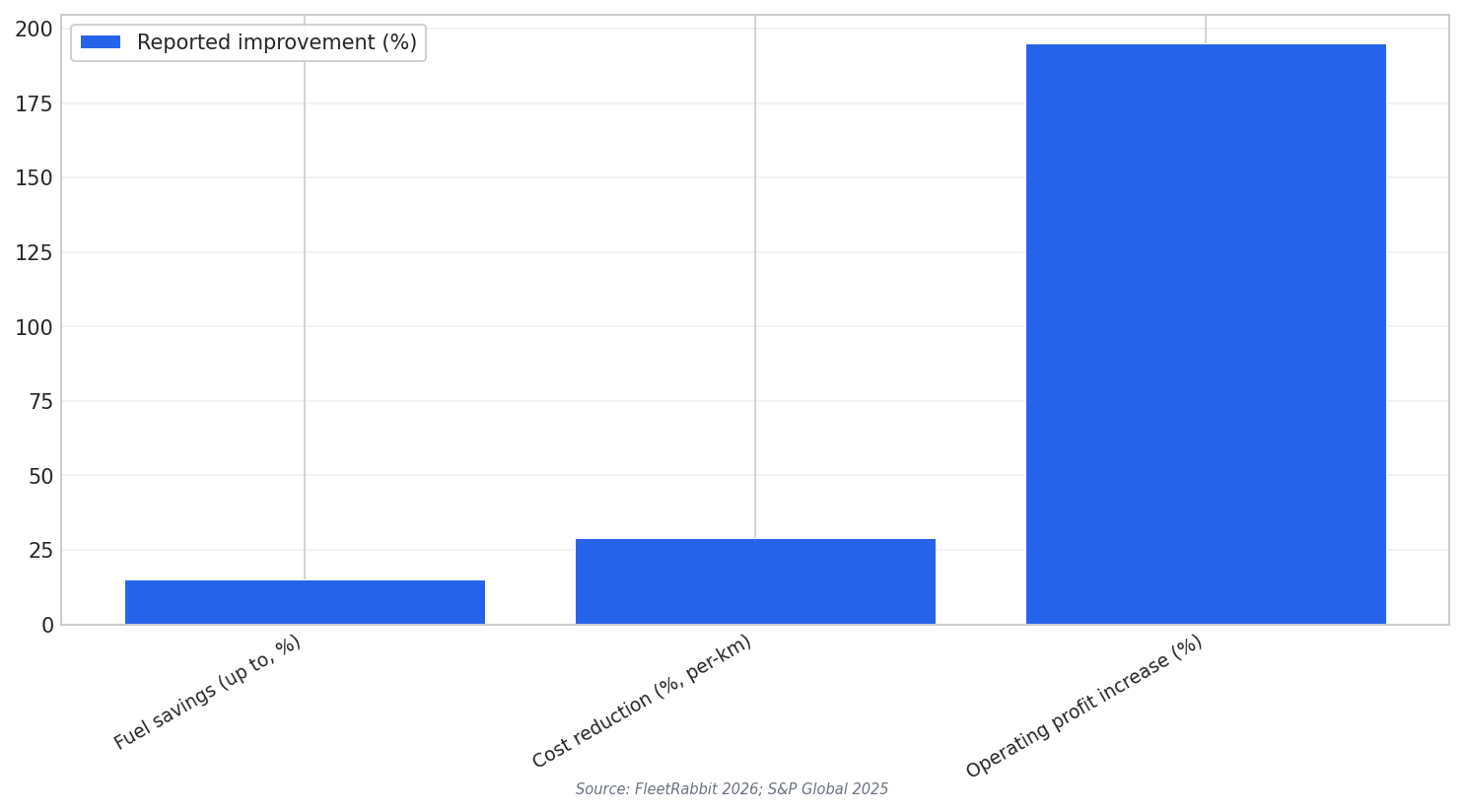
Across recent reports, the quantified benefits often fall into three buckets: fuel, road capacity, and operating economics. One source reports fleets seeing fuel savings of up to 15% in 2026 deployments. Another notes the follower truck can use up to 10% less fuel, while the lead truck’s fuel economy improves by a few percent. Separately, pilot estimations for a “1+4” autonomous platooning setup report a 29% reduction in per-kilometer freight costs and a 195% increase in operating profit.
Why These Convoys Could Fit Long Saudi Highway Routes
For Saudi highways, the attraction is simple: platooning targets long-haul driving where steady speeds and predictable flow are possible. Platoons can also support safety in a specific way. One pilot report says tight coordination helps dampen stop-and-go “shockwaves” that can lead to accidents. Another source adds that autonomy efforts aim to reduce accidents linked to human fatigue and distraction, while Level 2 and Level 3 driver assistance already provides benefits as the industry builds trust through data and performance.
It is also important to be clear about what today’s numbers do—and do not—prove for Saudi Arabia. The cost and profit figures in this article come from pilot estimations for a “1+4” platooning solution, and the fuel and throughput figures are reported from deployments and simulations described outside Saudi Arabia. Still, these results give Saudi freight planners a realistic starting point for what to test: secure vehicle-to-vehicle links, clear rules on human backup drivers, and defined highway segments where following trucks can react with millisecond precision.
What is truck platooning Saudi Arabia in simple terms?
How do platooning trucks communicate with each other?
What fuel savings are reported for truck platooning?
What business benefits have been estimated for autonomous platooning?