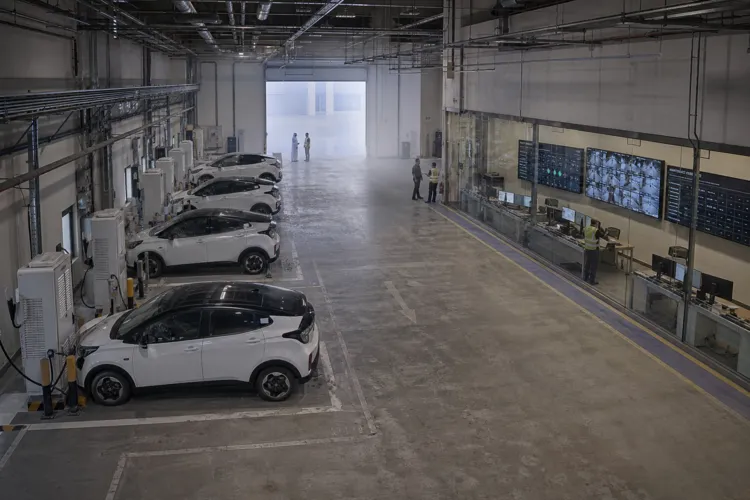
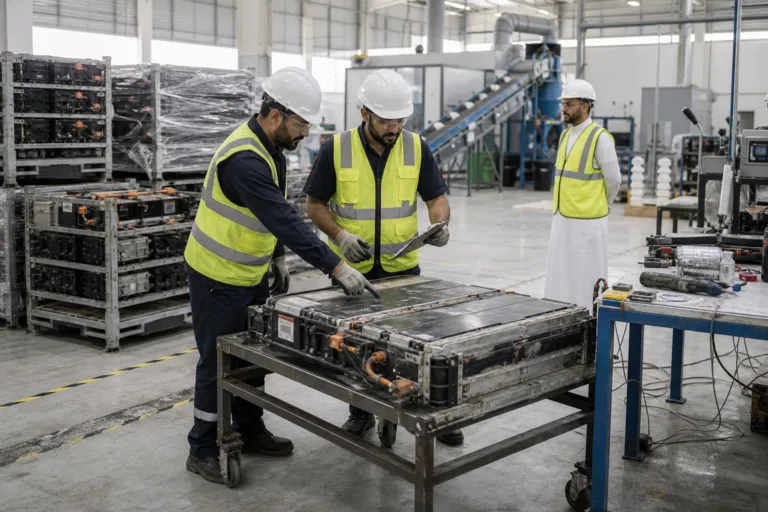
EV battery recycling Saudi Arabia is moving from a future topic to a near-term priority. EVs support decarbonization, but they also create end-of-life battery waste that must be managed safely. A CEDARE report warns that without circular economy approaches, poor collection, storage, and disposal can cause environmental damage, safety hazards, and the permanent loss of valuable materials. EV batteries are large and material-intensive, and they contain valuable critical raw materials. That makes recycling and reuse a resource issue, not only a waste issue.
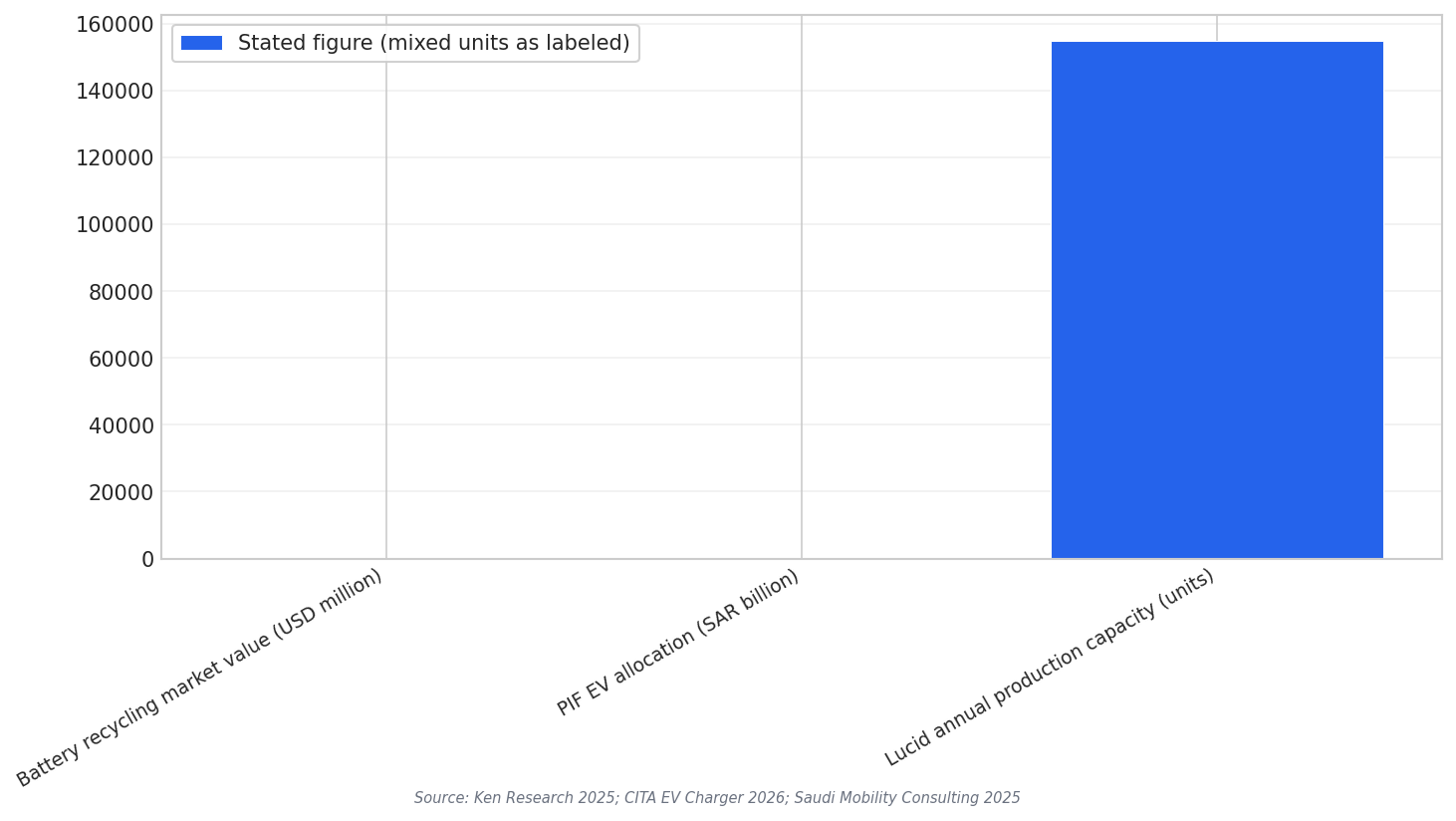
Saudi Arabia’s EV push gives clear signals that battery waste volumes will grow over time. Lucid Motors has a 155,000-unit annual production capacity, and CEER has planned 175,000-unit output. Saudi Mobility Consulting also reports major investments exceeding SAR 30 billion ($8 billion). In parallel, the Public Investment Fund (PIF) has allocated SAR 150 billion ($40 billion) towards EV infrastructure and manufacturing capabilities. This momentum makes it important to design battery take-back, sorting, reuse, and recycling systems early.
Three Saudi figures show why this is becoming a national industry topic: the battery recycling market is valued at approximately USD 155 million, PIF has allocated SAR 150 billion ($40 billion) for EV infrastructure and manufacturing, and Lucid’s annual EV production capacity is 155,000 units. These numbers reflect market demand, investment, and future battery flows.
What A Circular Battery System Must Solve
CEDARE highlights that many Arab countries are still at an early stage of EV adoption and lack dedicated systems for battery collection, reuse, and recycling. That gap can lead to informal practices and dependence on external recycling systems as markets expand. For Saudi Arabia, the practical challenge is to connect fast EV growth with safe battery handling rules, clear responsibilities, and reliable logistics. Batteries are designed for long operational lifetimes, so planning must cover both today’s scrap and tomorrow’s end-of-life volumes.
Technology choices matter. EVs mainly use lithium-ion batteries, and performance depends on materials such as lithium, nickel, cobalt, manganese, and graphite, according to CEDARE. Inkwood Research notes that several companies investigate hydrometallurgical techniques to extract metals like lithium, cobalt, nickel, and manganese from worn-out batteries. It also notes that lower energy consumption compared to pyrometallurgy can reduce operational costs. Closed-loop supply chains support circular economy goals when reclaimed products feed back into battery manufacturing processes.
Saudi Arabia’s ecosystem is also forming on the business side. Ken Research lists a mix of regional and international players, including Saudi Investment Recycling Company (SIRC), Veolia Middle East, Al-Saad Recycling Technologies, Arabian Eco-Recovery Systems (AERS), and others. IndexBox describes the cathode scrap recycling market as transitioning from a nascent stage to a structured industry with significant growth potential through 2035, with Saudi Arabia in the project development phase. Inkwood Research adds that GCC cooperation could accelerate regional battery circular economy development, noting complementary strategies between Saudi Arabia and the UAE.
Why is EV battery recycling Saudi Arabia becoming urgent?
What battery type is most tied to EV recycling needs?
Which metals are mentioned as targets for recovery in recycling?
Are battery recycling facilities being built in Saudi Arabia?