Smart parking Saudi Arabia is moving from “nice to have” to needed city infrastructure. Saudi Arabia’s major cities face real pressure from growth. Sources point to over 84% of residents living in urban areas. One report also notes more than 616,000 new passenger vehicles registered in a single year. In this environment, parking search time becomes a traffic problem, not just a driver problem.
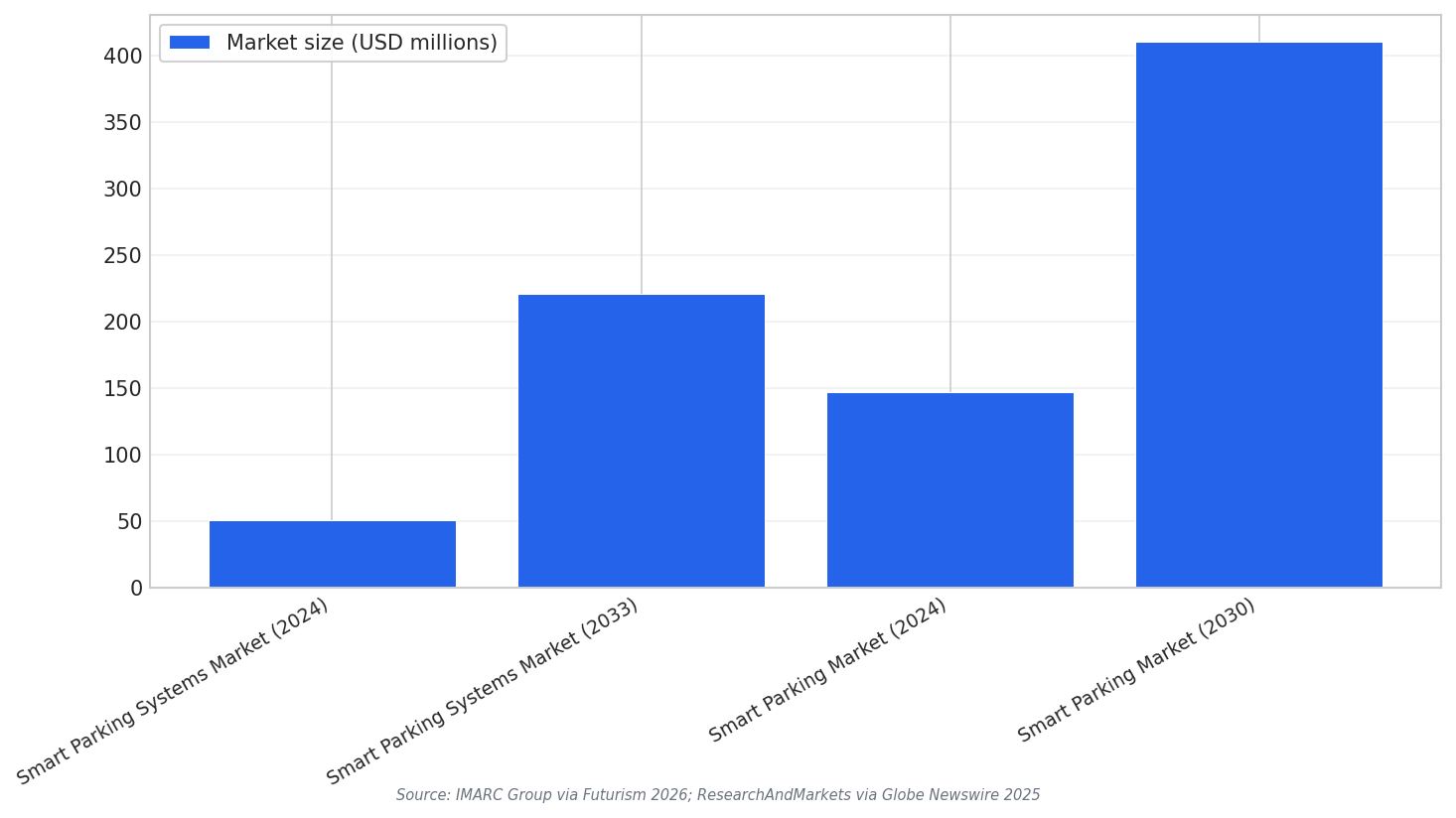
The business momentum is also clear in market forecasts. One source says the Saudi Arabia smart parking systems market was USD 51.03 million in 2024 and is expected to reach USD 221.20 million by 2033. Another forecast values the Saudi Arabia smart parking market at USD 146.96 million in 2024 and expects USD 410.37 million by 2030. These figures show strong growth expectations, even though the sources use different market definitions.
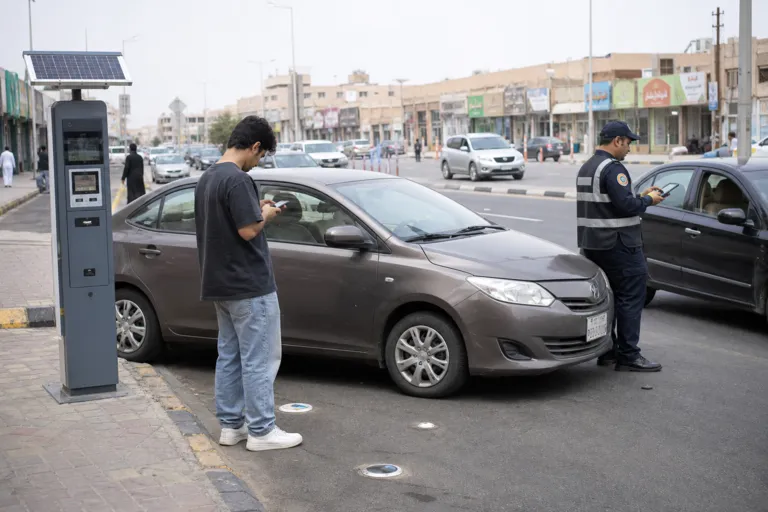
So what counts as “smart parking” in practice? The sources describe systems that combine sensor-based tools, IoT connections, mobile applications, and Electronic Control Units (ECUs). The goal is simple. Show drivers where space is available, guide them faster, and help cities run parking operations with better coordination. This can reduce inefficient parking and the traffic linked to it.
From Vision Plans to Real Streets in Riyadh
Saudi Arabia’s Vision 2030 push links parking to wider smart city design. A source notes giga-projects like NEOM, described as budgeted at USD 500 billion, alongside the Red Sea Project and Qiddiya. In Riyadh, one example is a 164,000-space smart parking initiative spanning 12 zones, in collaboration with stc solutions and Remat Al-Riyadh. The same source also describes Phase I covering over 24,000 new public spaces.
Regulation is another driver. Ken Research states that in 2023, the Saudi government introduced regulations mandating the integration of smart parking systems in new urban developments. This matters because it makes adoption part of planning, not an optional add-on. It also supports the growth of parking payment apps and tools like QR ticketing mentioned in the same source.
Private investment and local operators are also shaping the market. Arageek reports that Merak Capital invested SAR 100 million (around USD 26.7 million) into Arsann. Arsann was founded in 2017, runs more than 270 sites, and has helped park over 10 million vehicles across the Kingdom. The same source links its approach to IoT and digital payments, with the aim to streamline parking and reduce congestion.
On-the-ground outcomes are described in a Saudi mobility case study. It reports reduced time spent searching for parking, less congestion, and improved overall mobility after smart parking work. It also notes that dynamic pricing optimized parking revenue and utilization while reducing traffic-related emissions. For city leaders, this frames smart parking as both an experience upgrade and a traffic management tool.
What problem does smart parking Saudi Arabia solve in cities?
What technologies are used in Saudi smart parking systems?
What is happening with smart parking in Riyadh?
Are there regulations pushing smart parking in new developments?
Which company received funding for smart parking growth in Saudi Arabia?