The Eastern Province is Saudi Arabia’s largest province by area and the third most populous after Riyadh and Mecca provinces. More than a third of the province’s population is concentrated in the Dammam metropolitan area, also called Greater Dammam, which includes Khobar and Qatif. The province has a high economic position because it holds most of Saudi Arabia’s oil reserves, and Saudi Aramco is based in Dhahran in the Dammam metropolitan area. This concentration of people and industry raises a simple question: how should everyday movement between Dammam, Khobar, and Dhahran be organized so it is not only road-first, but network-first?
Road infrastructure is already the dominant connector. Dammam is linked to Eastern Province cities by 8-lane highways, including routes associated with the Dammam–Khobar Highway and other corridors. Eastern Province highways numbered 605, 610, 613, 614, 615, 617, and 619 connect the Dammam metro to Ras Tanura, Jubail, the King Fahd International Airport, Abqaiq, and Hofuf, while intercity bus services in the province are operated by the Saudi Public Transport Company. Air access also shapes travel patterns: King Fahd International Airport serves as the primary hub for the entirety of the Eastern Province, and its passenger terminal sits about 20 km (12 mi) northwest of Dammam, connected by a six-lane highway.
What Exists Today: BRT Coverage Meets a Road-Heavy Reality
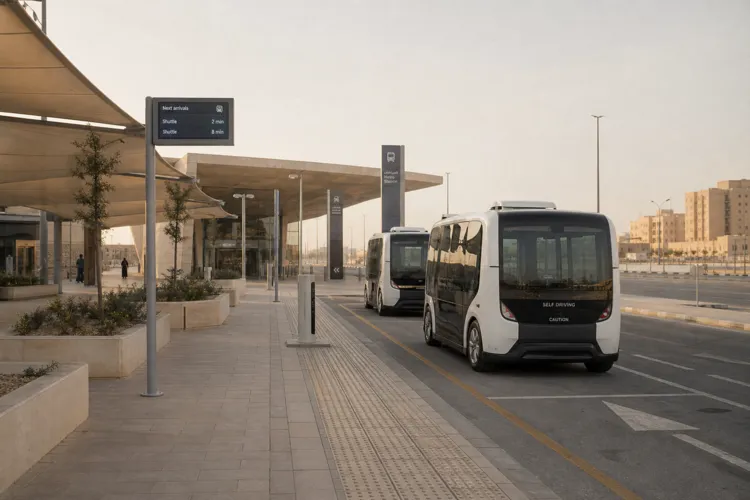
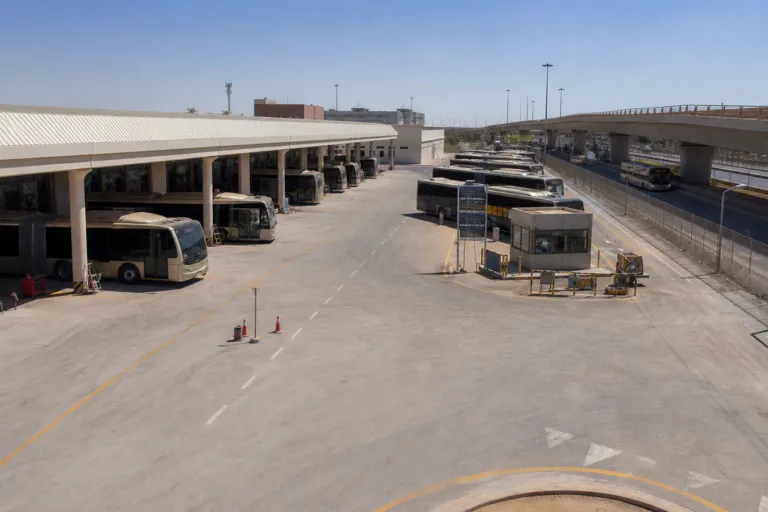
Public transport is not absent. A bus rapid transit (BRT) system launched in 2023 mainly covers Dammam, Khobar, Qatif, and Dhahran over 453 kilometers, with 212 bus stops. That footprint is large enough to function as a regional spine, but the lived experience of mobility is still defined by long highway links and industrial logistics needs. A separate national context reinforces why: across Saudi Arabia, public transport carried 420.6 million passengers in 2025, up 61% year on year, showing how quickly demand can scale when services become usable at everyday frequency.
The “gap” is partly about competing priorities, not just missing vehicles. The Eastern Province industrial belt connecting Dammam, Jubail, and Ras Tanura requires heavy-duty freight corridors supporting petrochemical transport. Nationally, Vision 2030 commits multibillion-dollar capital toward airports, highways, and logistics zones, while projects like the 170 km linear city at NEOM drive heavy-haul movement of cement, steel, and prefabricated modules over a decade-long build schedule. This investment climate strengthens road and logistics capacity, but it can also pull planning attention away from the finer-grained transit links that make metropolitan life easier.
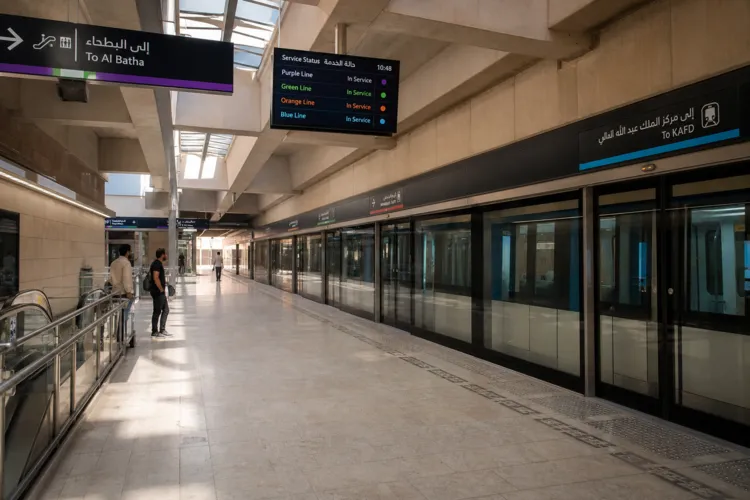
Looking beyond the Eastern Province, the broader Middle East public transportation market signals what integrated networks can deliver. Dubai’s system carried 747.1 million riders in 2024 across public transport, shared mobility and taxis, and its metro spans 90 km with 53 stations. Regionwide, the Middle East Public Transportation Market was valued at USD 11,850 million in 2025 and is projected to reach USD 19,548 million by 2031, reflecting an 8.7% CAGR. For Dammam–Khobar–Dhahran metropolitan transit, the takeaway is practical: when interchange quality and service planning improve, ridership can scale, and investment shifts from “more roads” to “better connections.”
What public transport network currently serves Dammam, Khobar, and Dhahran?
Why is the Eastern Province often described as road-connected?
How big is the Dammam metropolitan area in the Eastern Province’s population picture?
What does recent Saudi ridership say about demand for metropolitan transit improvements?
What is the core challenge for Dammam–Khobar–Dhahran metropolitan transit planning?