Madinah’s transport priorities sit at the intersection of daily urban life and the unique demands of religious travel. Nationally, Saudi Arabia’s Vision 2030 agenda for Hajj and Umrah targets 30 million foreign Umrah pilgrims annually, and the same program reported 16.92 million foreign Umrah pilgrims in 2024 against an interim target of 11.3 million. In Madinah, the ecosystem is supervised by several entities, notably the Ministry of Transport and Logistic Services and the Al-Madinah Region Development Authority. Any Madinah bus rapid transit master plan has to fit into this wider push to expand capacity across transport and mobility, while keeping trips predictable for residents and visitors.
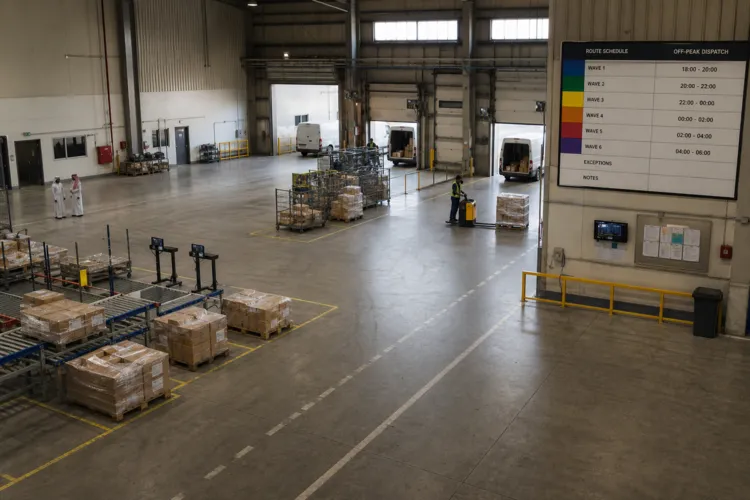
A practical foundation already exists in the city’s current bus operations. Saudipedia describes the Madinah Bus project fleet, overseen by the Al-Madinah Region Development Authority, as including 27 shuttle buses operating on six routes with 106 primary and secondary stops. Those stops include Sayed Al-Shuhada’, Al-Azhari, the Islamic University, the Sports Stadium, Al-Diathah, Al-Hijrah, Aliat Mall, Al-Khalidiyyah, Shadhah, and Prince Mohammad Bin Abdulaziz International Airport. A BRT-style master plan can start by upgrading these corridors where demand is concentrated, and by improving station design, service regularity, and passenger information along the existing pattern of routes and stops.
Connecting Bus Corridors to Airport, Rail, and Highways
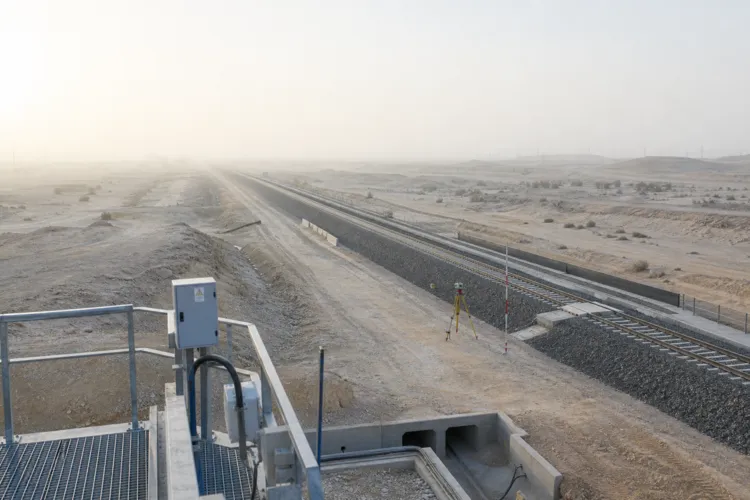
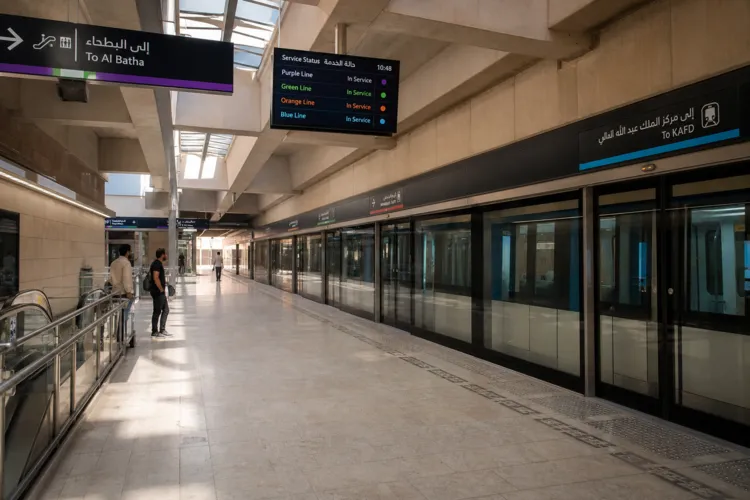
Madinah’s wider network strengthens the case for a higher-capacity bus backbone. The city’s air gateway is Prince Mohammad Bin Abdulaziz International Airport, established in 1950 and expanded with major works inaugurated in 2015, to accommodate growing air traffic, particularly crowds of millions of pilgrims and Umrah pilgrims coming to Madinah. Rail adds another high-throughput link: the Haramain High-Speed Railway station is about nine km from the Prophet’s Mosque and thirteen km from the airport. The electric railway reaches speeds of up to 300 km/h and includes 35 trains, each with 417 seats across business and economy classes. A BRT plan that prioritizes fast bus connections to these gateways can reduce friction between arrival points and key destinations.
Road access also matters, especially when travel is dispersed between neighborhoods and intercity corridors. Saudipedia lists major express highways that connect Madinah to other Saudi cities, including the Qassim–Madinah Highway (448 km), Jeddah–Madinah Highway (410 km), and Makkah–Madinah Highway (421 km). SAPTCO operates intercity bus services via its station in the city, creating an additional interchange point for visitors arriving overland. Within this context, a BRT network can focus on making city trips more reliable, and it can also act as a structured distributor from intercity arrival points toward major activity nodes, including the airport and the rail station.
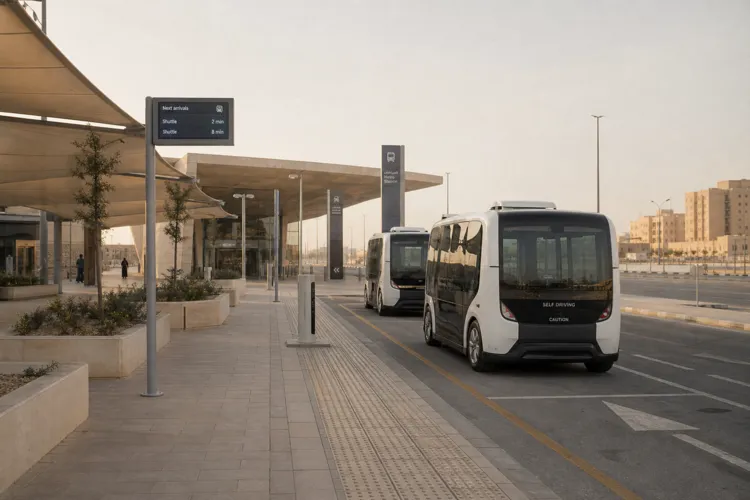
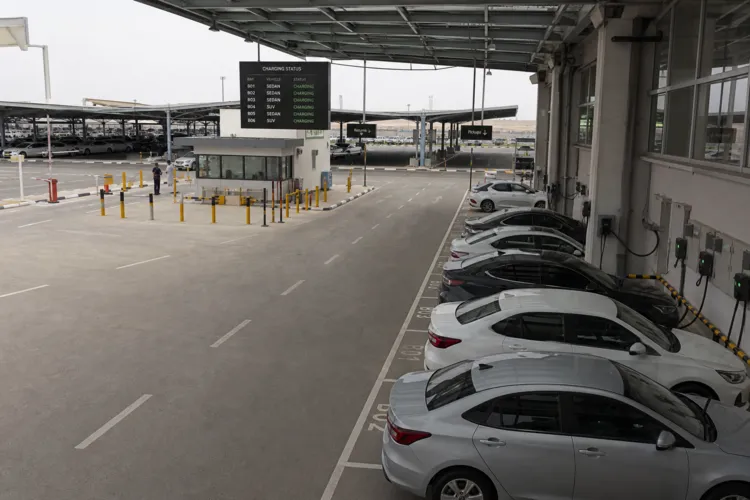
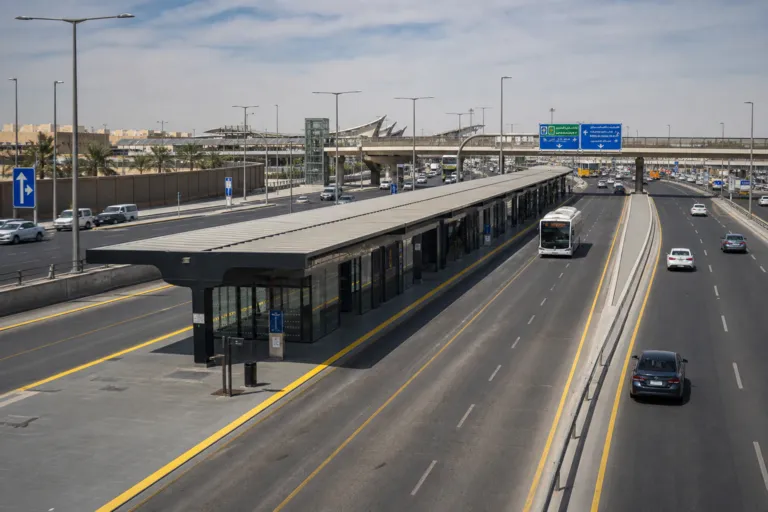
Broader Saudi transport initiatives provide useful signals for what modern bus systems can look like. In Makkah, the Times of India reported a Bus Rapid Transit system powered entirely by electricity, described as the first fully electric bus rapid transit network in the Middle East, and launched after an official inauguration in late 2025. The same report highlights features such as a hydraulic kneeling system for level boarding and digital displays at every stop and inside buses for live arrival updates. Separately, Mordor Intelligence reports pilot data from SAPTCO’s Madinah depot where smart buses integrate predictive maintenance that enhances uptime by up to one-fifth. Together, these reference points suggest that a Madinah BRT master plan can combine corridor design with operational technology, accessibility, and real-time information, while building on the city’s existing bus routes and its airport-and-rail connections.
What does a Madinah bus rapid transit master plan need to align with nationally?
What existing bus service base can Madinah build on for a BRT-style plan?
Which major gateways should BRT corridors connect in Madinah?
What rail capacity details matter when coordinating bus links with Haramain High-Speed Railway?
What modern bus features can be used as reference points for a future BRT experience?