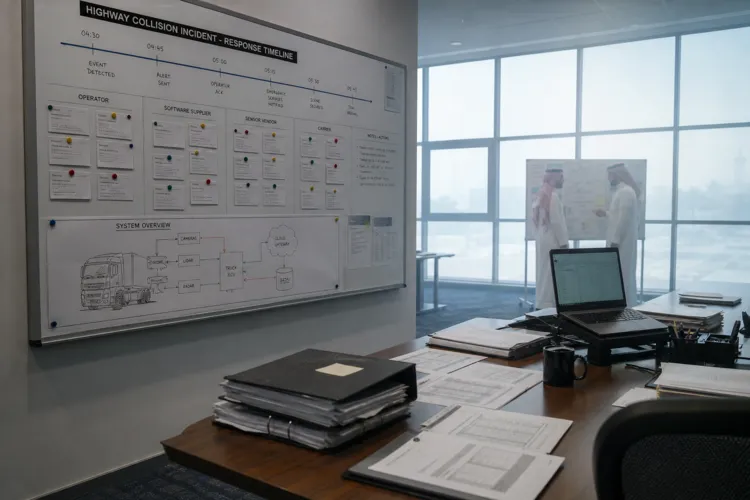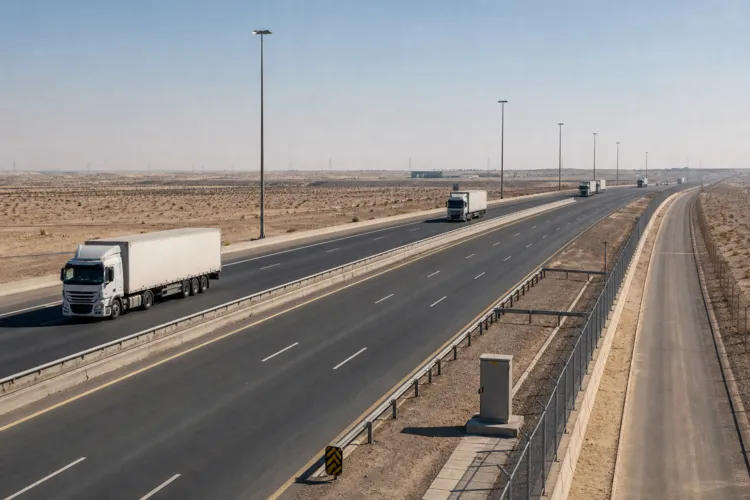
Autonomy in Saudi transport is shifting from concept to program plans, and that changes what “driving work” can look like. At LEAP 2026 in Riyadh, the Saudi AI company HUMAIN unveiled plans to introduce autonomous freight trucks across the Saudi road network by the end of 2030, in partnership with the US-based Applied Intuition. Al Majalla describes Saudi Arabia as having almost half a million trucks and more than 300,000 truck drivers (based on licences issued), so the talent base is large even before autonomy scales. In this context, Saudi truck driver remote operations jobs are not just a tech story. They are a workforce transition story that can keep local experience in the loop while roles move from steering wheels to screens.
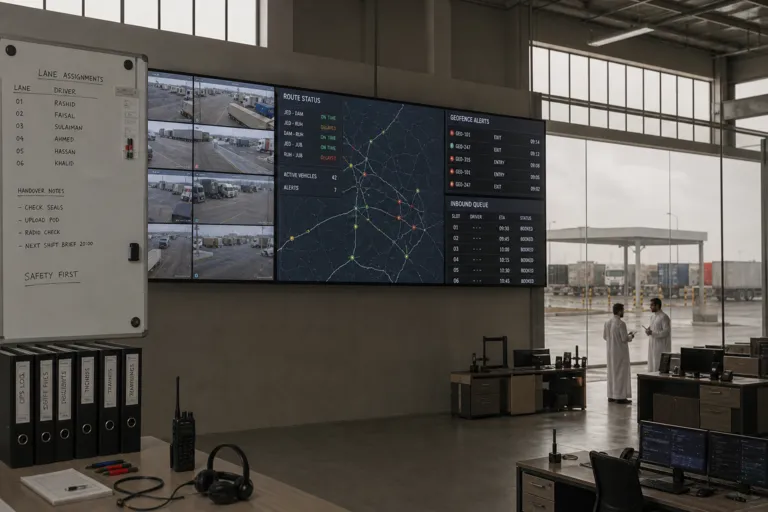
Reskilling is easier when the industry already uses digital operations tools. A 2025 report cited by Mettlead says over 60% of medium-to-large fleet operators in Saudi Arabia have adopted at least one digital platform for dispatch and monitoring. That matters because remote operations is built on disciplined dispatch, monitoring, escalation, and compliance routines. The same source notes that autonomous vehicle pilots are underway on select highways, while full commercial deployment without human oversight is not expected before 2030. So the near-term reality is mixed operations: human-driven trucks, pilot autonomy, and increasing oversight needs. That overlap is where experienced drivers can transition into monitoring, route support, and incident handling rather than exiting the sector.
What Remote Operations Roles Look Like as Autonomy Scales
Remote operations is not a single job title. It is a set of responsibilities that grows with fleet scale and regulatory requirements. Mettlead points to requirements such as obtaining a commercial transport license from the Transport General Authority, meeting Saudization workforce quotas under Nitaqat, maintaining compliance with safety and emissions standards, and implementing electronic logging systems. Those same workflows create remote-ready roles in compliance tracking, hours and activity logging, escalation management, and corridor readiness checks. For long-haul networks, Mordor Intelligence highlights that Full-Truck-Load dominates at a 78.42% share, even as its growth lags at a 5.16% CAGR (2026–2031). That dominance suggests remote operations will need to support high-volume, repetitive freight patterns where standard operating procedures can be codified and monitored consistently.
Saudi Arabia also has local proof points in adjacent autonomy programs that help define supervision models. Marqstats estimates the Saudi Arabia robotaxi market at USD 1.80 million in 2025, projected to reach USD 157.50 million by 2030, with the active fleet growing from about 15 vehicles to 4,200. In that same forecast, fully driverless vehicles supervised remotely account for 85.02% of 2030 robotaxi revenue, up from none in 2025. The report also describes a 2025 regulatory sandbox run by the Transport General Authority and notes that in 2025 WeRide robotaxis in Riyadh operated with a safety operator on board, with public rides offered between ROSHN Front and Princess Nourah bint Abdulrahman University. While robotaxis are not trucks, they show how remote supervision, sandbox regulation, and phased safety staffing can evolve, and that operational template can influence freight as it scales.
For reskilling, the message is practical: map driver strengths into repeatable remote tasks. HUMAIN and Applied Intuition plan to deploy thousands of autonomous trucks along Saudi Arabia’s principal smart logistics corridors by 2030, and Applied Intuition is set to build a local team of engineers and specialists to operate fleets and adapt systems to Saudi conditions. That is a concrete signal that operational teams will be needed alongside engineering. Meanwhile, global context underscores why companies keep investing. Future Market Insights values the Level 4 autonomous highway trucking market at USD 1.5 billion in 2026, forecasting USD 7.8 billion by 2036 at an 18.3% CAGR (global figures). Saudi operators can use the transition window before 2030 to move experienced drivers into remote support, monitoring, and compliance roles that keep freight moving while autonomy matures.
What is driving interest in remote operations roles for Saudi truck drivers?
How digital is Saudi fleet operations today, and why does it matter for reskilling?
What can robotaxis in Saudi Arabia teach freight fleets about remote supervision?
How dominant is Full-Truck-Load in Saudi road freight, and what does that imply for operations?
How should companies think about Saudi truck driver remote operations jobs as autonomy grows?