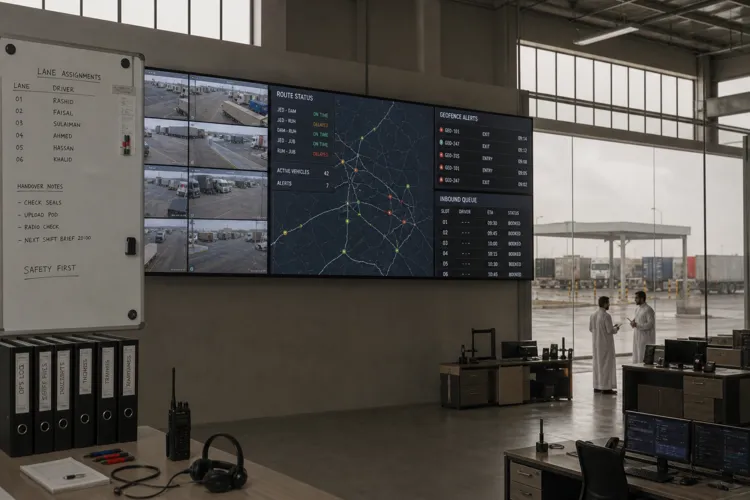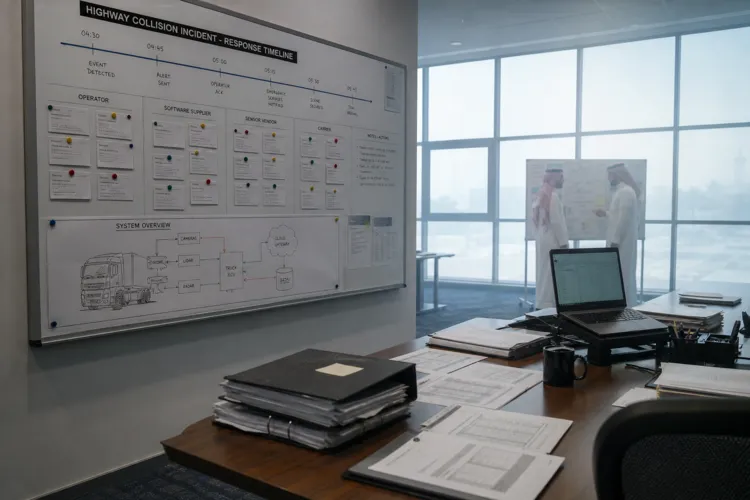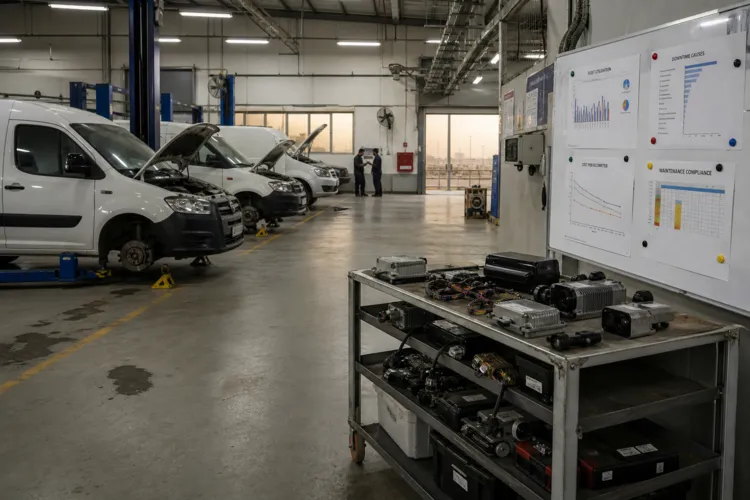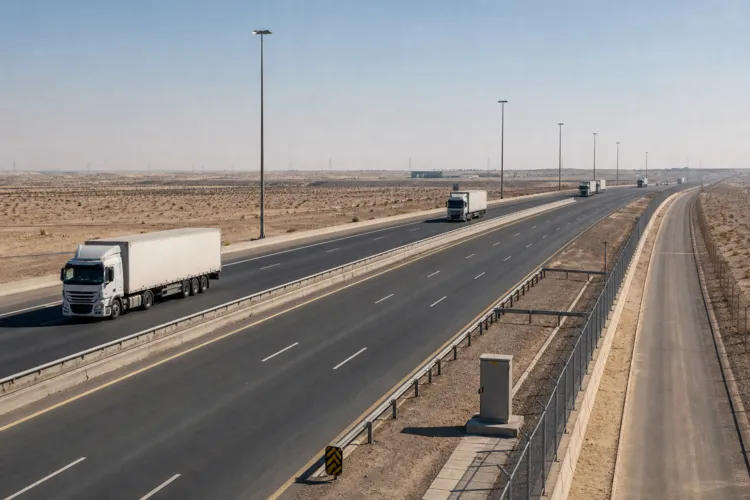
Saudi trucking is moving quickly toward connected operations. Operators are dealing with fuel-cost pressure, rising compliance expectations, and congestion on the Riyadh–Dammam–Jeddah triangle. In this context, telematics becomes both a compliance tool and an operating lever. Saudi Arabia’s fleet management market reached USD 281.8 million in 2025, and IMARC Group expects it to reach USD 601.3 million by 2034, with a CAGR of 8.79% during 2026–2034. Demand is tied to real-time tracking, route optimization, predictive maintenance, and driver-safety management across logistics and industrial fleets.
Compliance is also becoming more data-driven. Mordor Intelligence states that mandatory telematics on commercial vehicles from January 2025 creates data flows that allow predictive maintenance and drive-time compliance monitoring, lifting overall fleet reliability in the Saudi Arabia road freight transport market. For teams managing Saudi trucking fleet telematics compliance with the TGA, that compliance task should not stop at seeing vehicles on a map. Safee emphasizes that operators needing Wasl connectivity should monitor whether vehicle data actually reaches the Transport General Authority (TGA) platform, which changes daily workflows from passive tracking to active data assurance.
How to Align TGA Tracking Expectations With Real Cost Savings
Once tracking data is consistent, it becomes usable across dispatch, maintenance, and finance. Safee describes how connected records help teams move away from scattered spreadsheets by enabling shared operational records, configured alerts for events such as speeding or unexpected stops, automated reporting, and integrations with ERP systems and regulatory platforms such as Wasl when configured. This operational structure matters as compliance management increases complexity. NextBillion.ai notes that intelligent route planning can reduce unnecessary mileage, fuel consumption, and vehicle wear and tear, and that integrated tracking and telematics support visibility, driver behavior monitoring, route optimization, and regulatory compliance requirements in Saudi Arabia.
Fuel savings should be pursued with the same discipline as compliance. Fleetoo cites fleet management benchmarks stating that tracking systems cut maintenance costs by 15–20%. Fleetoo also offers an illustrative assumption: a Saudi fleet of 20 trucks spending SAR 80,000 per month on fuel could save SAR 12,000–20,000 per month from fuel reduction alone. These claims are presented as benchmarks and examples, but they show how telematics can link routing decisions and maintenance planning to measurable cost outcomes. The same Fleetoo source adds that, globally, businesses implementing GPS fleet tracking save an average of $3,000 to $6,000 per vehicle per year through reduced fuel costs, lower insurance premiums, and more efficient dispatching.
Finally, fleet leaders should treat compliance readiness as part of modernization, not an isolated project. Saudi Arabia has committed SAR 1.5 billion to smart transportation initiatives, and the National Industrial Development and Logistics Program (NIDLP) is described as channeling over USD 36 billion into modernizing ports, rail, and 59 integrated logistics zones. Mordor Intelligence also notes NIDLP incentives such as rebates, duty exemptions, and subsidized financing that spur purchases of fuel-efficient tractors and telematics. When you combine these tailwinds with connected-fleet basics—device reliability, integrations, and ongoing monitoring of data delivery to TGA via Wasl—you build a program that supports compliance while continuously reducing waste in fuel, miles, and downtime.
How does Saudi trucking fleet telematics compliance with the TGA work in practice?
When do mandatory telematics requirements start for commercial vehicles in Saudi Arabia?
What cost improvements can telematics support besides compliance reporting?
What is an example of fuel savings from tracking for a Saudi fleet?