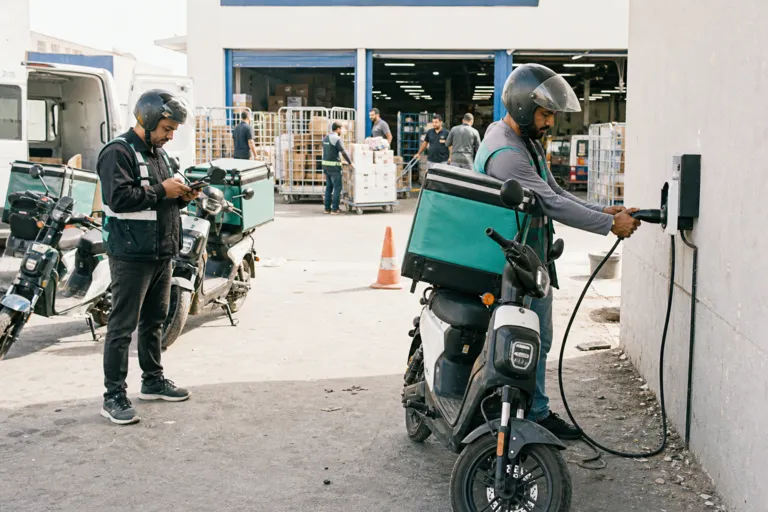
Saudi Arabia’s last-mile logistics is under pressure to move faster in dense cities while keeping operations efficient. Consultants at Nexdigm note that Vision 2030 has put transport and logistics on the national agenda, with investment into highways, warehousing clusters, customs digitization, and freight corridors. They recommend that businesses prioritize hyperlocal fulfillment models, fleet electrification, data-led route optimization, and strategic partnerships with retailers to capture long-term growth. In parallel, two-wheelers are becoming more relevant as urban delivery tools. A separate market view highlights Riyadh’s congestion challenge, citing that residents lose 52 hours annually in traffic and that congestion reached 23 percent, conditions that favor smaller vehicles that can maneuver through gridlock.
For decision-makers evaluating Saudi delivery fleet e-motorcycles, the broader two-wheeler and delivery demand signals matter. IMARC Group data cited in a two-wheeler market overview values the Saudi Arabia two-wheeler market at USD 1.4 billion in 2025 and projects it to reach USD 2.3 billion by 2034, with a CAGR of 5.94% from 2026–2034. The same source points to last-mile logistics demand as a driver, alongside food delivery platforms and mobility initiatives under Vision 2030. It also frames e-commerce as a catalyst, stating the Saudi Arabia e-commerce market is set to reach USD 708.7 billion by 2033, which increases delivery volumes and reinforces the need for fleets that can reliably operate across urban and suburban routes.
What Makes the Business Case Work in Practice
Electrification is already showing up in regional and global logistics moves, offering practical reference points. In March 2024, Aramex launched a range of fully electric motorcycles for last-mile deliveries in the UAE, positioning it within a broader aim of reaching a 98% electric vehicles fleet by 2030. The same industry report states that electric bikes are designed to travel in urban environments efficiently by minimizing emissions and running costs. The report also notes that Saudi Arabia’s last-mile delivery vehicle market is experiencing growth tied to government efforts to promote smart logistics, investments in e-commerce infrastructure, uptake of electric and hybrid delivery fleets, and increased urban micro-fulfillment centers in major cities to deliver goods quicker. These points support why two-wheeler electrification can fit the realities of dense delivery zones.
Operators also need to plan electrification as part of a mixed-fleet pathway, not a single-vehicle decision. IndexBox projects the Saudi Arabia electric light commercial vehicle (eLCV) market to grow from approximately 1,200–1,800 units in 2026 to 18,000–25,000 units annually by 2035, implying a CAGR of 30–35%. It estimates that last-mile delivery and parcel logistics account for 55–65% of total eLCV demand in 2026, with panel vans and light chassis cabs dominant in Riyadh, Jeddah, and Dammam. For fleet managers, this matters because e-motorcycles can complement electrified vans by handling high-frequency, small-basket routes in congested areas while vans cover larger payloads and scheduled drops. This “right vehicle for the right route” framing aligns with Nexdigm’s emphasis on hyperlocal models and data-led optimization.
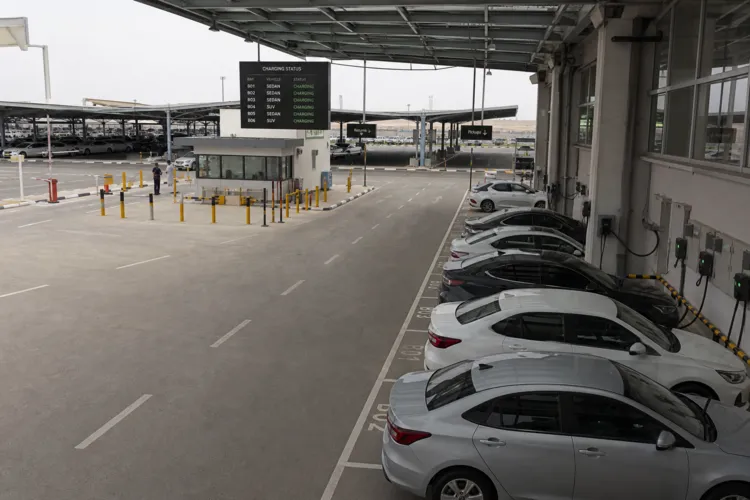
The constraint side of the business case in Saudi Arabia is also clear in the available data and must be addressed early. IndexBox reports fewer than 600 publicly accessible DC fast-charging points suitable for eLCVs across the Kingdom in early 2026, limiting adoption for certain operating patterns. It also states that high ambient temperatures exceeding 50°C in summer months can degrade battery cycle life by an estimated 15–25% compared to temperate markets, requiring advanced thermal management systems that add 8–12% to vehicle purchase costs. Financing can be another hurdle, with eLCV upfront lease rates reported at a 20–30% premium over diesel equivalents due to residual value uncertainty. Separately, IndexBox estimates the Saudi Arabia electric commercial vehicle MRO market at approximately USD 45–65 million in 2026, with an installed base of 3,500–5,000 electric commercial vehicles, underscoring that the service ecosystem is forming but still early-stage.
Why are e-motorcycles becoming relevant for Saudi Arabia’s last-mile delivery?
What market signals support investment in electric two-wheelers and delivery fleets in Saudi Arabia?
What regional example shows electric motorcycles being used for last-mile deliveries?
What operational constraints could slow electrification for delivery operators in Saudi Arabia?
How big is Saudi Arabia’s electric commercial vehicle maintenance market today?