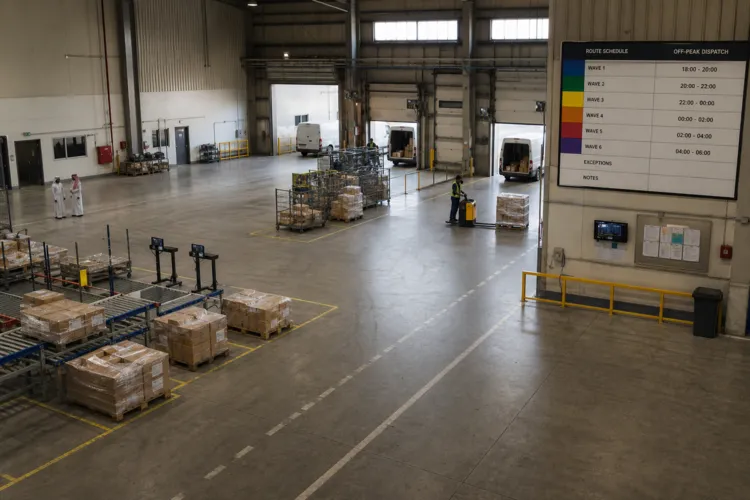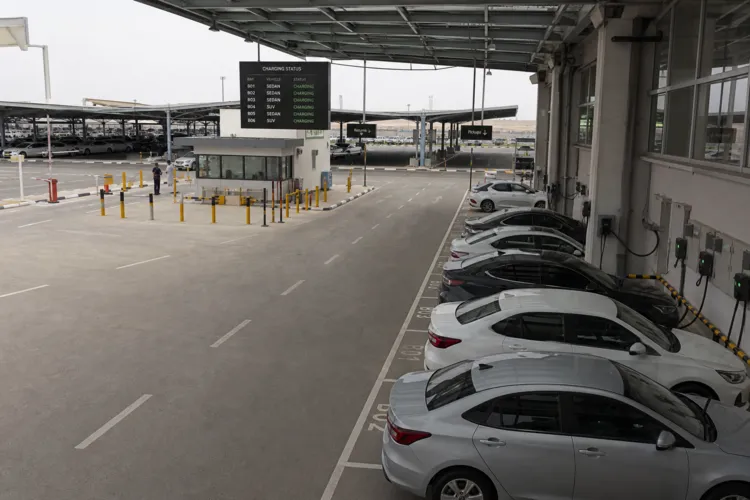

Saudi Arabia is moving from isolated drone flights to repeatable routes that look and behave like corridors. That shift is being pulled by expanding demand across logistics, agriculture, infrastructure inspection, and public safety, alongside continued government and defense emphasis on surveillance UAVs. Multiple sources also point to higher investment interest in BVLOS operations and automated coordination, because those capabilities help scale activity safely instead of treating each mission as a one-off. In this context, the idea behind a Saudi drone corridor U-space traffic management approach is not just a technical upgrade. It is an operating model for shared airspace, where digital permissions, flight planning, and continuous coordination become routine.
The economic signals behind corridor-scale operations are already visible in market estimates, but they differ by source and scope. Mobility Foresights projects the Saudi Arabia air drones market to grow from USD 12.5 billion in 2025 to USD 28.3 billion by 2032, at a CAGR of 12.3% (2026–2032). Grand View Research estimates Saudi Arabia’s drone market revenue at USD 812.5 million in 2025, reaching USD 1,614.8 million by 2033, with an expected CAGR of 8.3% from 2026 to 2033, and notes Saudi Arabia accounted for 1.0% of the global drone market in 2025. These differing figures do not change the operational reality: higher volumes and more varied missions increase the need for reliable routing, deconfliction, and scalable UTM services.
U-Space As a Reference Point, and What “Scale” Really Means
U-space is a useful reference because it formalizes the conditions for drones and manned aircraft to operate safely in a defined portion of airspace. Precedence Research notes that, in April 2021, the European Commission adopted the U-space package—three regulations that together create those conditions. Saudi Arabia is shaping its own approach under the General Authority of Civil Aviation (GACA), and several sources describe a complex landscape. Ken Research states that, as of future, there are over 200 specific regulations governing UAV operations, and that complexity can hinder rapid deployment. At the same time, Vocal Media reports that GACA released dedicated commercial drone delivery regulations in mid-2025, and that formal approval of drone delivery operations—including Matternet’s M2 in January 2025—signals intent to accelerate logistics use cases.
Scaling a corridor network also depends on UTM capabilities that keep pace with growth. Globally, Precedence Research values the unmanned traffic management market at USD 2.11 billion in 2025 and predicts it could reach around USD 13.06 billion by 2035, at a CAGR of 20.80%. It also says the Middle East & Africa held a notable share, driven by rising drone sales in countries including Saudi Arabia and the UAE. On the local market side, Ken Research values the Saudi Arabia unmanned traffic management market at USD 694 million based on a five-year historical analysis, and lists a mix of regional and international participants, including GACA and Saudi Arabian Airlines, alongside UTM and drone-tech firms such as Unifly and Altitude Angel. These signals point toward a software-led layer that can be scaled and configured for different operational sizes and complexity.
The hardest part of “traffic management at scale” is not only tools, but adoption and readiness. Ken Research highlights a constraint: public awareness remains low, with only 30% of the population familiar with drone applications. Meanwhile, sector-specific demand keeps rising. A construction-focused report notes a projected increase in drone utilization expected to reach 15,000 units in future, and adds that AI and machine learning integration could lead to a 15% reduction in project costs. That same report also flags stringent licensing requirements under GACA as a hurdle. Taken together, these points suggest Saudi Arabia’s corridor buildout will need to combine clear operating rules, strong operator compliance, and UTM services that can support both dense urban logistics and high-value industrial missions.
Why is Saudi Arabia pushing toward drone corridors now?
What signals show UTM is becoming a serious market in Saudi Arabia?
How does U-space relate to Saudi Arabia’s corridor planning?
What are the biggest blockers to scaling Saudi drone corridor U-space traffic management?
Which numbers show commercial pull from construction and logistics?