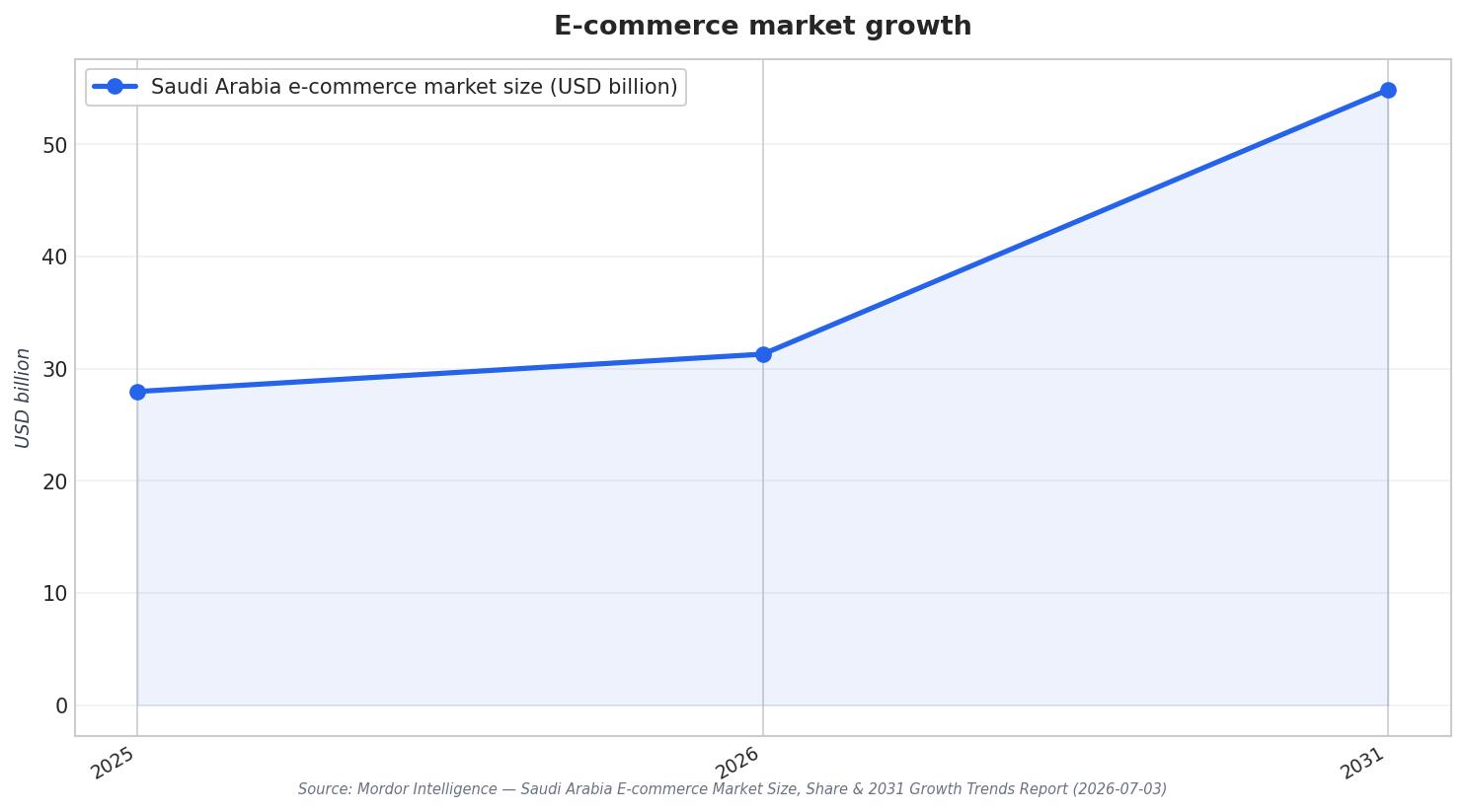
Saudi Arabia’s e-commerce market is expanding quickly, and logistics capacity is racing to keep up. Mordor Intelligence estimates the Saudi Arabia e-commerce market at USD 31.29 billion in 2026, up from USD 27.96 billion in 2025, with projections reaching USD 54.87 billion by 2031 at an 11.92% CAGR (2026–2031). This momentum is supported by a highly connected shopper base, with 99% internet penetration and 78% 5G coverage cited as key enablers. Smartphones also dominate the shopping journey, delivering 77.98% of B2C e-commerce revenue in 2025. As buyers click and expect fast delivery, operators focus on fulfillment zones that can receive imports, process orders, and dispatch parcels with fewer delays.
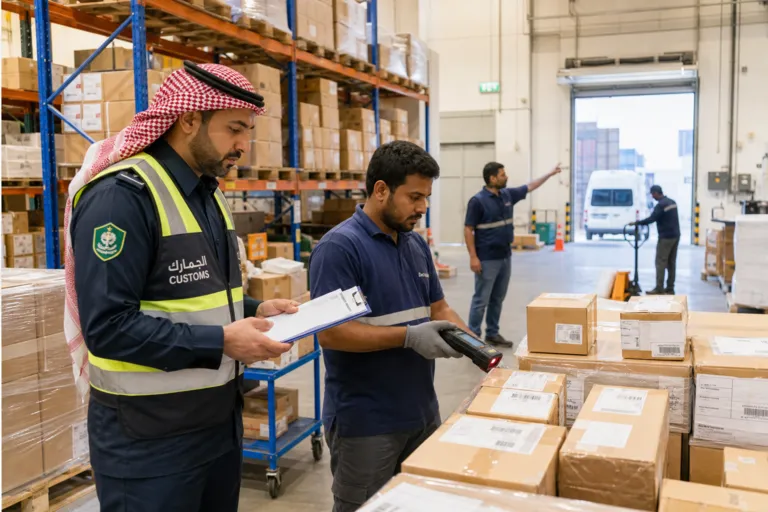
Bonded warehouses matter in this environment because they are built for cross-border flows and tighter service-level expectations. In warehousing and storage, the e-commerce and retail segment held a 32.10% share of the Saudi Arabia market in 2024 and is advancing at a 6.17% CAGR through 2030, according to Mordor Intelligence. The same report links rising cross-border demand with expanding smart-gate clearance, which helps compress delivery lead times and pushes benchmarks higher. Nexdigm also notes that expanding logistics parks, bonded warehouses, and temperature-controlled storage is strengthening supply chain capacity across the Kingdom, and it highlights Riyadh, Jeddah, and Dammam as prominent warehousing hubs due to industrial concentration, large consumer markets, and proximity to major ports and airports.
How Fulfillment Zones Link Customs, Storage, and Faster Dispatch
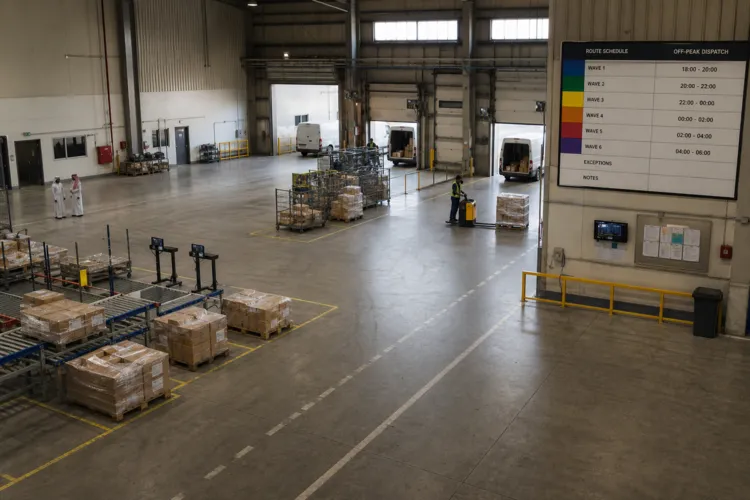
Saudi fulfillment zones are being shaped by infrastructure programs and the push for integrated, end-to-end logistics. In freight and logistics, Mordor Intelligence values the Saudi market at USD 27.14 billion in 2025 and estimates growth from USD 28.68 billion in 2026 to USD 37.82 billion by 2031 at a 5.69% CAGR. That same analysis points to bonded-zone e-commerce hubs as a factor that accelerates cross-border fulfillment efficiency, while international CEP traffic is on track for a 6.69% CAGR between 2026 and 2031. Contract logistics is also expanding, valued at USD 1.23 billion in 2025 and estimated at USD 1.27 billion in 2026, reaching USD 1.51 billion by 2031. Retail and e-commerce represented 26.60% of the contract logistics market in 2025, showing why providers prioritize bonded storage, cross-docks, and value-added steps that keep inventory closer to demand.
On-the-ground investments show how platforms and logistics providers translate demand into capacity. GMI Research reports that in 2022 Noon.com opened a 45,000 m2 customer fulfilment center in Riyadh to deliver products speedily across Saudi Arabia, and that in 2023 Saudi Amazon doubled its storage volume by establishing a new fulfilment center with a storage facility of 2.7 million cubic feet to support more entrepreneurs and sellers. These builds align with the idea of Saudi bonded warehouse e-commerce fulfillment: put inventory in strategic hubs, use modern facilities to process orders at scale, and reduce friction from cross-border handling. The warehousing market context is also expanding, with Mordor Intelligence projecting the Saudi Arabia warehousing and storage market to reach USD 3.88 billion in 2025 and grow to USD 5.20 billion by 2030 at a 6.04% CAGR.
Bonded warehouses are not only about speed. They also support category growth that needs reliable handling and storage options. In B2C e-commerce, consumer electronics held 27.06% of Saudi Arabia’s e-commerce market size in 2025, while grocery and food and beverages are rising at a 13.72% CAGR toward 2031, according to Mordor Intelligence. In logistics, warehousing capacity is still dominated by non-temperature-controlled space at 77.25% share in 2025, but temperature-controlled capacity is forecast to climb at a 6.48% CAGR between 2026 and 2031. As fulfillment zones add bonded and cold-chain capabilities, they give cross-border sellers and local marketplaces more ways to stage inventory, package orders, and meet shopper expectations shaped by mobile-first, always-connected buying behavior.
Why are bonded warehouses important for cross-border online orders in Saudi Arabia?
Which cities are the main warehousing hubs for e-commerce fulfillment in Saudi Arabia?
What recent fulfillment center investments show demand for Saudi bonded warehouse e-commerce fulfillment?
How fast is international parcel traffic expected to grow in Saudi Arabia?
How large is Saudi Arabia’s warehousing and storage market expected to be by 2030?