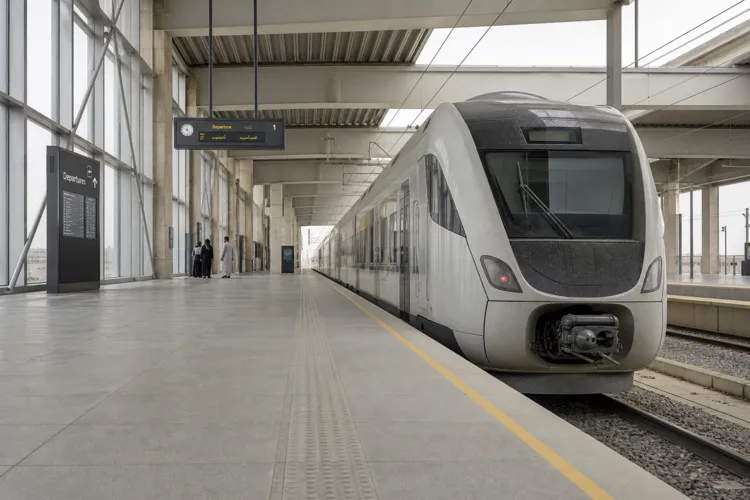
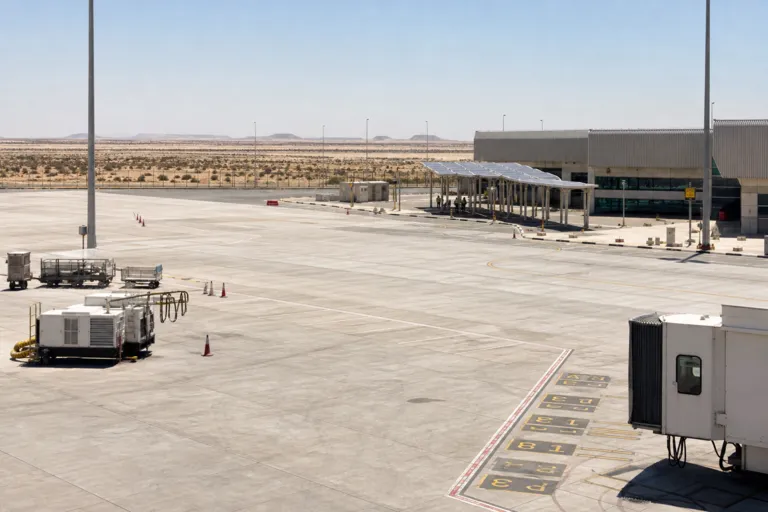
Red Sea International Airport (RSIA) is moving from launch into a more mature operating phase as Saudi Arabia expands aviation infrastructure along its western coastline. Multiple sources frame RSIA as the purpose-built gateway to The Red Sea destination, designed to shorten the journey to remote islands, beaches, and high-end resorts while supporting Saudi Arabia’s Vision 2030 diversification strategy. Long-term planning repeatedly points to a 2030 goal: reaching 1 million annual passengers while balancing domestic and international traveler volumes. That passenger target matters because it turns RSIA from a “nice-to-have” amenity into an operating asset that underpins hotel occupancy, airline network planning, and destination-wide investment decisions.
The demand story is tied to the scale and positioning of The Red Sea Project itself. The destination is described as spanning over 28,000 square kilometres in Saudi Arabia’s Tabuk region and being built as a luxury tourism development designed around sustainability, innovation, and regenerative tourism. It is also described as ultimately including 50 hotels, a marina, an international airport, and comprehensive tourism infrastructure, with a commitment to net-zero carbon and preservation of 75 percent of its natural environment, alongside a no single-use plastic commitment. In practical terms, RSIA’s value proposition is not just “airport access,” but access that aligns with a destination brand built around sustainability and environmental stewardship.
Why RSIA’s Capacity Roadmap Strengthens the Business Case
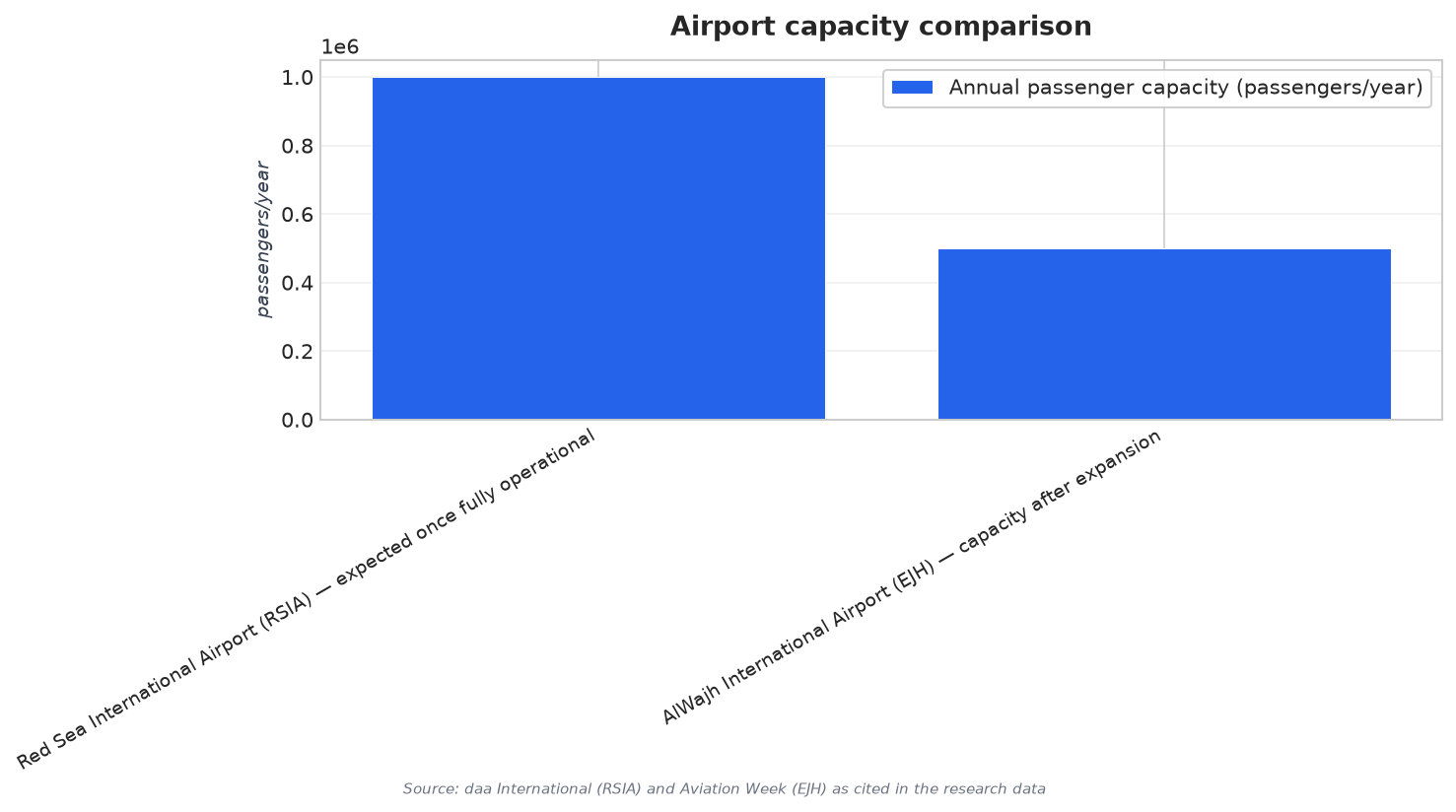
RSIA’s business case becomes clearer when its phased capacity plan is made explicit. In its first phase, RSIA is operational and described as designed for an eventual three million passenger annual capacity, positioning it as the infrastructure backbone of the northern Red Sea tourism development. Separately, RSIA is also described as expected to serve up to one million passengers annually once fully operational, and long-term plans target one million annual passengers by 2030. Read together, these figures show a deliberate ramp: an initial operational runway, a defined 2030 throughput target, and a larger design envelope intended to keep pace with destination build-out as more properties open.
Sustainability positioning is part of the airport’s differentiation strategy, not an add-on. One report notes RSIA is targeting LEED Platinum certification, with Saudi Arabia positioning it as a benchmark for sustainable aviation development within the Middle East tourism sector. This is where the topic of Red Sea International Airport eco tourism aviation becomes tangible: the airport is framed as an environmentally conscious gateway to a destination with legally binding commitments on net-zero carbon and environmental preservation. For airlines and tourism operators, that consistency between airport narrative and destination narrative supports premium pricing and brand credibility.
RSIA also sits inside a broader multi-gateway approach for the Red Sea tourism region. Aviation Week reports Red Sea Global completed a major expansion of AlWajh International Airport (EJH), creating a second aviation gateway. EJH can now handle up to 500,000 passengers annually, up from 100,000 previously, with a peak capacity of 330 arriving/departing passengers per hour across four gates. The same report highlights a key commercial reality: infrastructure alone does not create connectivity and must be supported by market demand, commercial viability, and long-term partnership. For RSIA, that is the core test of the 2030 passenger ambition: pairing capacity and sustainability credentials with durable airline connectivity.
What passenger volume is RSIA targeting, and by when?
What is RSIA’s longer-term design capacity?
How does sustainability factor into the Red Sea International Airport eco tourism aviation story?
Is there another airport supporting the Red Sea tourism developments?