The keyword “Saudi 2034 World Cup transport” is more than a search term. It is a real planning challenge. Saudi Arabia will host the 2034 FIFA World Cup after securing the role on December 11, 2024. Organizers expect exceptional visitor volumes. FIFA recorded over one million international visitors at the last World Cup in Qatar, and similar numbers are expected in Saudi Arabia.
A Roland Berger report highlights five pressure points. Scale comes first, because visitor numbers will spike fast. Timing is also critical. Saudi Arabia has only nine years to prepare, which is shorter than some previous host nations that had over a decade. Coordination across many transport bodies is another concern. The report also flags different needs across fans, players, officials, and journalists. Sustainability is the final challenge, because the Hosting Higher Authority says it wants to minimize environmental impact.
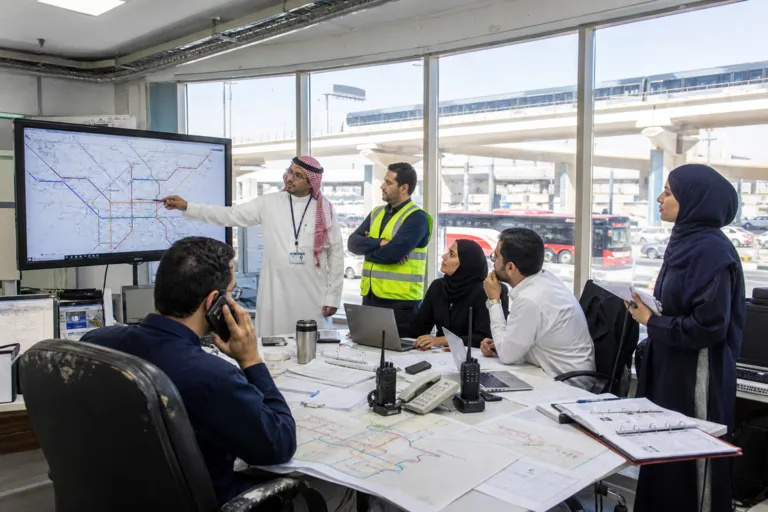
Delivery will depend on tight links across agencies. The report lists groups that must work together, including the Ministry of Transport and Logistic Services, the General Authority of Civil Aviation, and Saudi Arabia Railways. It also points to the World Cup Host Cities Authority and regional bodies like the Royal Commission for Riyadh City and the Aseer Development Authority. Developers such as NEOM and Qiddiya Investment Company are also part of the system. This matters because logistics must work across 15 stadiums in five host cities.
From Airports to Last Mile: Building One Connected Network
Saudi Arabia is using the tournament to modernize transportation and logistics infrastructure as part of Vision 2030. Plans described include airport expansions, new metro lines, shuttle services, and rail links, set to be completed within the next nine years. The focus is not only passenger flow. The same upgrades are framed as a way to strengthen freight movement too, with expanded airports adding cargo capacity and metro expansions supporting urban freight deliveries.
Several locations are positioned as long-term hubs, including Riyadh and Jeddah, plus emerging regions like NEOM and Abha. The approach centers on integration across air, rail, and metro systems to create seamless mobility. It also includes metro extensions such as the Riyadh Metro expansion to Qiddiya and a push toward high-speed rail projects. The aim is to reduce reliance on road transport, lowering costs and emissions while improving efficiency.
Last-mile access is treated as a core part of the experience. Plans include park-and-ride systems, disaster and crowd management solutions around large events, and advanced traffic and security management systems. These elements are designed to help visitors move safely and predictably between airports, stations, city centers, and stadium areas. The Middle East Insider also calls transport the most valuable legacy, pointing to metro extensions, high-speed rail connections, airport expansions, and highway upgrades that can serve the economy for decades.
What does “Saudi 2034 World Cup transport” mainly involve?
How many years does Saudi Arabia have to prepare transport for 2034?
How many stadiums and host cities must the transport system serve?
Why is coordination seen as a major risk?
What is the sustainability goal mentioned for the tournament?