Saudi Arabia is pursuing advanced air mobility as part of a broader national development strategy. For eVTOL air taxis to work at scale, the country needs more than aircraft. It needs Saudi Arabia eVTOL infrastructure, especially vertiports that fit into cities, airports, and tourism zones.
The General Authority of Civil Aviation (GACA) is coordinating key steps. Aviation authorities have outlined regulatory requirements, infrastructure needs, and operational frameworks for aerial mobility systems expected to emerge over the coming decade. GACA has also issued guidance for vertiport design and regulatory oversight.
Partnerships are moving in parallel with regulation. The Saudi airline group signed agreements to acquire up to 100 electric aircraft from Lilium. Joby and GACA announced plans for the deployment of electric air taxi services in the Kingdom. Joby also references an agreement with Abdul Latif Jameel to explore delivery of up to 200 aircraft, plus collaboration with Aloula Aviation, the aviation subsidiary of Saudi Aramco.
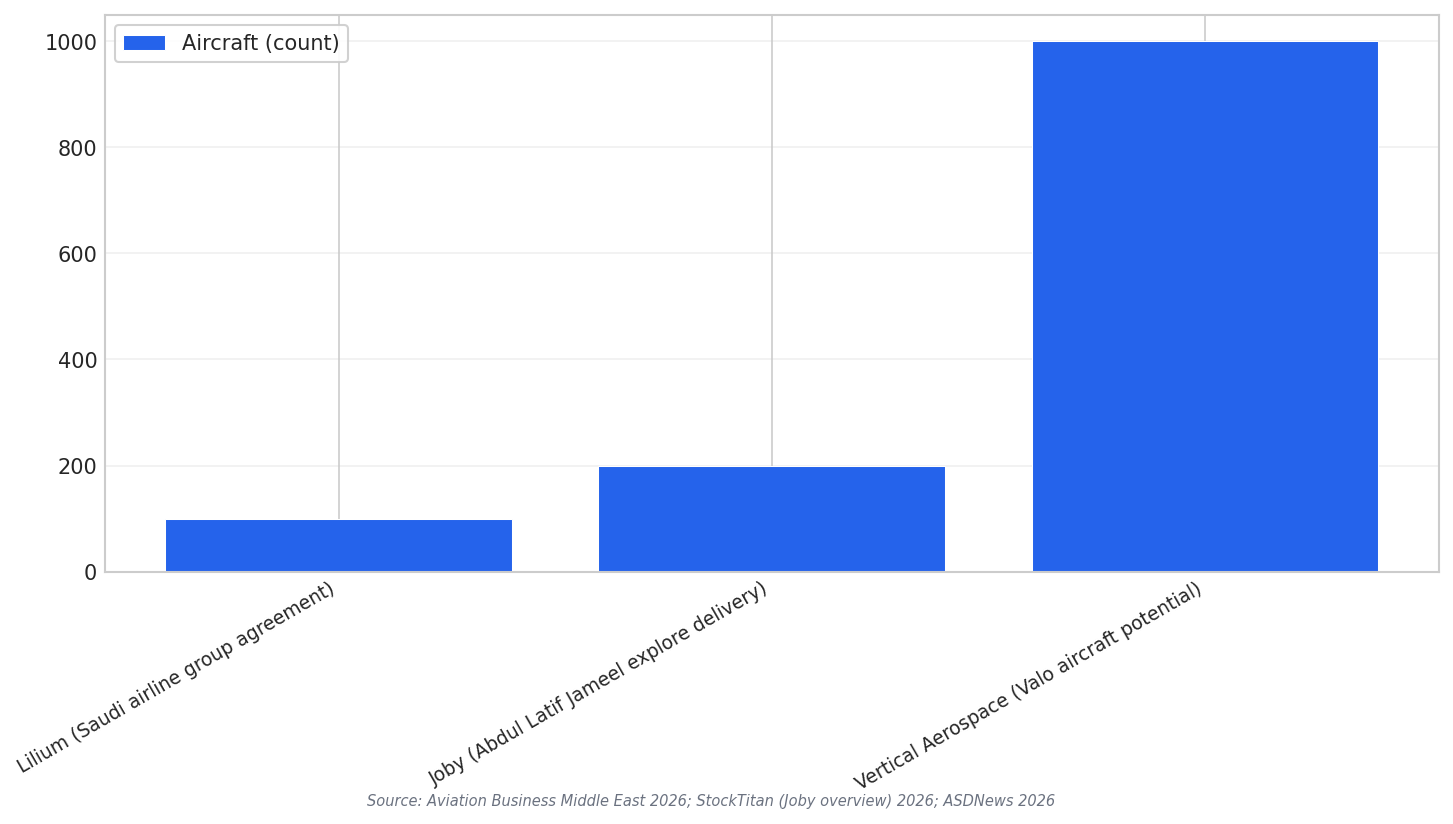
These figures signal why vertiports matter. Planning documents say large-scale operations will require significant investment in vertiports, energy supply networks, and airspace management systems. In simple terms, a working air-taxi network needs places to land, power to charge, and rules to manage traffic.
What A Saudi Vertiport Must Do
Saudi authorities describe vertiports as dedicated facilities designed to handle the takeoff, landing, and maintenance of eVTOL aircraft. Regulation must also address the design and certification of vertiport infrastructure. Landing sites must meet aviation safety standards while integrating with urban transport systems and energy supply networks.
Location planning is also clear in the roadmap-driven approach. Vertiports are intended to be strategically located near major airports, tourist destinations, and urban hubs to support smooth operations. Early services are expected to target high-end tourism destinations, including luxury resorts along the Red Sea, with a longer-term vision that expands eVTOL use toward broader public transportation purposes.
More deals point to a wider ecosystem beyond passenger trips. A Joby partnership is described as including pilot training programs and the development of maintenance, repair, and overhaul services. Separately, a Vertical Aerospace MoU in Riyadh sets out evaluations covering manufacturing localization, commercial eVTOL operations, and potential investment and incentive opportunities, aligning with Vision 2030 and industrial goals.
What does “Saudi Arabia eVTOL infrastructure” include besides vertiports?
Where are vertiports expected to be placed in Saudi Arabia?
Which organizations are shaping the rules for eVTOL and vertiports?
Which eVTOL aircraft and partnerships are mentioned for Saudi deployments?