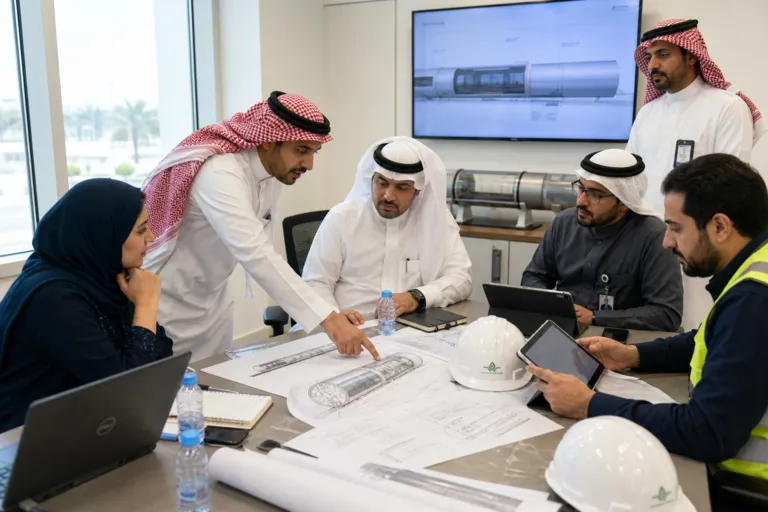
The Saudi hyperloop project is often described as the Kingdom’s chance to lead in a new form of ultra-fast travel. Hyperloop itself is still a proposed transportation system for passengers and freight. It is built around three core parts: tubes, pods, and terminals. The goal is simple: move a pod through a sealed, low-pressure tube so air resistance stays low and travel can be much faster.
Globally, the idea became widely known after Elon Musk published a white paper on 22 August 2013. It described capsules supported by an air-bearing surface inside a low-pressure tube. Development has included public tests and records. A Technical University of Munich team reached 463 km/h in July 2019. Virgin Hyperloop conducted a first human trial in November 2020, with a top speed of 172 km/h.
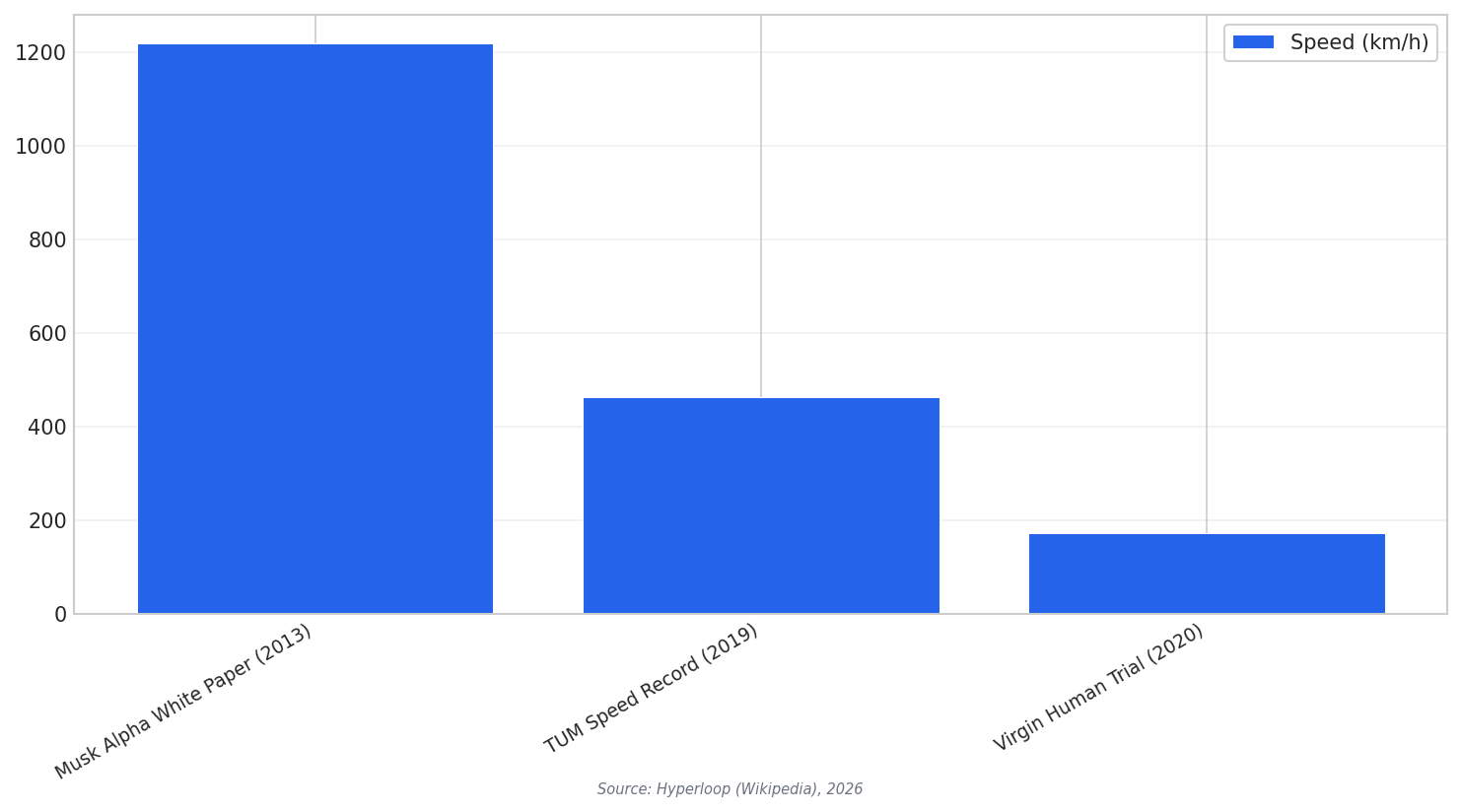
These three speed figures help show the gap between concept, testing, and human trials. They also show why many people still debate readiness. Some analysts challenged the early cost estimates in Musk’s white paper, arguing a system could run several billion dollars higher. Even so, companies and governments kept exploring routes, rules, and study programs.
In Saudi Arabia, the most concrete public step cited in the sources is a link to Virgin Hyperloop One. Hyperloop One’s history notes that in February 2020 the firm signed a partnership agreement with Saudi Arabia to conduct a pre-feasibility study. Planning Times also says the Kingdom was in advanced talks with Virgin Hyperloop One and proposed building a manufacturing plant and a 35-kilometer test track north of Jeddah.
From Vision-Led Hype to Infrastructure-Led Proof
Planning Times frames this as a proposed USD 10 billion project that was declared an official public infrastructure project in 2019. The same source connects the push to travel demand, saying passenger journeys were expected to reach 130 million by 2026. It also contrasts current road travel time of about three and a half hours with a Hyperloop time of 35 minutes for the same city pair, highlighting the promise of time savings if a system is built.
Still, the wider hyperloop industry has seen setbacks. Hyperloop One declared bankruptcy and ceased operations on 31 December 2023, while other companies continued development. In parallel, market researchers at KenResearch valued the KSA Hyperloop Technology Market at USD 2 Mn in 2023, linking momentum to the Vision 2030 push to diversify the economy. A separate Medium article in May 2026 argues that Hyperloop is starting to look like infrastructure, not just a flashy idea, but that shift depends on tangible projects, not only announcements.
What is the Saudi hyperloop project in the sources?
How fast has Hyperloop technology gone in real tests?
How much is the proposed project said to cost?
What does KenResearch say about the KSA Hyperloop Technology Market size?
Did Hyperloop One continue operating after 2023?