The Line is a planned linear settlement under construction in NEOM, in Saudi Arabia’s Tabuk Province. It is described as a smart city with no cars, no streets, and no carbon emissions. The goal is to change daily movement by making most trips on foot and moving longer distances by rail instead of private vehicles.
The current plan says The Line would be 170 kilometers long, about 500 meters high, and 200 meters wide. It was planned to accommodate up to 9 million residents. The project also promises that basic services will be within a five-minute walking distance, so many daily trips can be short and simple.
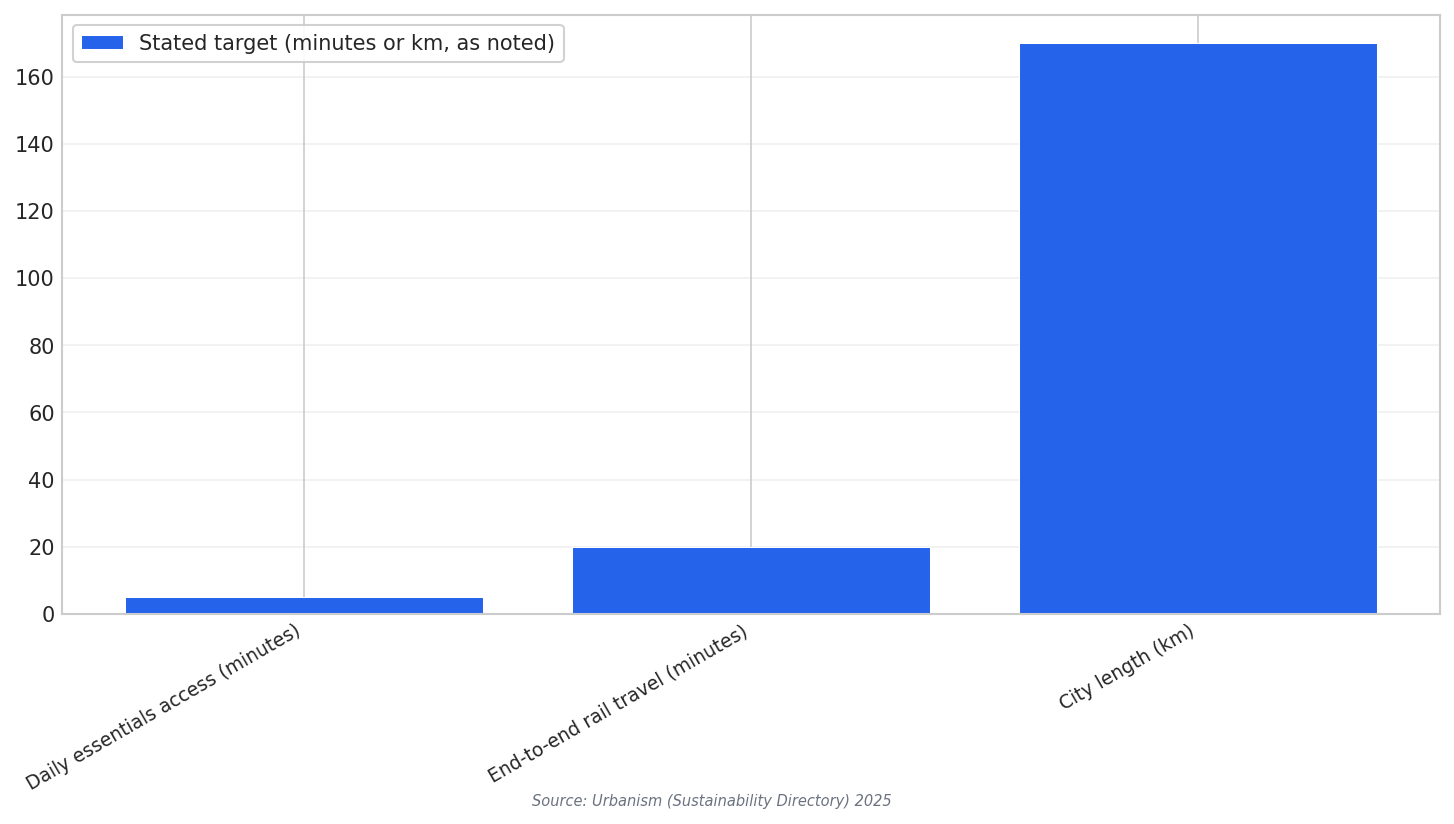
Key transport-related targets are repeatedly stated in public descriptions: daily essentials within a five-minute walk, end-to-end travel in 20 minutes by high-speed rail, and a car-free city structure stretching 170 kilometers. These three numbers show the basic logic behind the mobility model: walk for local needs and use rail for cross-city travel.
This approach depends on extreme compactness. Wikipedia describes a projected average population density of 260,000 per square kilometer and links it to the target of keeping services close. In simple terms, high density and mixed services reduce the need for long trips, because homes, work, and essentials are placed near each other.
What Makes The Line’s Transit Model Different
The Line transport system NEOM is built around removing the usual reasons people drive. If there are no streets for cars and essentials are within a five-minute walk, then daily movement changes by design. For longer trips, the city’s promise is high-speed rail that crosses the full 170 kilometers in 20 minutes, which is meant to replace car commutes.
The project has also faced major questions about delivery. Wikipedia reports that by 2024, after $50 billion had been spent, it was facing large cost increases and many long delays. It also reports shifting targets, including an aim to complete a 5 km segment by 2030, and that in 2024 some reports said the first phase would only be 2.4 km long, which Saudi officials denied.
There are also broader criticisms linked to development impacts. Wikipedia states that thousands of people have been forcibly moved and villages have been razed to make way for the project, and Britannica notes criticism from human rights groups, including forcible and violent eviction of the Howeitat tribe from land slated for development. By the end of 2025, Wikipedia says the project appeared to be suspended and that no construction work was taking place.
What is The Line transport system NEOM designed to replace?
How fast is the planned end-to-end travel across The Line?
How close are daily essentials supposed to be in The Line?
How big is The Line supposed to be, and how many residents was it designed for?
What issues have been reported about the project’s progress?