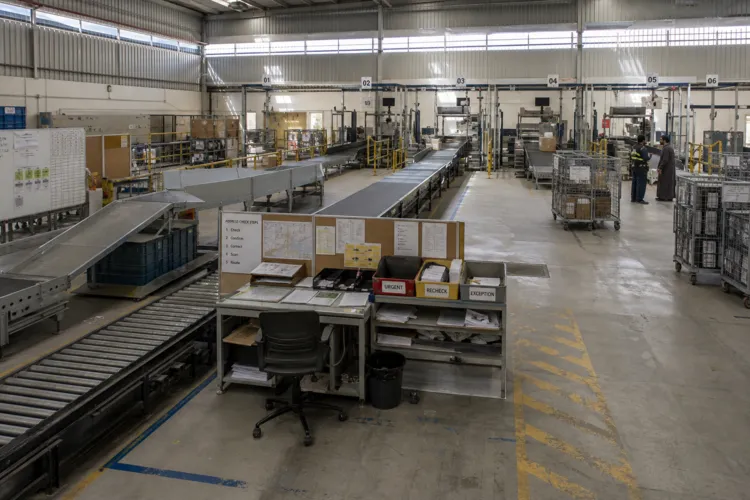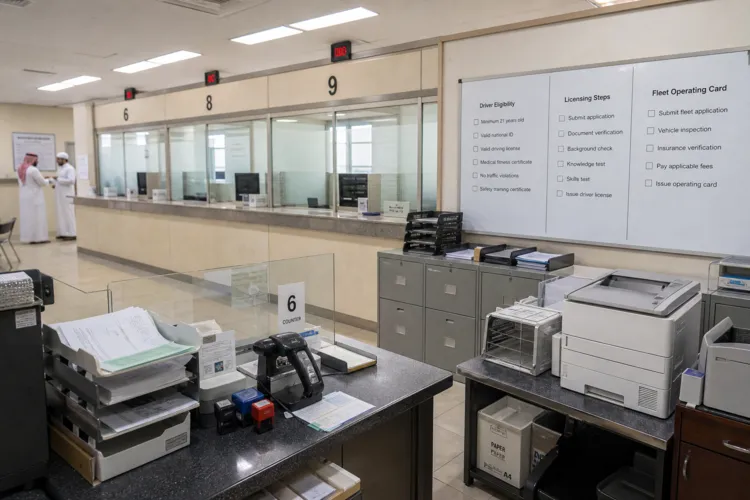
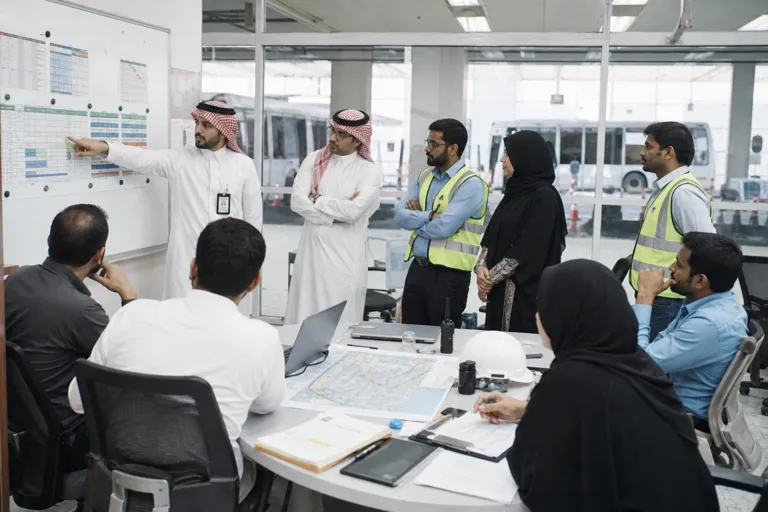
The Saudization mobility sector is moving fast. Saudi transport and mobility has a pipeline of projects valued at over $1.7 trillion. The sector has a workforce of over a million individuals. It accounts for around 7% of Saudi Arabia’s total workforce. As of 2023, the sector contributes about 7.2% to GDP. This scale makes workforce strategy a delivery risk, not just an HR task.
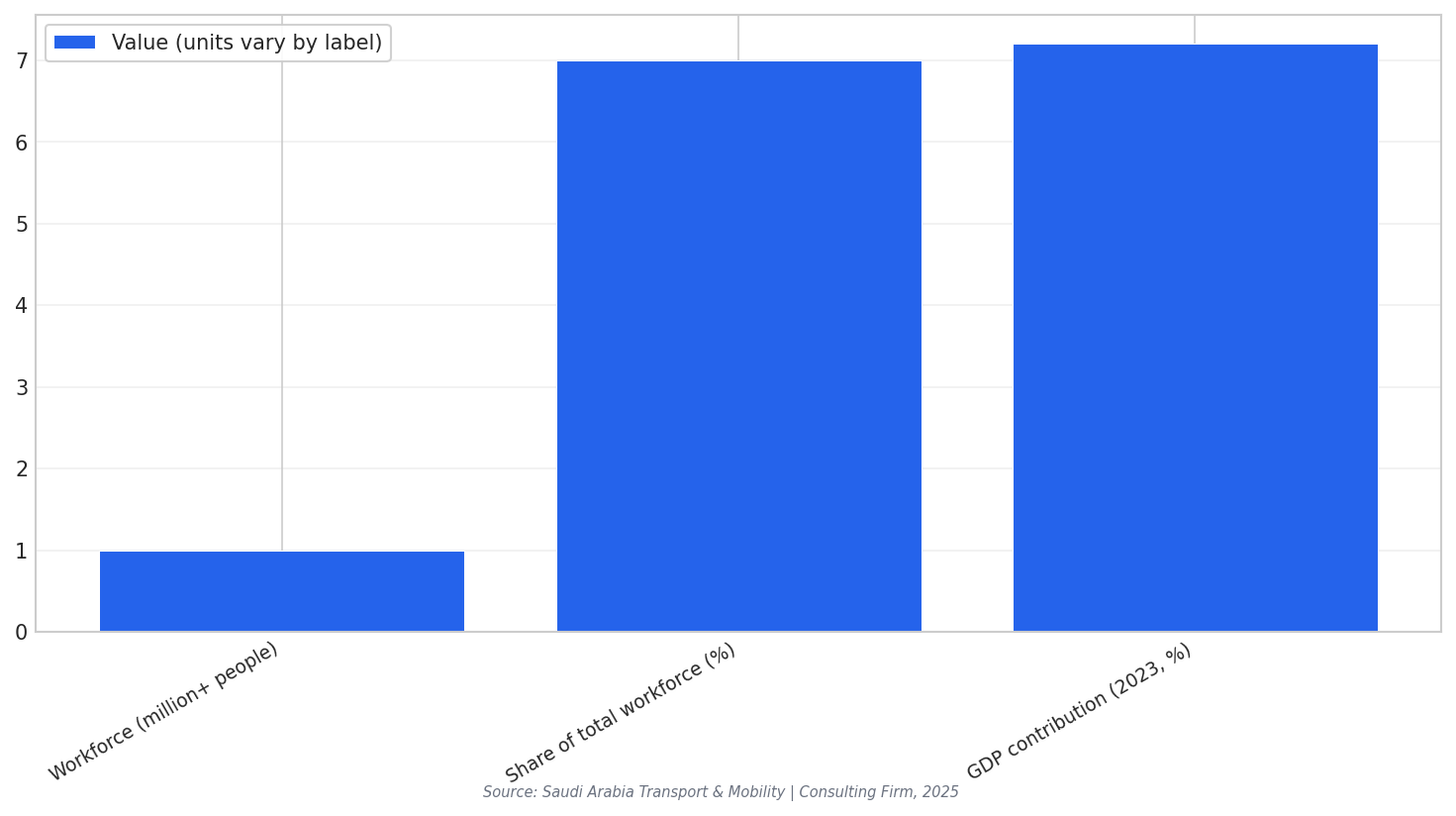
Key sector figures appear in one place: workforce is over a million people, the sector is around 7% of the total workforce, and it contributes about 7.2% of GDP in 2023. These numbers help explain why workforce localization and readiness matter for project timelines and operating performance.
Saudization is implemented through the Nitaqat program, and it is reinforced by sector-specific quotas and compliance obligations. Talent mobility services are becoming a practical tool in this environment. Arab News reports that mobility providers help companies navigate regulatory frameworks such as Saudization policies under Nitaqat, sector quotas, and Ministry of Human Resources and Social Development compliance obligations. They also help embed Saudi nationals into the private sector through strategic workforce planning aligned with national human capital priorities.
From Quotas to Work-ready Pipelines
The shift is not only about hiring. Sources stress planning, training, and retention. A compliance guide notes that sector-based Saudization requirements necessitate strategic workforce planning and prioritize the hiring and training of Saudi nationals. It also notes that, in retail, Saudization may be required to exceed 70% in specific job categories. The same source highlights tools like the Qiwa platform to monitor Saudization performance in real time and recommends regular internal auditing to maintain conformity.
Workforce strategy must match the project surge in established mobility areas. BCG points to a major strategic surge in infrastructure and mobility projects and gives examples such as Riyadh Metro, Riyadh Air, and King Khalid Airport. BCG also warns that failing to secure the right talent can create operational delays, increased recruitment costs, and failure to meet Saudization goals. Its recommended response includes a comprehensive human capital strategy, digital platforms to streamline onboarding and manage talent pipelines, and partnerships with education and training institutions.
Execution also runs through payroll, reporting, and frontline productivity. A payroll and workforce planning source advises companies to build talent pipelines for Saudi candidates, train HR and payroll teams on local regulations and reporting, and use workforce analytics to monitor progress toward nationalization goals. It also notes that governments offer incentives to companies that meet or exceed Saudization quotas. Finally, it highlights that mobile applications can help field teams reduce non-productive time, increase productivity, and reduce duplication and human errors in recording information.
What does the Saudization mobility sector focus on in practice?
Why is workforce strategy critical for Saudi transport and mobility now?
Which tools can help track Saudization compliance?
How can companies build sustainable local talent pipelines for mobility projects?