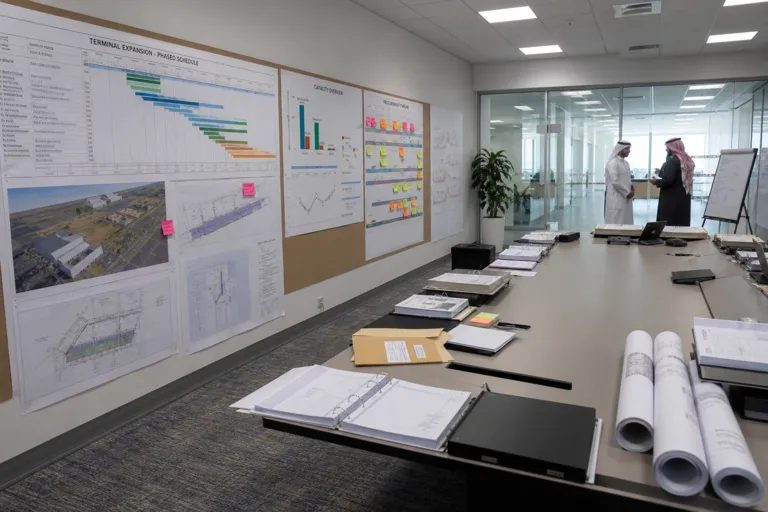
Saudi Arabia’s Abha Airport privatization concession has moved from a policy goal to an active contest. GACA President Abdulaziz bin Abdullah Al-Duailej said 100 companies have already submitted proposals and they are under review. Multiple reports also describe “more than 100” requests or applications from local and international firms to develop, implement, operate, and manage the airport. Al-Duailej said the winning consortium for Abha Airport is expected to be announced within about three months, as stated at the Supply Chains and Logistics Conference in Riyadh. The same public remarks connect Abha’s process to a broader rollout that will later include Taif, Qassim, and Hail airports.
The demand is not only about operating rights. It is also about scale and a defined growth target. GACA states the project aims to expand Abha Airport’s operational capacity from 1.5 million passengers to 13 million passengers, delivered in three phases. Several outlets repeat the same figures and structure, reinforcing that the capacity uplift is central to how the concession is being marketed. Al-Duailej also described the public-private split in practical terms: the government side focuses on governance, quality, and regulation, while the private sector drives financing, design, implementation, and operations. That division helps explain why so many bidders are positioning themselves as integrated consortia rather than single contractors.
What the Concession Timeline Signals About the Market
The timeline and procurement posture are also shaping bidder behavior. Zawya reports that in December 2024, the Saudi Civil Aviation Holding Company (Matarat) issued a Request for Proposal (RFP) to pre-qualified bidders for the privatisation, expansion, and improvement of the New Abha International Airport Project. In the same reporting, the expansion work is expected to be completed by 2028, according to Matarat. Together, these points indicate a process that is advanced enough to attract serious, structured offers, yet still competitive enough that outcomes are not predetermined. The “within three months” announcement expectation adds urgency for bidders to finalize financing, operations plans, and delivery schedules.
Saudi officials are framing Abha as part of a longer privatization pathway, not a one-off transaction. GACA says Saudi Arabia’s airport privatization journey began in 2016 with the privatization of Prince Mohammad bin Abdulaziz International Airport in Madinah, which Al-Duailej described as a pioneering global model. Saudi Gazette adds that design, construction, financing, and operation were entrusted to the private sector in that earlier experience, contributing to an increase in capacity to 8.5 million passengers. It also reports a subsequent agreement signed a year ago to increase capacity to 18 million passengers, extending the concession for an additional 30 years with the same investor. This precedent offers bidders a reference for how long-term airport concessions can evolve after award.
The competitive intensity around Abha is also happening alongside wider logistics ambitions that rely on airports as nodes. At the same Riyadh conference, Al-Duailej said Saudi airports’ logistics zones expanded storage capacity from roughly 1.8 million tons to about 3.3 million tons annually. He also stated a target to increase air cargo from under 1 million tons in 2019 to around 4 million tons by 2030. Separately, Deputy Minister of Transport and Logistics Rumaih Al-Rumaih said the National Transport and Logistics Strategy helped stimulate private sector investments exceeding SR200 billion across transport modes, including airports and logistics services. Read together, these figures explain why bidders see Abha as a strategic entry point into a pipeline of airport and logistics partnerships.
When will the winning consortium for Abha Airport be announced?
How many companies have shown interest in the Abha Airport deal?
What capacity increase is planned under the Abha Airport privatization concession?
Which airports are expected to follow Abha in Saudi Arabia’s privatization plan?
What do officials say the public and private sectors each handle in these airport partnerships?