The Red Sea is a tourism megaproject on the Red Sea coast of Saudi Arabia, located in a 28,000 km2 area in Tabuk province between Umluj and Al-Wajh. The wider area includes more than 90 offshore islands and the Al Wajh lagoon, described as a pristine 2,081 km2 habitat with coral reefs, seagrass, and mangroves. In this setting, guest transport is not an afterthought. It is part of how the destination aims to deliver a high-end experience while protecting marine and terrestrial habitats, including species such as coral, hawksbill sea turtles, and osprey.
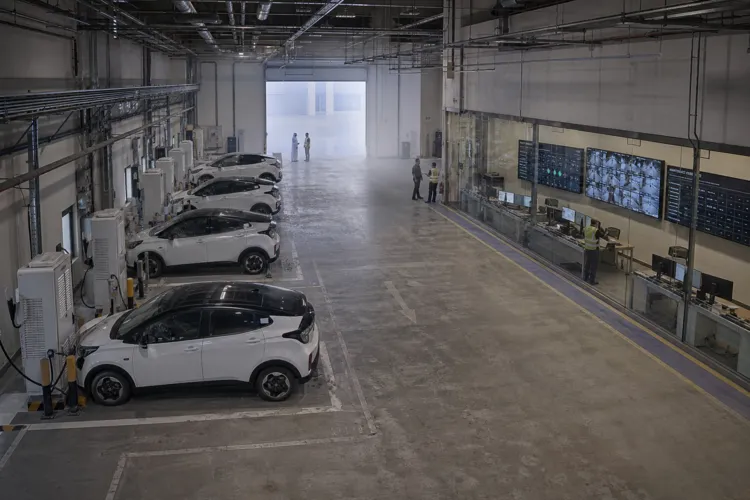
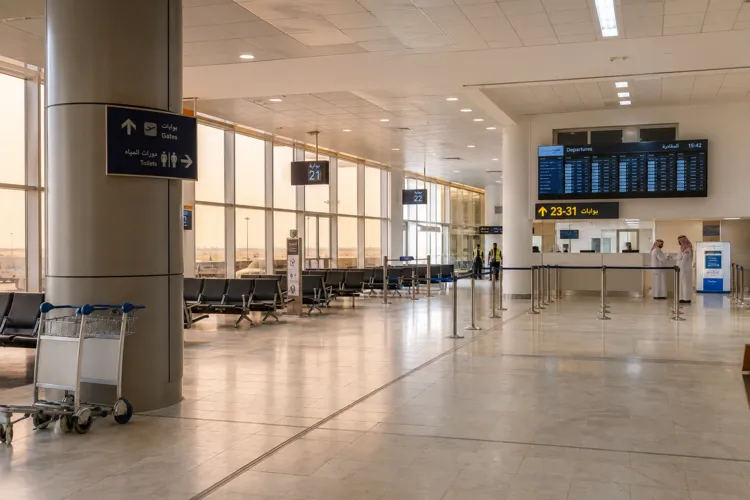
For guests, the trip can start at Red Sea International Airport, which is already open, and then continue via coordinated transfers. Red Sea Global’s sustainability reporting describes an electric mobility network with more than 150 charging stations supporting EV transfers, alongside boats and seaplanes that complete the system for movement between the airport, islands, and inland resorts. This is the practical backbone of what many travelers look for in Red Sea destination sustainable island mobility: transport choices that fit the place, reduce operational impact, and still feel seamless from arrival to check-in.
How Electric Boats Fit into a Coordinated Arrival System
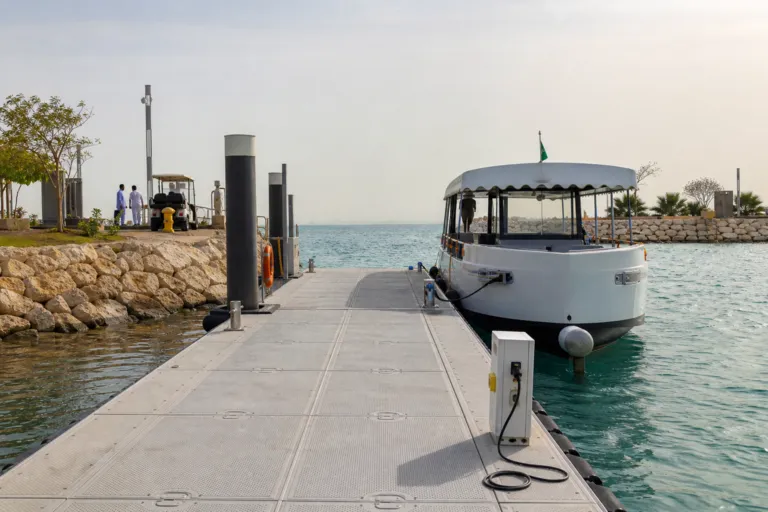
Electric boats matter most where islands are central to the guest journey. Some island resorts are described as reachable only by seaplane or chartered boat, which highlights why marine transport is built into the overall network. Shura Island is the exception in access terms. It is linked to the mainland by a purpose-built bridge and is described as a 25-minute drive from Red Sea International Airport, with access provided by a dedicated fleet of electric vehicles. On the islands, the approach is mostly pedestrianised, with a dedicated fleet of electric cars and hydrogen-powered buggies supporting shorter trips once guests arrive.
The transport system also sits inside a broader design promise around power and development limits. WATG describes the masterplan as designed to generate 100% of its required power on-site through photovoltaic panels and solar roads. Business reporting adds that the system already powers the first phase, including resorts, transport, and utilities, without reliance on the national grid. At full capacity, it is expected to prevent hundreds of thousands of tons of CO2 emissions annually. Meanwhile, construction is tightly restricted: less than 1% of the destination is developed, with 75% of islands left untouched.
Scale helps explain why the destination needs multiple modes, including electric boats. WATG notes planning across more than 90 islands, with infrastructure that includes an international airport, resort and service marinas, and a logistics center, plus a program covering 10,000 hotel keys and residential units. Other project descriptions aim for 50 hotels with 8,000 rooms and more than 1,000 residential properties across 22 islands and 6 inland sites. With such breadth, electric marine transport is a functional link in a system intended to connect islands, inland resorts, and hubs while keeping sensitive coastlines and lagoons central to the guest experience.
How does The Red Sea coordinate guest transport across islands and inland resorts?
Why are electric boats important for island resort access at The Red Sea?
What makes Shura Island different for arrivals compared with other islands?
How does development control support the destination’s transport and sustainability approach?
What does Red Sea destination sustainable island mobility mean in practice here?