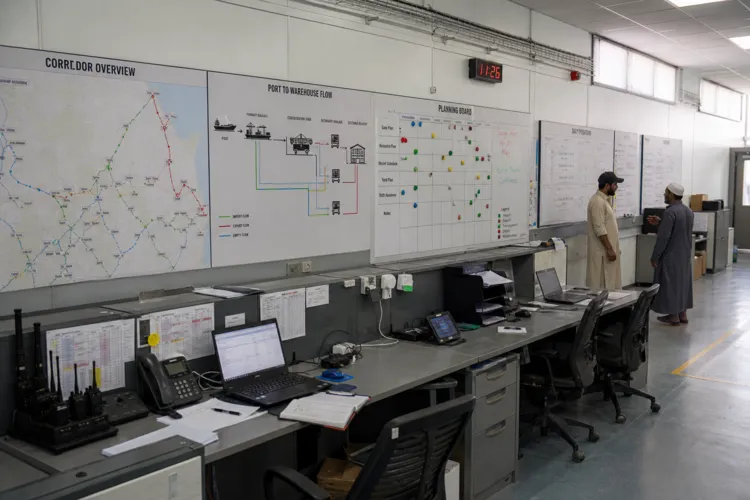
Saudi Arabia’s Transport General Authority (TGA) has issued Executive Regulations for the Commercial Transportation of Goods via Motorcycles, formally shifting the activity from a regulatory sandbox into a comprehensive regulatory framework. The stated direction is to organize and develop the sector, enhance safety and security standards, support investment, and encourage fair competition, while also considering environmental requirements. For delivery platforms, the practical change is simple: what was previously tested in a controlled environment now becomes a set of enforceable operating requirements that must be built into onboarding, fleet management, and daily dispatch processes.
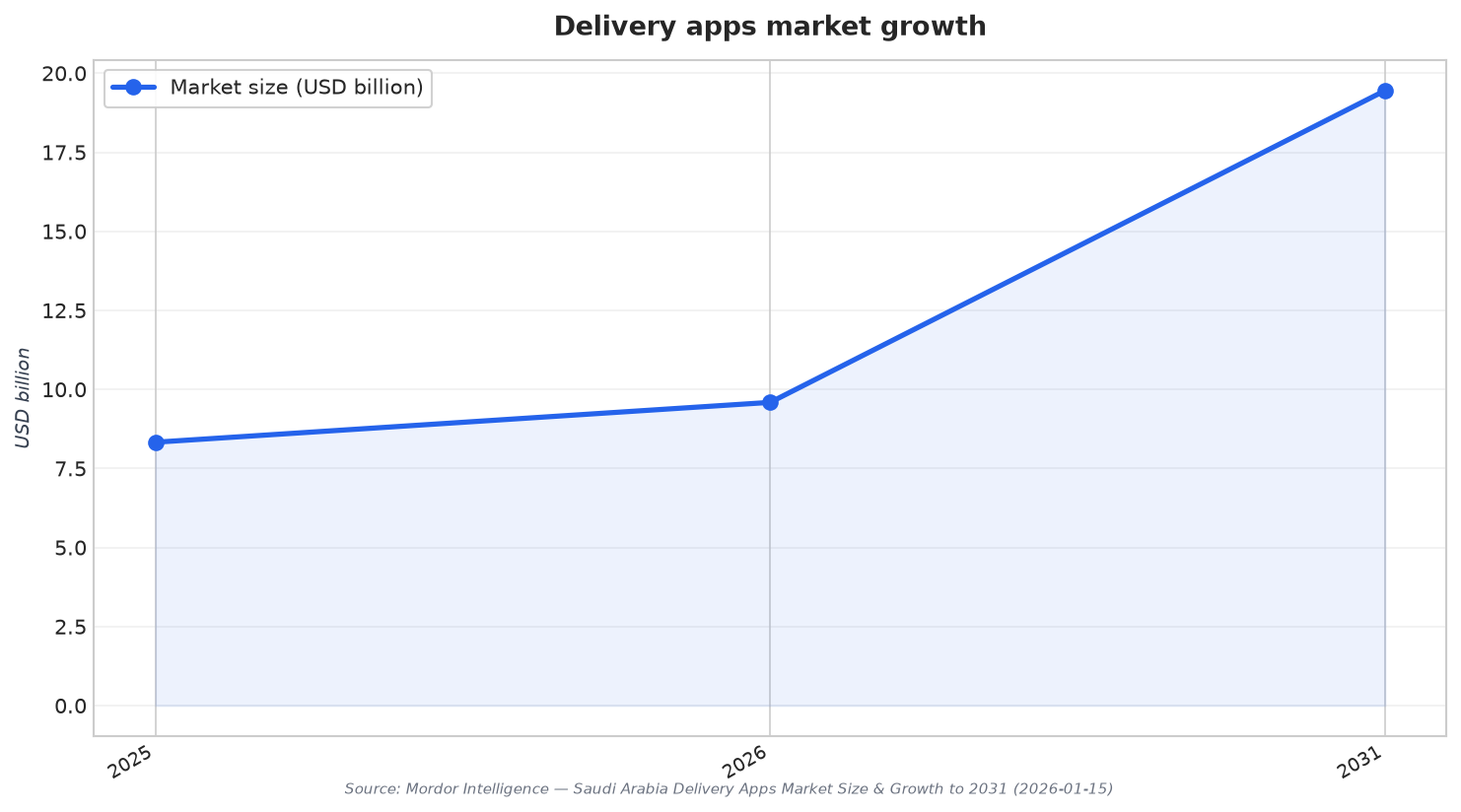
The timing matters because delivery demand is already large and expanding. Mordor Intelligence values the Saudi Arabia delivery apps market at USD 8.33 billion in 2025 and estimates growth from USD 9.59 billion in 2026 to USD 19.45 billion by 2031, with a 15.18% CAGR for 2026–2031. In 2025, food delivery held 76.48% share, and on-demand ordering accounted for 88.63% of revenue. In that context, the TGA commercial motorcycle freight regulation becomes a key operational constraint and a source of certainty at the same time, especially for platforms built around high-frequency, on-demand runs.
What Compliance Now Looks Like for Platforms and Fleets
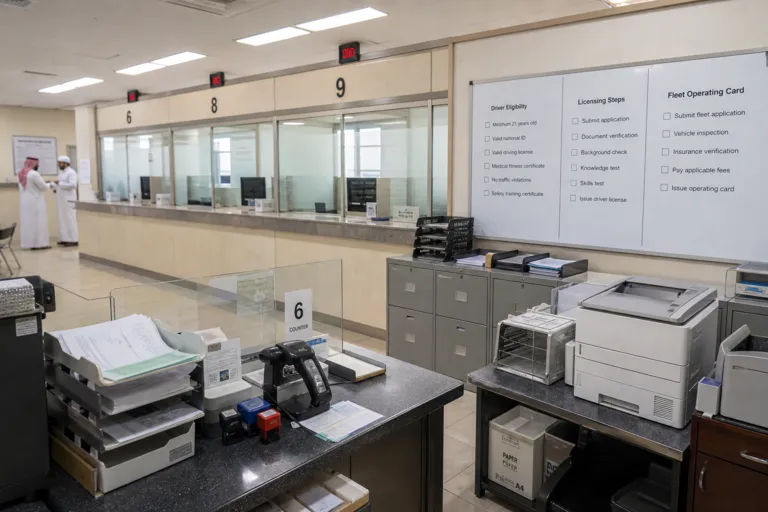
The executive rules restrict the commercial activity to licensed establishments transporting goods belonging to third parties using motorcycles designed for that purpose. Operating without a license, or continuing after a license expires, is canceled, or suspended, is prohibited. Licenses can be issued for periods ending no later than 31 July 2028, and once all conditions are met the license is issued for one year and cannot be transferred. Applications must be filed through TGA channels, and an establishment must meet all licensing requirements within 90 days of applying or the application will be canceled. Requirements include a commercial registration covering motorcycle goods transport, a valid General Organisation for Social Insurance certificate, and (if the registration is more than one year old) a valid Zakat and tax certificate, plus prior approval obtained through the sandbox, an operating center in the licensed city, integration with the TGA electronic platform, and payment of applicable fees and outstanding fines.
Workforce controls are equally direct. Service providers must obtain a professional driver card for every driver before allowing them to perform commercial transport. Drivers must hold a valid license for the appropriate motorcycle category and have a contractual relationship with the provider. They must also obtain a criminal record clearance certificate and pass a professional competency test administered by a TGA-accredited center. For non-Saudi drivers, the occupation on the residency permit must be suitable for motorcycle driving under the Saudi Standard Classification of Occupations or another occupation approved by the authority. On the asset side, providers must obtain an operating card for each motorcycle before using it to transport goods, embedding compliance into fleet inventory and utilization planning.
For platforms, the broader impact is on scaling models and unit operations as Saudi logistics modernize. Mordor Intelligence estimates the Saudi Arabia freight and logistics market at USD 28.68 billion in 2026, growing at a 5.69% CAGR to USD 37.82 billion by 2031, with freight transport at 58.92% share in 2025 and domestic CEP deliveries at 65.05% of segment revenue in 2025. Quick commerce activity is described as concentrated in hubs including Riyadh, Jeddah, and Dammam, while TGA’s increasing regulatory involvement is linked to greater consistency and professionalism in delivery operations and fleet management. In practice, a formal motorcycle goods-transport framework can reduce ambiguity for investment and expansion, but it also raises the bar for documentation, driver testing, and system integrations that platforms must treat as core product and operations work.
What does moving motorcycle freight “out of the sandbox” mean in Saudi Arabia?
Who is allowed to provide commercial motorcycle goods transport under the new rules?
How long do operators have to meet licensing requirements after applying?
What driver requirements matter most for delivery platforms?
How will the TGA commercial motorcycle freight regulation affect Saudi delivery platforms at scale?