“Saudi transport logistics SAR 280 billion” captures the scale of the Vision 2030 narrative around transport and logistics investment, even as public project-level disclosures appear in specific, named deployments. Across government-aligned strategies, Saudi Arabia links logistics investment to becoming a global logistics hub and to modernising networks with advanced infrastructure and digital transformation. Event briefings on maritime logistics also frame the Kingdom’s strategic location at the crossroads of three continents as a core advantage, and point to ports such as King Abdullah Port and Jeddah Islamic Port as advanced facilities in the region. These themes show how capex is being positioned: capacity, connectivity, and operational efficiency.
One visible capex landing zone is the interface between ports and inland logistics parks, where road geometry, bridges, and dedicated access can remove bottlenecks. In July 2025, a project executed by Mawani was described as having a value exceeding SAR 689 million to create a dedicated logistics corridor linking Jeddah Islamic Port with Al-Khumrah Logistics Park. The corridor stretches 17 kilometers, includes two lanes in each direction, and plans 12 bridges to move trucks without relying on internal city roads. The same announcement describes emergency access points, maintenance facilities, and a complete rainwater drainage system, tying infrastructure spend to smoother cargo movement and reduced congestion.
Ports, Privatization, and the Push for Operational Efficiency
Capex is also arriving through long-term privatization structures that place upgrade obligations on operators. In April 2026, Saudi Global Ports Group began operations at the Jubail Container Terminal at Jubail Commercial Port under a 30-year privatization agreement with Mawani. Under that agreement, SGP will invest SAR 2 billion over the concession period to upgrade infrastructure and deploy advanced equipment, with the stated aim of supporting long-term operational capabilities and accommodating larger vessels. The same update emphasizes stronger connectivity between ports, inland logistics facilities, and supply chain ecosystems, presenting this as a resilience and efficiency play rather than a single-terminal story.
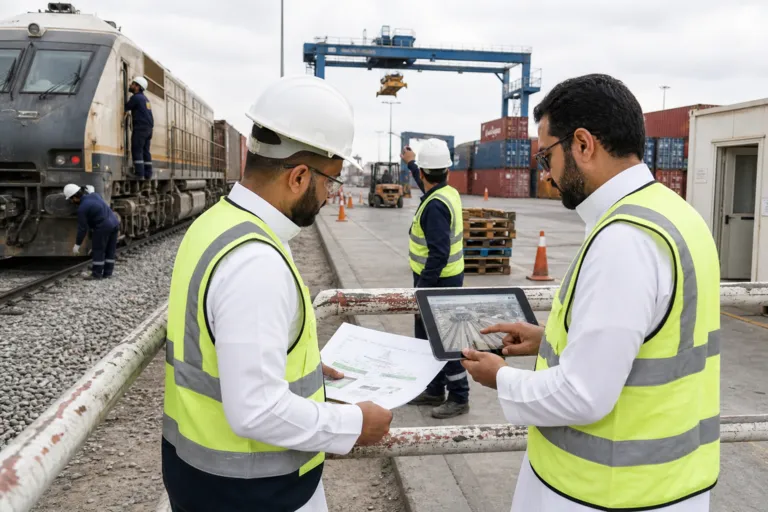
Rail is another deployment track, but the disclosed emphasis is on digital infrastructure and workforce capability, not only concrete and steel. In November 2025, Ericsson signed a Memorandum of Understanding with the Saudi Railway Company (SAR) to introduce 5G and Future Railway Mobile Communication System technologies across the Kingdom’s rail network. The collaboration includes deploying 5G-based infrastructure and developing applications such as real-time video, train control, and IoT connectivity. It also includes an innovation centre for testing new solutions and a focus on training SAR’s workforce in advanced communication systems. The initiative was described as aligned with Vision 2030 and the National Transport and Logistics Strategy.
Transport capex is also being discussed in the context of delivery pressure and reprioritisation across the broader Vision 2030 portfolio. A Reuters update in October 2025 quoted the investment minister saying 85% of Vision 2030 targets were complete or on track as of the end of 2024, while also noting delays and recalibrations amid economic headwinds and logistical constraints. Separately, reporting on reassessments of giga-projects described infrastructure investment to support upcoming major events, listing projects such as the Riyadh Line 2, the Saudi Landbridge railway, and metro systems in Jeddah and Makkah. Taken together, the disclosed projects show where “Saudi transport logistics SAR 280 billion” is being translated into corridors, terminal upgrades, and rail digitisation that target throughput and reliability.
What does “Saudi transport logistics SAR 280 billion” refer to in Vision 2030 coverage?
What is the Jeddah Islamic Port logistics corridor project value and scope?
How much will Saudi Global Ports invest in Jubail Container Terminal upgrades?
How is Saudi Arabia applying digital technology to rail under Vision 2030?
What progress update was reported on Vision 2030 initiatives?