The Riyadh Metro Red Line Diriyah extension is designed to carry the existing corridor westward from King Saud University to the Diriyah Gate Development project. Public reporting tied to the Royal Commission for Riyadh City (RCRC) describes an additional 8.4 km of new route and five new stations. On today’s network, the Red Line runs along King Abdullah Road between King Saud University and King Fahd Sports City, with a total length of 25.3 kilometres and 13 stations, including three transfer stations. The new works add a new leg that directly targets the Diriyah destinations highlighted in RCRC statements.
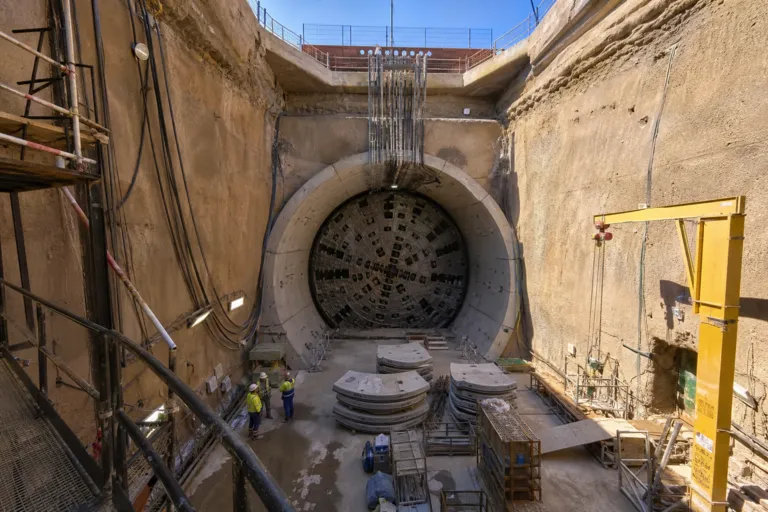
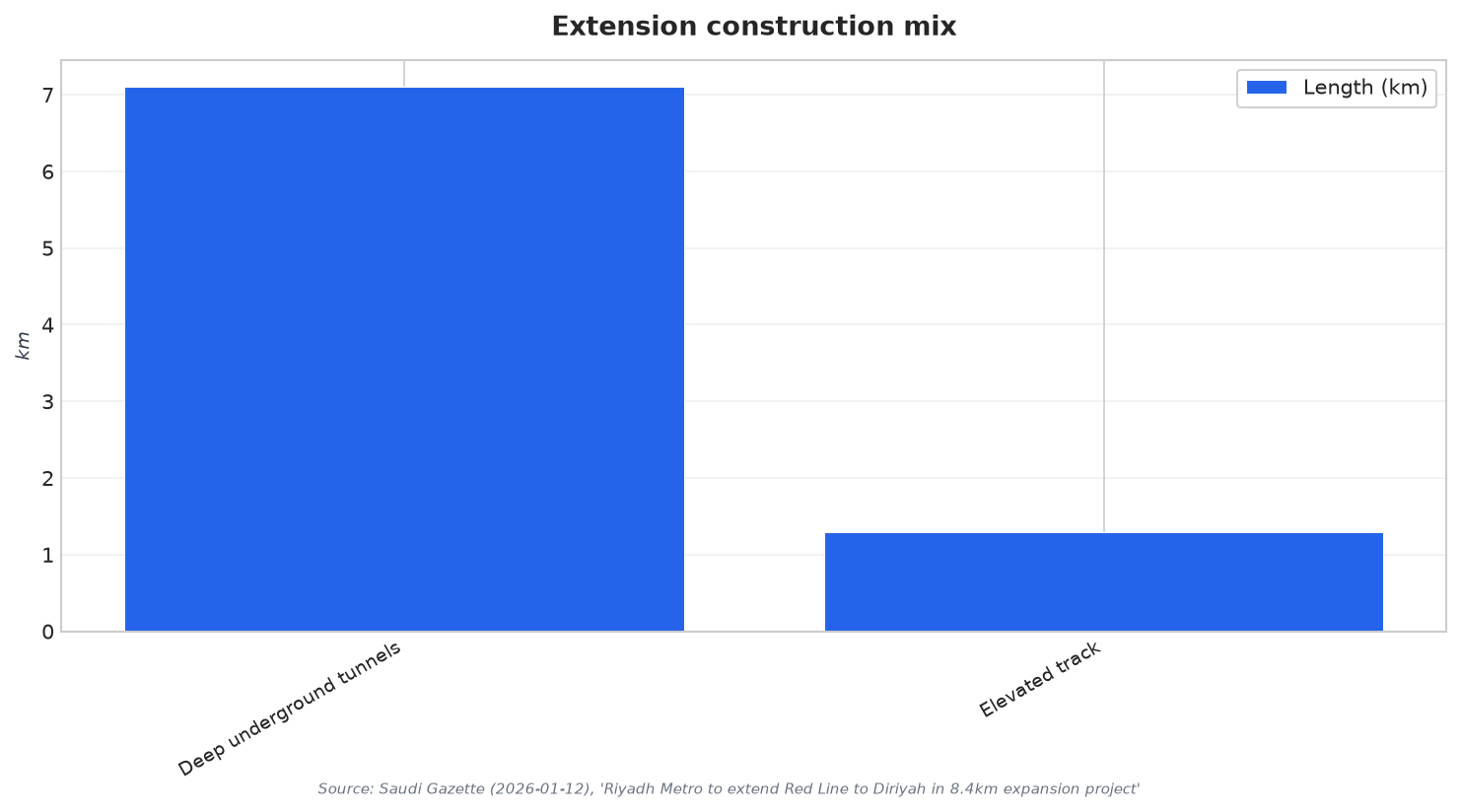
Most of the engineering is underground. The scope includes 7.1 km of deep underground tunnels and 1.3 km of elevated track, alongside the new stations. Station placement details reported from RCRC indicate two stations at King Saud University, with one serving the medical city and health colleges and another serving the university concourse. Three additional stations are planned in Diriyah, including one identified as a future interchange with Line 7. The same reporting frames the corridor as a step toward strengthening connectivity between key urban areas and major activity nodes.
What Changes When the Extension Opens
Once complete, the Red Line is expected to reach 33.7 km and 20 stations, combining the existing route with the new segment to Diriyah. The extension is also forecast to reduce traffic by 150,000 vehicles per day by offering a public transport alternative to and from Diriyah. RCRC’s statements also point to direct access within the Diriyah Gate Development area, linking to major destinations including Al-Turaif, Al-Bajiri districts, and the Opera House. The project timeline cited in reporting is six years for completion.
The Red Line expansion is positioned as part of a broader public transport push in Riyadh. The Riyadh Metro is described as a rapid transit system serving the Saudi capital and part of the King Abdulaziz Project for Riyadh Public Transport. Wikipedia summarises the metro as consisting of six lines connecting 85 stations across 176 kilometres, and says the project cost $22.5 billion to build. It also states the metro was opened on December 1, 2024, and that the system is fully automated and driverless.
Ridership and governance context has also been referenced in coverage of the Diriyah works. Saudi Gazette reports that metro ridership has surpassed 173 million passengers, while describing the 8.4 km addition and five-station plan for the Red Line. In the same stream of reporting, the extension is framed as supporting a sustainable urban transport ecosystem that links key centers, residential communities, and cultural, educational, and healthcare landmarks. In short, the Red Line’s move to Diriyah is a targeted addition with clear scope: new distance, new stations, and a tunnel-heavy build profile.
What will the Red Line add in the Riyadh Metro Red Line Diriyah extension?
How much of the new route is underground versus elevated?
Where will the five new stations be located?
What is the forecast traffic impact of the Diriyah extension?
What will the Red Line’s total length and station count be after the expansion?