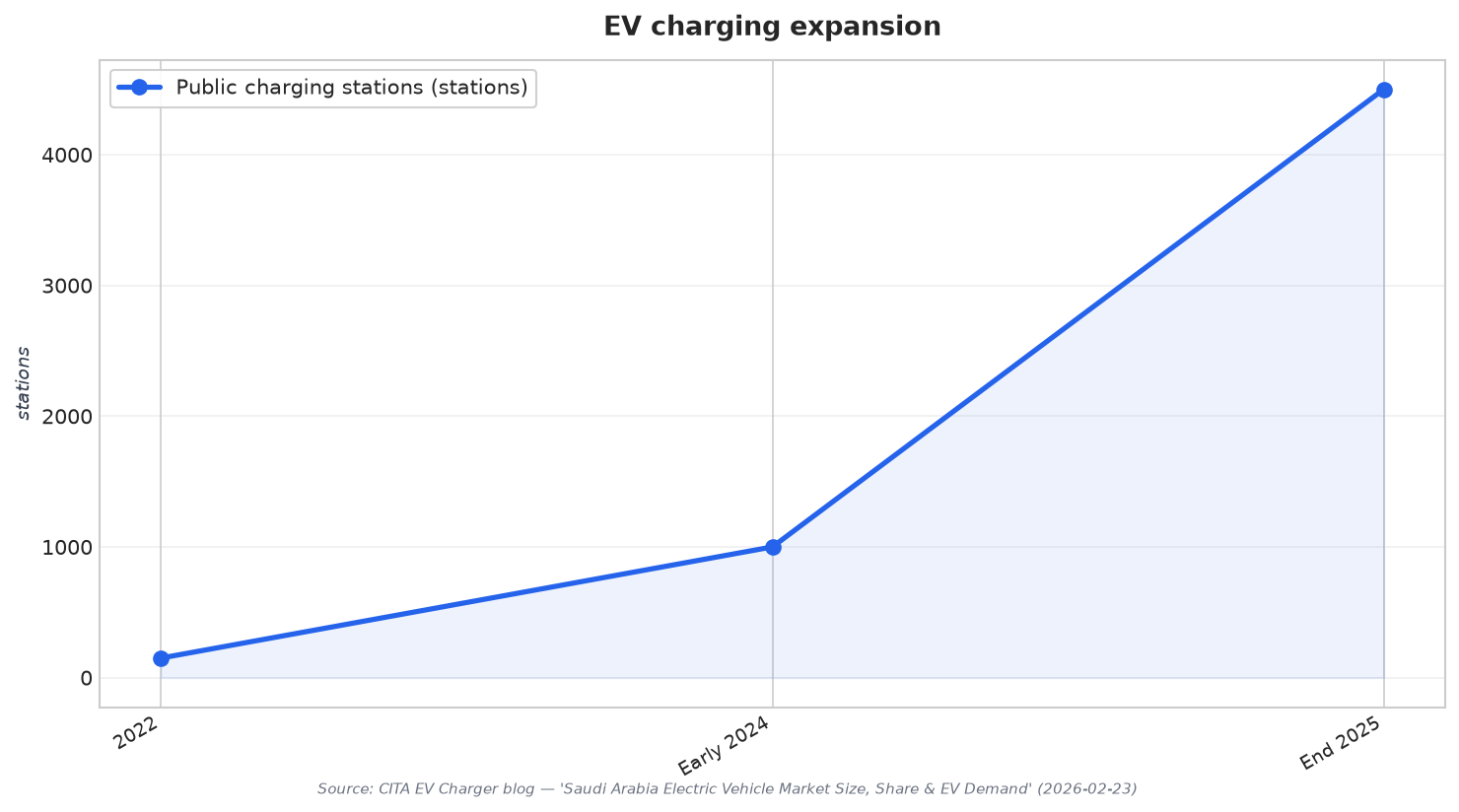
Saudi Arabia’s EV momentum is creating a clear opening for a B2B charging-as-a-service approach that fits fleet realities. The Saudi Ministry of Investment data cited in a market report points to a 425% increase in EV registrations between 2021 and 2023, rising from 375 EVs in 2021 to over 12,000 by the end of 2023. Charging infrastructure expanded alongside that growth, with public charging stations increasing from 150 in 2022 to over 1,000 by early 2024. In this environment, fleets are looking for predictable operating models, and a Saudi EV charging-as-a-service subscription can package charging access, support, and service in a way that reduces the need for fleets to build everything alone.
Subscription-style models are also showing up across adjacent EV financing and mobility structures. An IndexBox analysis of the Saudi Arabia Electric Vehicle Finance market estimates that EV subscription models and finance products tailored to ride-hailing fleets are growing at 40–50% annually. It also states that subscription bundles represent 8–12% of new EV finance agreements in Saudi Arabia in 2026, up from near zero in 2023. That matters for charging providers because fleet electrification is rarely just about the vehicle. Charging access, uptime, and cost control sit next to financing decisions, especially when operators want flexibility and off-balance-sheet access. These conditions make subscription-led charging services a natural companion to broader fleet programs.
Why Fleets Prefer Subscriptions: Predictability, Speed, and Outsourcing
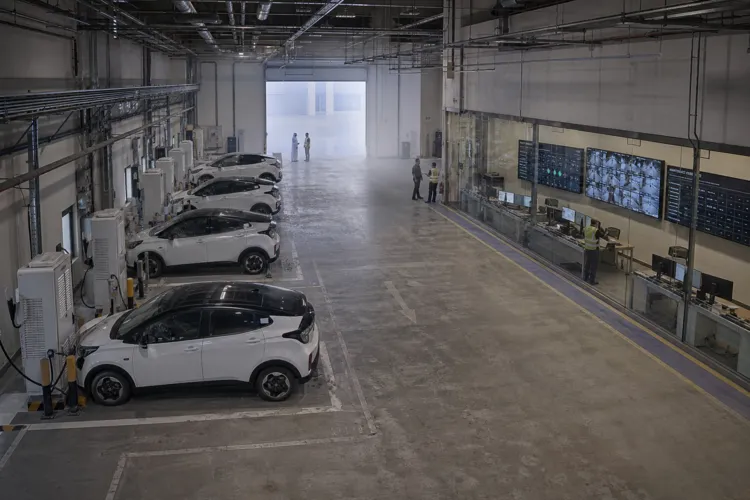
Saudi charging market segmentation explicitly recognizes subscription-based services as a core service model. Ken Research lists Subscription-Based Services, Pay-As-You-Go Models, Financed Solutions, and Hosted Services, noting that subscriptions are gaining traction due to convenience and predictable costs, and that financed solutions are increasingly adopted by businesses and fleet operators to deploy charging infrastructure with minimal upfront investment. The same source describes Commercial Fleet Operators as leading the market due to operational efficiency needs and fleet electrification targets. In parallel, a charging-stations market analysis highlights why depot and corridor performance matters: government-backed deployments led by EVIQ are targeting high-power DC units, often 100 kW and above, for public and highway locations, while centralized depots need rapid turnaround that DC fast-charging can provide.
Early examples also show how subscription packaging is being productized for different customer types, including fleets. A market forecast notes that in August 2025, E-FILL, operated by ASX eMobility, launched Saudi Arabia’s first subscription-based EV charging model with Basic, Standard, and Business/Fleet plans. That same analysis flags a compliance layer that shapes procurement: SASO certification is mandated for all EV charging equipment, setting a non-negotiable standard for safety, performance, and compatibility. For fleet operators, this creates a practical advantage in outsourcing. A charging-as-a-service provider can standardize certified hardware, manage maintenance, and align site selection with DC fast-charging needs, instead of asking transport teams to become charging experts.
For larger fleet and premium mobility use cases, the infrastructure and financing runway extends beyond simple public charging growth. An IndexBox luxury EV market report forecasts charging infrastructure expansion from fewer than 1,200 DC fast-charging points in 2026 to over 10,000 by 2035, supported by the Saudi Ministry of Energy’s National EV Charging Infrastructure Program. The same report frames corporate fleet electrification programs as a USD 200–350 million opportunity for leasing and financing companies to structure vehicle-as-a-service contracts that can include charging infrastructure management. Taken together with the growth in subscription and mobility fleet financing, the Saudi market signals a shift: fleets can increasingly buy outcomes—reliable charging access and managed operations—rather than owning every asset and process.
How fast is EV adoption rising in Saudi Arabia, and why does it matter for fleet charging?
What is driving subscription-style EV models for fleets in Saudi Arabia?
What did Saudi Arabia’s first charging subscription launch include for fleet users?
Why is DC fast-charging important for commercial depots and highway use?
How can a Saudi EV charging-as-a-service subscription reduce complexity for fleets?