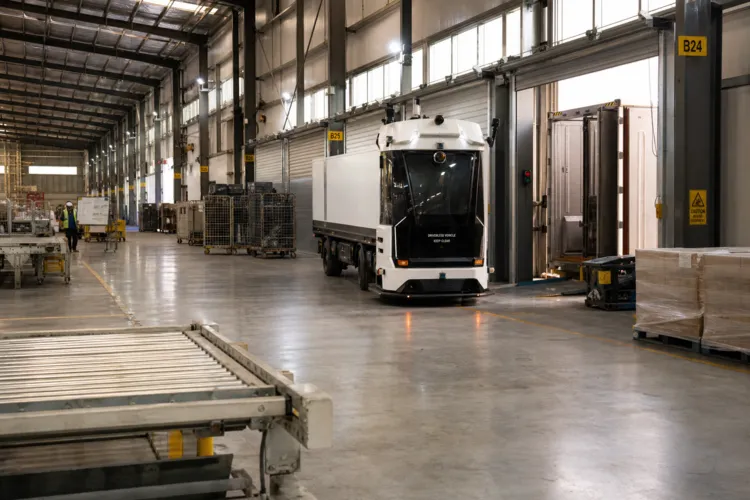
Autonomous haulage is increasingly framed as a practical response to safety, labor, and uptime needs in heavy industry. Verified Market Reports sizes the global Autonomous Haulage Systems (AHS) market at USD 1.7 billion in 2025, with a projected valuation of USD 5.3 billion by 2034 and a 14.0% CAGR for 2026–2034. The same source describes driverless, sensor-enabled vehicles as a way to reduce downtime and improve productivity through continuous operations and real-time monitoring. In Saudi Arabia, the pull is also shaped by large-scale construction and mining demand for high-capacity haulage, which supports a broader shift toward newer fleets and digital-ready equipment.
Fleet economics in the Kingdom matter because the heavy-duty truck base is expanding. Mordor Intelligence estimates the Saudi Arabia heavy duty truck market at USD 8.76 billion in 2025 and forecasts USD 13.74 billion by 2030, a 9.57% CAGR. Construction and mining accounted for 43.28% of market size in 2024, while specialized trucks above 40 t GVW are projected to post the fastest growth at a 10.29% CAGR through 2030. The same report notes an import age cap of five years, a policy that can accelerate fleet renewal. For autonomous-ready haulage, faster replacement cycles can make it easier for operators to standardize on modern platforms, controls, and maintenance practices.
Digital Mines in Saudi Arabia: The Technology Stack Behind Driverless Haulage
Autonomy in mining is also linked to wider “digital mine” workflows that affect planning, monitoring, and maintenance. A Saudi-focused technology update estimates the Saudi Arabia mining equipment market at USD 7.32 billion in 2025, reaching USD 9.72 billion by 2030 at a 5.83% CAGR, and ties adoption to Vision 2030 objectives. It describes automated drilling systems and 5G-enabled predictive maintenance as tools to counter skilled-labor shortages while improving productivity and lifetime ownership costs. In that same discussion of digital mines, Ma’aden is cited as deploying autonomous industrial mining robots in underground operations through partnerships with OffWorld, signaling that automation efforts can span beyond haul roads into broader site operations.
Multiple indicators point to technology-forward procurement decisions. In the Saudi equipment mix, Surface Mining Support Equipment held 21.36% share in 2024, while drills and breakers are projected to grow at a 6.17% CAGR through 2030. Excavation commanded 41.16% of market size in 2024, and processing is forecast to expand at a 6.22% CAGR to 2030. Powertrain choices are shifting too: diesel held a 75.16% share in 2024, while battery-electric is projected as the fastest-growing power source with a 16.31% CAGR between 2025 and 2030. These trends matter for haulage because autonomous fleets depend on reliable equipment, predictable maintenance, and connected systems that can support remote oversight and optimized dispatch.
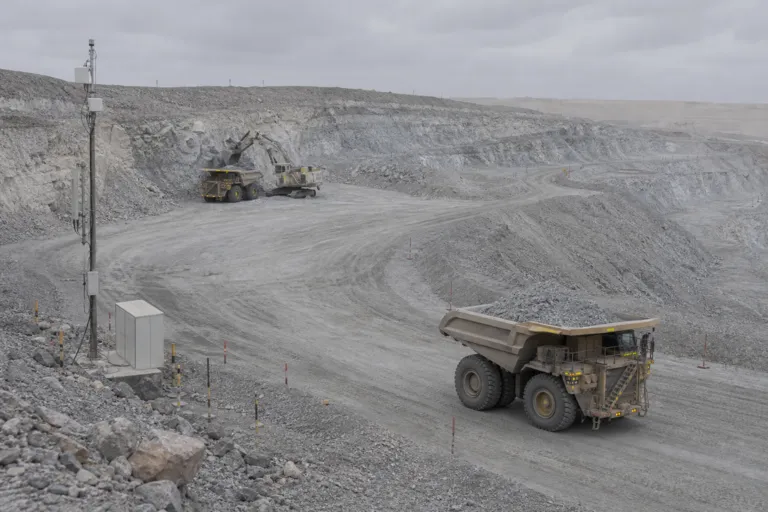
Saudi market sizing for autonomous mining and quarry haulage trucks is also emerging in commercial research. Ken Research values the Saudi Arabia Autonomous Mining and Quarry Haulage Trucks Market at USD 1.2 billion based on a five-year historical analysis, and highlights leading demand centers such as Riyadh, Jeddah, and Dammam, with the Eastern Province linked to mining activity and investment. In parallel, global context shows mining autonomy is not new: Market Research Future notes that mining applications are a mature niche where companies like Caterpillar and Komatsu have operated autonomous haul trucks in open-pit environments for over a decade. Put together, the Saudi autonomous mining haul truck story is less about a single machine and more about connected fleets, renewed assets, and digital operations that can scale across sites.
How big is the global Autonomous Haulage Systems market?
What do Saudi heavy-duty truck figures suggest about haulage demand?
What is Ma’aden doing in mining automation today?
How does the mining equipment market connect to driverless fleets in Saudi Arabia?
What does the Saudi autonomous mining haul truck market look like in research coverage?