The shift from a human safety driver to a fully driverless robotaxi is shaped as much by policy as by software. A recurring global pattern is a phased approach: regulators first define testing conditions and often require a human driver to be present, then move toward higher autonomy and, eventually, vehicles that can operate without a person behind the wheel. A 2024 snapshot described more than 50 countries as either drafting or enforcing autonomous vehicle policies, showing how common this staged pathway has become. For Saudi Arabia, the key question is how this progression is governed in practice, especially when a “safety operator” transitions from an in-car role to a remote or procedural oversight role.
Robotaxis also sit inside a broader market story that can pressure regulators to clarify rules. One market report valued the global robotaxi market at USD 67.84 Billion in 2024 and projected it to reach USD 4028.41 Billion by 2032, with a CAGR of 67.87% from 2026 to 2032. That same framing defines a robotaxi as typically operating at SAE Level 4 or Level 5 and providing on-demand rides without a human safety operator or driver present in the vehicle. Those claims are global, not Saudi-specific, but they help explain why the Saudi driverless robotaxi safety operator regulation topic matters: removing the human from the cabin changes cost structure, liability thinking, and what evidence regulators require before commercial approvals.
What “No Safety Driver” Really Means Under Modern Robotaxi Rules
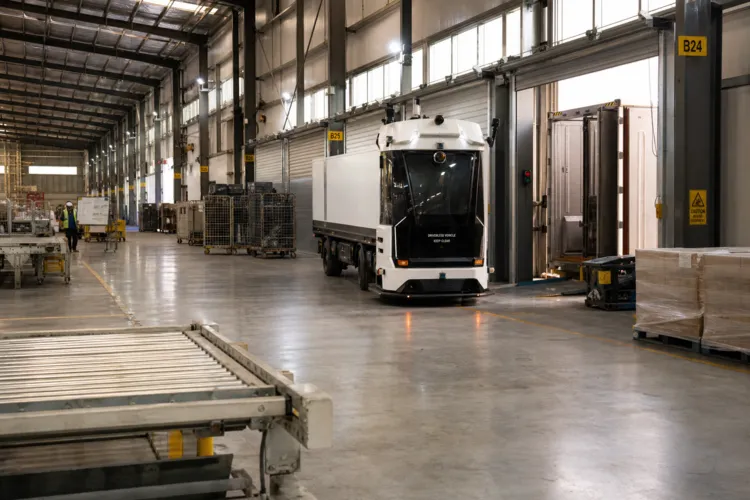
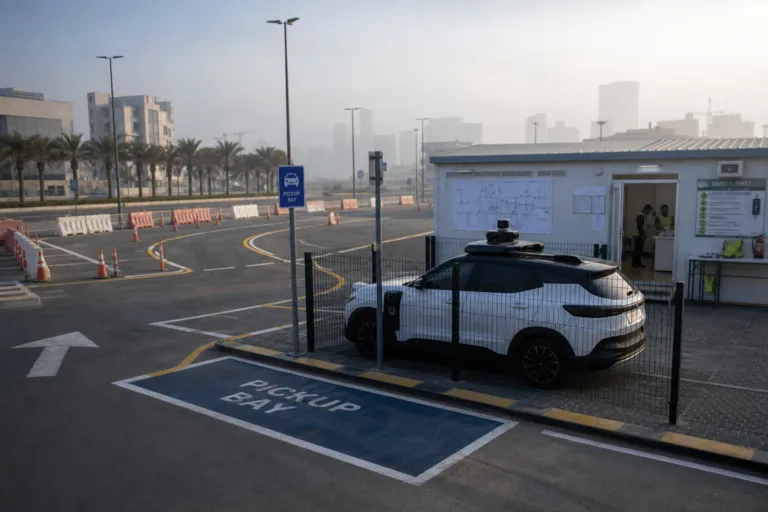
In markets where fully driverless service is already described as operating, the common regulatory building block is a defined operational design domain and a commercially approved zone. One industry report describes a Level 4 robotaxi system using LiDAR, radar, and AI-based perception that operates without safety drivers in a commercially approved urban zone, and it notes a fully driverless launch in Abu Dhabi using Baidu’s Apollo Go with sixth-generation RT6 vehicles. Separately, commentary on today’s robotaxi landscape claims that in places like Phoenix, San Francisco, Austin, and Wuhan, riders can already summon a fully driverless car with no driver and no safety attendant. These examples do not describe Saudi Arabia’s rules directly, but they show the governance model Saudi regulators can mirror: constrained geography, clear approvals, and defined autonomy level.
For Saudi Arabia, sources describe strong interest but cautious scaling. One market analysis frames the UAE and Saudi Arabia as attractive for pilot fleets and controlled smart-city mobility projects, while also warning that commercial scale remains limited and needs careful treatment. The same analysis stresses that customers and regulators will not accept black-box behavior without safety cases, audit trails, and performance evidence. That is the crux of removing the safety driver: regulators can demand documented safety arguments and traceable operational proof, not just demonstrations. Another robotaxi overview notes that Saudi Arabia has invited several Chinese operators for testing programs, signaling a pathway where testing partnerships and government-backed pilots can mature into clearer requirements for safety oversight when the in-vehicle safety operator is removed.
The regulatory leap to driverless rides is also influenced by how quickly other jurisdictions standardize expectations. In Europe, a unified framework is described as targeted for 2026, aiming to reduce legal roadblocks across member states. In China, over 20 cities are described as allowing full Level 4 autonomy testing, illustrating how multi-city trial frameworks can accelerate evidence collection. These comparisons matter for Saudi Arabia because they highlight the governance primitives that tend to travel across borders: pilot programs, safety protocols, data sharing, and liability management, all of which are cited as evolving components in robotaxi regulation. For Saudi deployments, the most durable route to removing the safety driver is likely the one sources emphasize globally: phased permissions, controlled operating areas, and rigorous safety evidence that regulators can audit.
How does Saudi Arabia approach removing the safety driver from robotaxis?
What do regulators typically require before allowing fully driverless rides?
Where are fully driverless robotaxi services cited as operating today?
Why do “commercially approved zones” matter in driverless regulation?
What global trend supports clearer robotaxi rules over time?