Riyadh Season is built at city scale. The 2025–2026 edition is described as spanning 14 themed entertainment zones across Riyadh, drawing more than 12 million visitors over a multi-month duration, and generating an estimated SAR 18 billion ($4.8 billion) in direct and indirect economic impact. That footprint changes the transport question. It is not only about getting people to one venue. It is about linking many zones in a way that feels continuous and safe, while protecting the experience of arriving, queuing, and leaving without breakdowns.
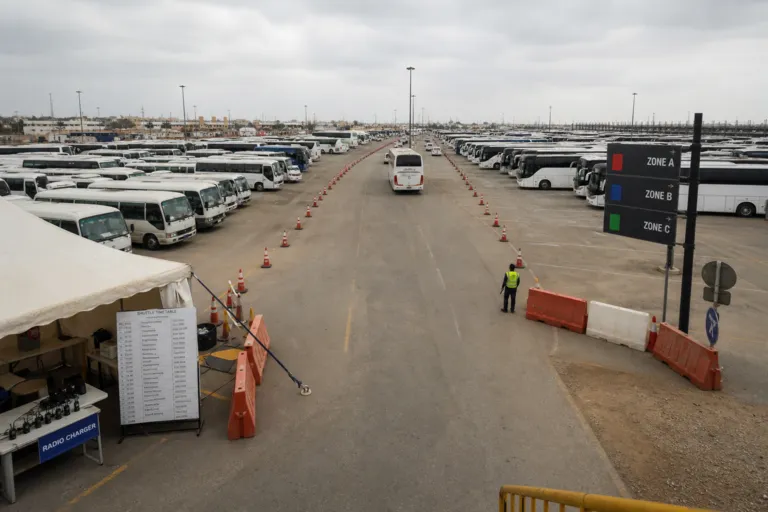
The first crowd-transport lesson is that zone distribution creates both resilience and risk. Spreading demand across 14 zones can reduce single-site pressure, but it also creates many simultaneous peaks. That makes event mobility closer to network operations than to a single-event traffic plan. Riyadh Season’s own evolution is described as moving from a “chaotic” inaugural 2019 experiment into a more professionally executed machine by 2025–2026. For transport teams, that arc implies iterative learning: tighter dispatch discipline, clearer wayfinding between zones, and more reliable staging for pick-ups and drop-offs so crowd management systems and ticketing platforms are not undermined by the journey.
Shuttle Orchestration Starts With Metro Headroom and Transfer Hubs
The Riyadh Metro provides the backbone that shuttle orchestration can plug into. Since services began in December 2024, official and media coverage reported more than 18 million passengers in the first 11 weeks, and CNN reported the system welcomed its 100 millionth passenger by August 2025. Separate coverage said cumulative trips moved beyond 200 million by March 2026. The metro’s scale is described as six lines spanning 176 kilometres with 85 stations, with theoretical capacity described as at least 3.6 million passengers a day. That designed headroom matters when entertainment demand spikes.
Peaks and transfer points show where event planners should concentrate “last mile” supply. A Riyadh 2030 dashboard reports a peak of 17.48 million riders in November 2025, coinciding with the Riyadh Season entertainment programme and favourable weather conditions. It also reports that in February 2026, Line 1 (Blue) carried 28.7% of the system total, while Line 3 (Orange) carried 23.5%. Another roundup highlighted key interchange hubs such as Qasr Al Hokm and the King Abdullah Financial District. For event mobility, those percentages and hubs translate into practical priorities: shuttle bays, crowd marshals, and timed dispersal plans should be strongest where transfers already concentrate demand.
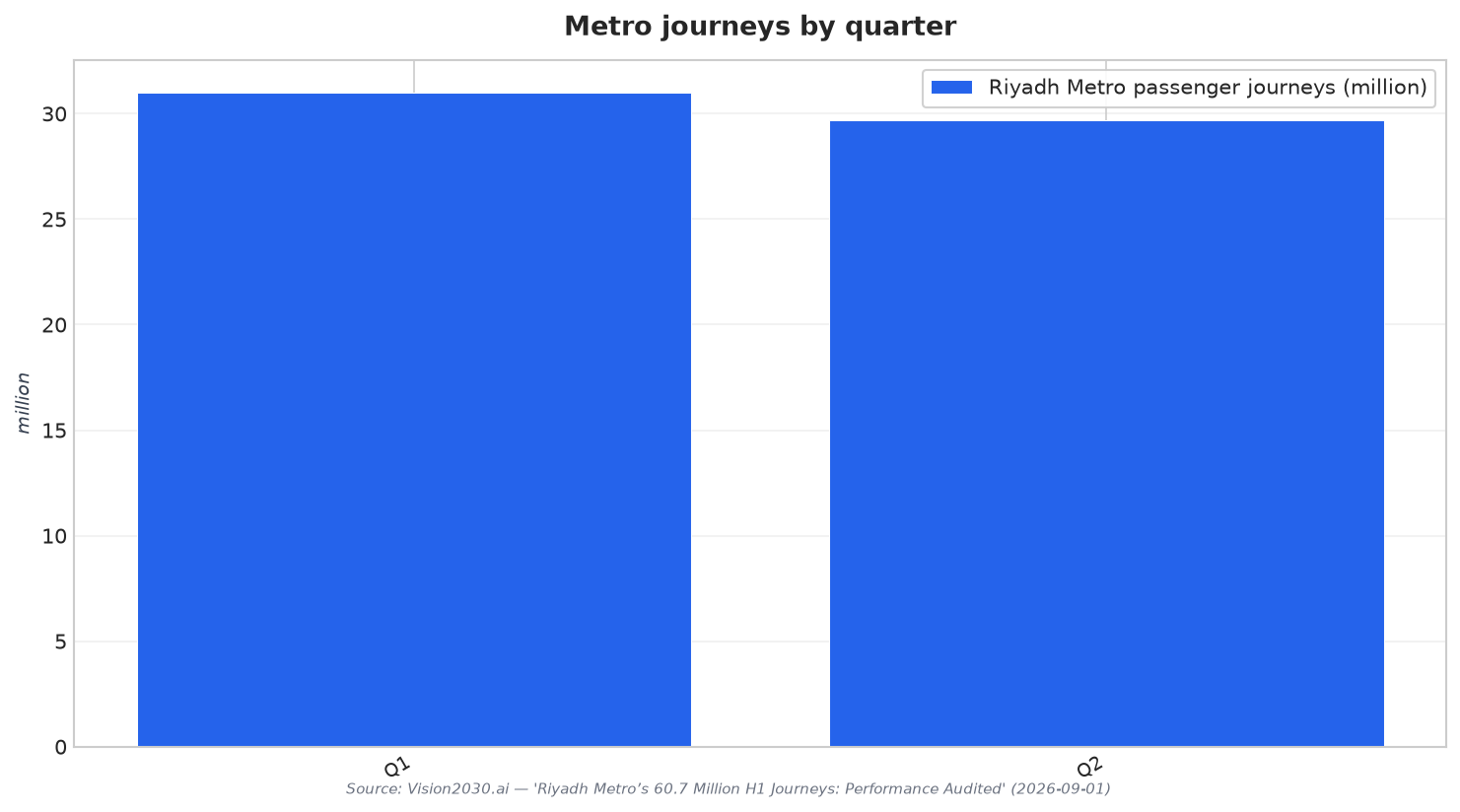
Finally, Riyadh Season offers a rehearsal space for even larger visitor surges. Expo 2030 Riyadh is planned to run from 1 October 2030 to 31 March 2031, with planners expecting 42M+ visits according to Expo materials. Sources describe a connected approach: integration with the Riyadh Metro, shuttle links to key city hubs, and smart systems using artificial intelligence for operational efficiency and visitor flow management. The lesson for crowd transport is to treat operations data as a core product. Even where published metro summaries show totals like 60.7 million journeys in H1 (31 million in Q1 and 29.7 million in Q2), they also show why richer fields are needed to diagnose performance during major event peaks.
What scale makes Riyadh Season a serious mobility challenge?
How does the Riyadh Metro support major-event crowd transport planning?
What evidence links entertainment seasonality to metro demand?
Where should shuttle orchestration focus during big crowds?
What are the key takeaways for Riyadh Season mobility and crowd transport?