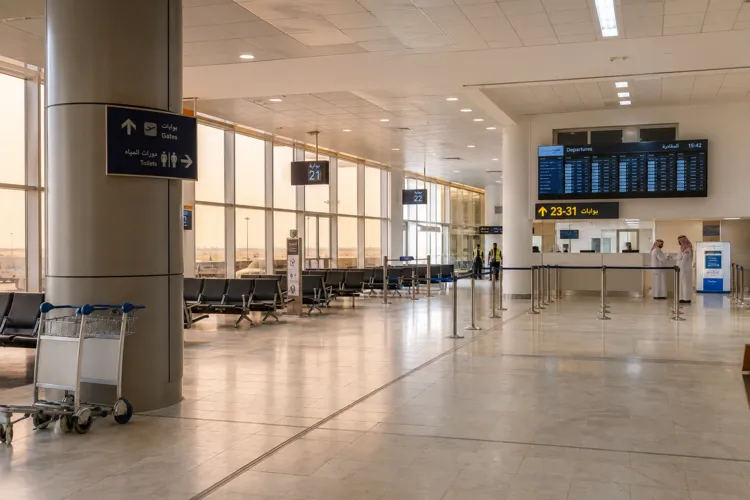
King Salman International Airport (KSIA) is being built as more than a passenger gateway. Its design choices point to an integrated cargo strategy that leans on passenger capacity, belly freight, and fast logistics. The project is planned across roughly 57 square kilometres on the existing King Khalid International Airport site, with six parallel runways and nine terminals under a Foster + Partners master plan. Major construction works commenced in September 2025, and a 4,200-metre third runway started construction in early January 2026. The airport’s stated 2030 capacity target is 100–120 million passengers a year, and that scale matters for cargo because it can increase flight frequencies and onward connections.
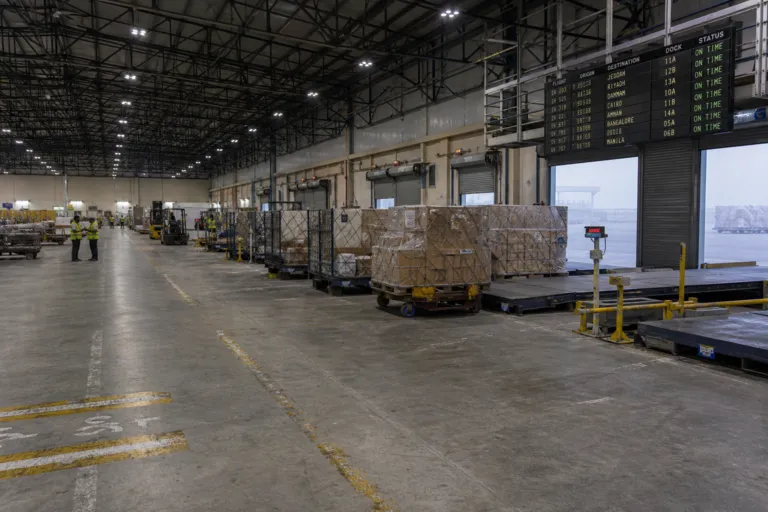
The belly-freight angle is explicit in how the airport is being laid out. Aviation Week quotes KSIA leadership saying connectivity from passenger terminals to cargo areas is being prioritized to reflect the importance of belly cargo in operations, while also supporting a goal to improve the Kingdom’s logistic performance index to be among the top 10 globally. That kind of terminal-to-cargo adjacency is a throughput play. It aims to reduce transfer friction between passenger flight schedules and cargo handling, which is especially relevant for express parcels, pharmaceuticals, and high-value goods—shipment types already noted as part of Riyadh’s air cargo mix at King Khalid International Airport.
A Logistics Zone Strategy Built Around Speed and Tenants
KSIA’s cargo proposition is also being pushed through special logistics zoning and tenant-led demand. Makreo reports that King Salman International Airport’s Special Integrated Logistics Zone spans 3 million m², with Apple and Shein already signed as tenants. Separately, Mordor Intelligence describes a Special Integrated Logistics Zone at King Khalid International Airport spanning 32 million ft² that offers duty-deferred storage and automated clearance, cutting average e-parcel customs release times to below two hours. Those specifics illustrate the operating model Saudi Arabia is pursuing: bonded-zone capabilities, documentation streamlining through the national LOGISTI single-window, and faster release for e-commerce cargo that is sensitive to delays.
This airport-led logistics push is happening alongside national air cargo growth targets. Makreo states total air cargo volume in Saudi Arabia reached 1.2 million tonnes in 2024, and that the civil aviation authority is targeting a fivefold increase by 2030. Air freight is forecast to grow at a 6.78% CAGR from 2026 to 2031, according to the same source. Airline network growth is part of the enabling logic: Makreo also notes Riyadh Air targets 120+ aircraft serving 100+ destinations by 2030. More routes and frequencies can translate into more belly capacity and more options for time-critical cargo routings through Riyadh.
For shippers, the cargo story is strongest when the airport connects cleanly into a wider domestic and regional logistics system. Mordor Intelligence notes Saudi Arabia has 1,018 km of operational rail and describes expansion through the USD 100 billion Gulf Railway, linking toward GCC networks. The same source says the corridor can trim transit times on Mumbai–Europe lanes by up to eight days by bypassing Suez congestion. On the warehousing side, Makreo reports DHL Supply Chain announced a EUR 130 million investment in 2025 for a new 70,000+ m² warehouse and distribution hub in Riyadh. Put together, these elements frame the King Salman Airport air cargo hub concept as a multimodal play, where air uplift is paired with bonded handling and downstream distribution capacity.
What makes King Salman International Airport a cargo-focused mega-airport, not just a passenger hub?
How big is the Special Integrated Logistics Zone planned for KSIA?
How large is Saudi Arabia’s air cargo market today, and what growth is targeted?
How does the King Salman Airport air cargo hub strategy relate to belly freight?
What other logistics investments in Riyadh support the airport’s cargo ambitions?