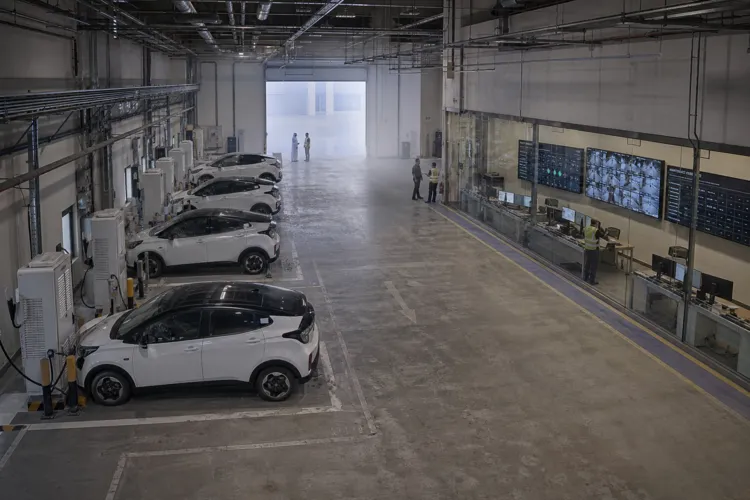

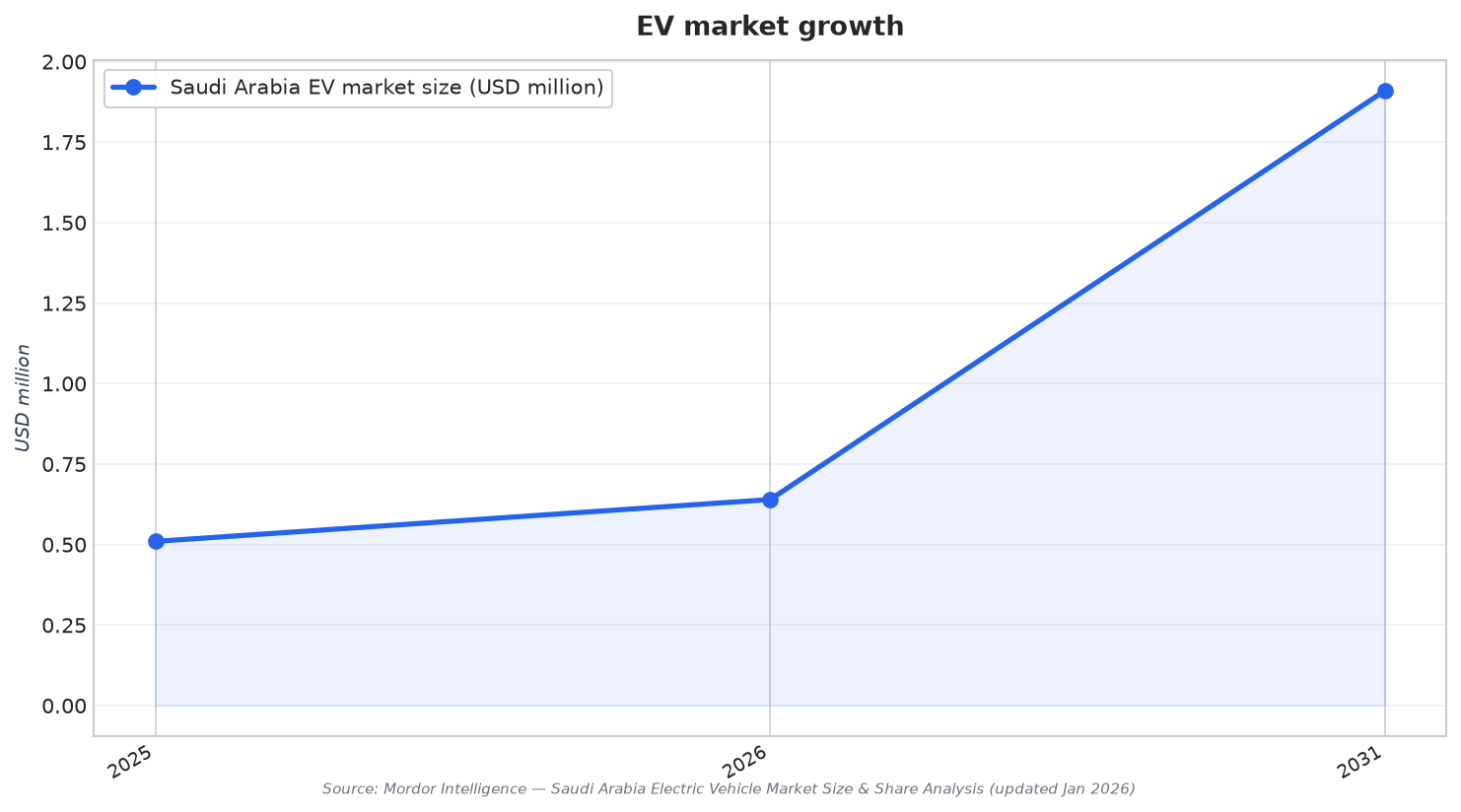
Saudi Arabia’s electrification push is forcing fleet operators to treat insurance and warranty decisions as operational strategy, not back-office procurement. EV registrations rose 425% between 2021 and 2023, growing from 375 EVs on the road in 2021 to over 12,000 by the end of 2023, based on figures cited from the Saudi Ministry of Investment. The EV market outlook also points to momentum tied to Vision 2030 priorities and procurement. Mordor Intelligence describes drivers including sovereign capital via the Public Investment Fund (PIF) and a 10-year government purchase commitment for up to 100,000 Lucid units. For fleets, more units on the road means more exposure to claims, repair networks, and warranty interpretation—especially when vehicle performance, battery health, and uptime are tied to contracts.
On the insurance side, operators face a more standardized environment with less room for informal policy customization. MarkWide Research notes that SAMA enforces unified policy wording and minimum coverage standards that standardize offerings while capping premium variability. It also describes the Saudi central bank’s regulatory sandbox that permits telematics-based pricing experiments, enabling usage-adjusted premiums and dynamic premium adjustment tied to vehicle telemetry. This matters for fleets because EV driving patterns are often easier to measure and manage across a managed pool. At the same time, rural telematics infrastructure gaps can limit sensor deployment and create uneven data quality across the Kingdom, which can complicate pricing and claims workflows for vehicles that operate beyond major corridors.
Where Warranty and Infrastructure Become Insurable Risk
The Saudi EV insurance warranty framework is increasingly shaped by how fast fleets can deploy charging and how financing packages bundle service obligations. IndexBox reports that fleet operators seeking to electrify face 12–18 month lead times for depot charging installation, delaying conversion of corporate lease agreements and reducing the addressable market for fleet EV finance by an estimated 20–25%. That delay is not just a project-management issue; it becomes a risk variable that affects how long legacy vehicles stay in service, how quickly new EV utilization ramps, and how warranty windows and service cycles align with real-world deployment. As EV finance expands into “insurance-linked products,” operators need warranty clarity on high-cost components and a plan for interim operational exposure.
Fleet electrification is also changing the product mix inside motor insurance and adjacent programs. MarkWide Research states that fleet owners represent the fastest-growing customer type as logistics sector expansion accelerates commercial vehicle registration. It also highlights insurer strategies in commercial motor lines and specialized fleet coverage programs, while emphasizing that SAMA’s standards influence pricing flexibility. IndexBox adds that subscription and mobility fleet financing is the fastest-growing segment, with EV subscription models and ride-hailing fleet finance products growing at 40–50% annually, and subscription bundles accounting for 8–12% of new EV finance agreements in Saudi Arabia in 2026. As these bundles grow, warranty service terms and claims handling processes can be as important as the premium line item, because they govern downtime and replacement cycles.
Operators should also separate what is local fact from global context when benchmarking EV risk transfer. Cognitive Market Research describes the global electric vehicle insurance market as valued at USD 52.11 billion in 2022, with a forecast to reach USD 209.26 billion by 2030 at a 14.51% CAGR; this is global context and not specific to Saudi Arabia. Locally, the EV mix itself is evolving. Mordor Intelligence reports that passenger cars held 76.81% of Saudi Arabia’s EV market share in 2025, while commercial vehicles are forecast to expand at a 24.53% CAGR through 2031. It also notes Riyadh commanded 38.73% of 2025 sales. For fleet operators, that combination—rapid growth, dense urban exposure, standardized policy wording, and telematics experimentation—means the most resilient approach is to align warranties, telemetry, and charging rollout plans so that insurable events and operational disruptions are managed as one system.
How does Saudi Arabia’s EV insurance and warranty framework reshape fleet risk?
What EV adoption signals are pushing operators to rethink coverage now?
How do telematics rules affect fleet premiums and underwriting?
Why do charging timelines matter for insurance-linked EV programs?
Which EV finance models are growing fastest for mobility and fleet use in Saudi Arabia?