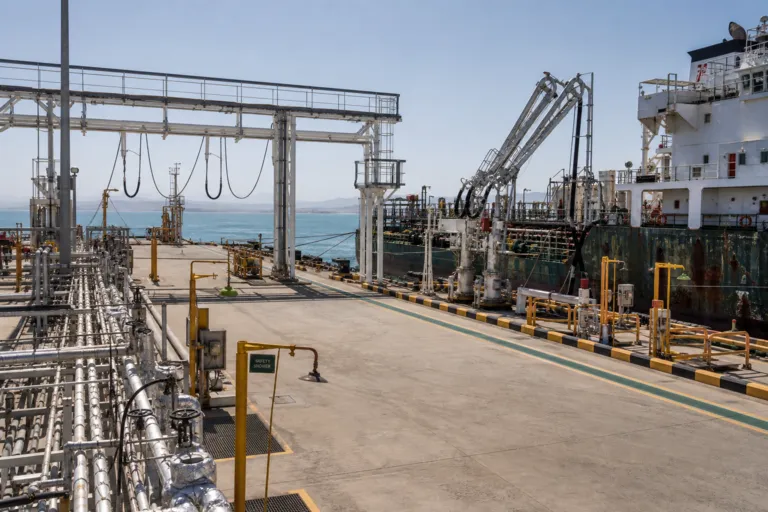
Red Sea bunkering is moving from a simple “where is fuel available?” question to a “which fuels can ports safely and reliably supply?” question. In April 2026, Argus Media was quoted describing two bunker fuels—high-sulphur fuel oil (HSFO) and marine gas oil (MGO)—as in “short supply” at Fujairah after the closure of the Strait of Hormuz disrupted flows. In that same context, shipowners were described as looking elsewhere to refuel, including Saudi Red Sea ports such as Jeddah and Yanbu. That matters because the bunker market is still dominated by conventional grades, but disruptions and compliance pressure can accelerate interest in alternative supply points and new fuel options.
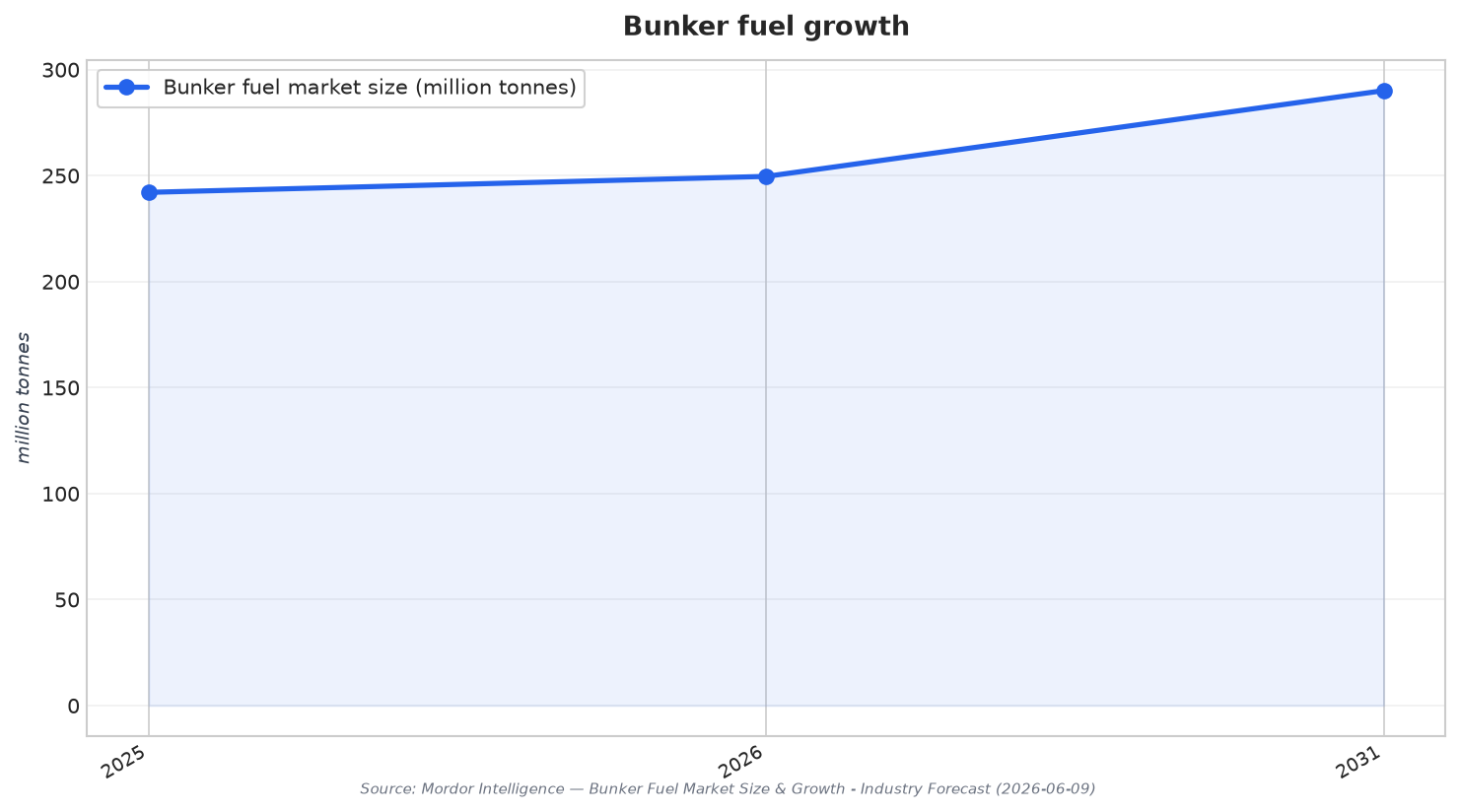
Globally, bunker fuel volumes remain huge, and the market is already tilting toward cleaner grades. Mordor Intelligence valued bunker fuel market nameplate capacity at 242.12 million tonnes in 2025 and estimated growth from 249.65 million tonnes in 2026 to 290.12 million tonnes by 2031, at a 3.05% CAGR for 2026–2031. In 2025, Very-Low-Sulfur Fuel Oil (VLSFO) held a 52.4% share, showing how IMO 2020 continues to reshape demand. The same report projected Liquefied Natural Gas (LNG) to expand at a 31.6% CAGR through 2031, reinforcing that ports are being pushed to rethink storage, handling, and delivery systems for fuels that are not traditional residual oil.
Why Methanol and Ammonia Now Matter for Saudi Red Sea Bunkering
Methanol and ammonia are increasingly framed as leading contenders in the marine transition. OPIS described methanol bunkering hubs emerging at major ports worldwide, with additional facilities under development, and highlighted the expanding roles of methanol and ammonia in the maritime energy mix. OPIS also noted that, under an assumption that shipping is the most logical home for low-carbon methanol, hypothetical new low-carbon methanol capacity is often located near major bunkering hubs such as Rotterdam and Singapore. It added an outlook in which shipping demand for methanol could reach almost 30 million metric tons by 2050 and nearly 40 million tons by 2060, indicating the scale of supply-chain pressure ports and producers are preparing for.
Saudi Arabia’s positioning links port ambition with industrial supply fundamentals. MarkWide Research described Jubail Industrial City’s petrochemical complex as repositioning Saudi Arabia as a methanol export hub with integrated feedstock advantages, and noted that Saudi Basic Industries Corporation leverages scale across ammonia-to-methanol value chains. It also characterized fuel-grade methanol as the fastest-expanding category amid marine and road transport decarbonization trials, and said carbon intensity benchmarks from the Saudi Green Initiative are reshaping feedstock sourcing decisions and plant retrofit requirements. For Saudi ports looking at Red Sea bunkering, that combination—industrial clustering, export orientation, and a decarbonization framework—supports the narrative that future fuels can become a competitive lever, not just a compliance cost.
Policy and certification dynamics add another layer, because alternative fuels require consistent specifications and safe handling. MarkWide Research said the SFDA oversees methanol handling safety in industrial and consumer-facing applications, while SASO enforces product quality specifications for domestic trade and export certification, including purity thresholds and labeling protocols. Globally, market signals reinforce the need for a multi-fuel strategy. Mordor Intelligence said regulation is a key swing factor, referencing FuelEU Maritime’s greenhouse-gas mandate and the expansion of Emission Control Areas (ECAs) as forces that accelerate demand for portfolio strategies mixing VLSFO, LNG, methanol, and emerging ammonia. In that context, Saudi green marine bunkering on the Red Sea becomes a question of how fast ports can align logistics, specifications, and safety with the fuels shipowners increasingly want to buy.
Why are shipowners discussing Saudi Red Sea ports like Jeddah and Yanbu for bunkering?
What do sources say about the size and growth of the bunker fuel market?
Which bunker fuel held the largest share in 2025, according to the sources?
How large could shipping demand for methanol become in the long term?
How does Saudi green marine bunkering in the Red Sea connect to Saudi methanol and ammonia value chains?