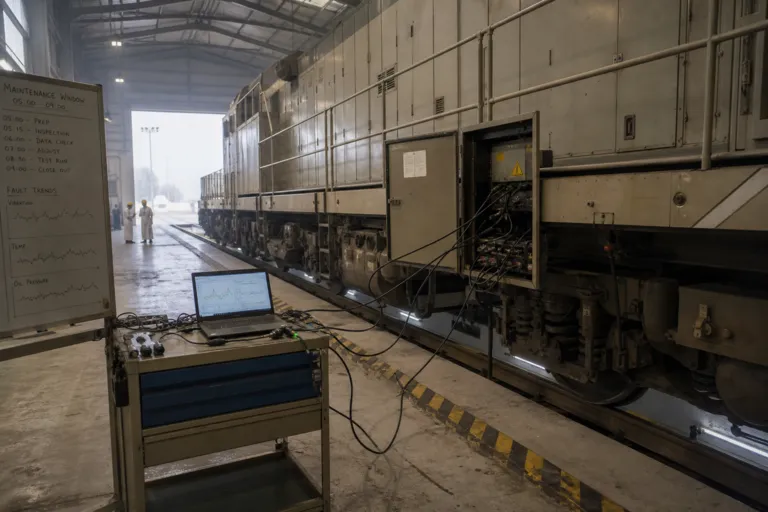
Freight rail performance often comes down to one question: does the locomotive show up ready to work. Across the industry, the direction of travel is clear. Technology such as IoT-enabled sensors, GPS-based tracking, predictive maintenance systems, and automated train control is described as becoming standard across networks, supporting real-time monitoring and data-driven decisions that reduce operational disruptions. For Saudi operators, the same logic applies to locomotive availability on freight corridors where downtime carries high economic costs. This is where Saudi rail locomotive predictive maintenance becomes less of a buzzword and more of a discipline: instrument the asset, monitor condition, and plan interventions before failures force unplanned stoppages.
Saudi Arabia also sits inside a wider Middle East and Africa trend toward digital railway adoption. In this region, growth is linked to the United Arab Emirates, Saudi Arabia, and South Africa adopting advanced digital systems on metro, urban transit, and high-speed rail networks. Predictive maintenance is explicitly listed alongside integrated signaling and real-time information as a focus for improving safety and operational efficiency. Freight operators in the region are also described as open to adopting IoT-based condition monitoring and predictive maintenance platforms, paired with AI-driven traffic and yard management. For freight rail, this matters because predictive insights are only valuable when they are connected to operating plans, workshop capacity, and the timing of track access.
Turning Reactive Work Into Predictive Work on Electrified Corridors
The Kingdom’s move from reactive to predictive regimes also shows up in adjacent maintenance markets tied to electrification. In the Saudi Arabia catenary maintenance vehicle market, multi-function integrated vehicles account for roughly 40–45% of value share, while dedicated inspection and measurement vehicles are projected as the fastest-growing segment at a 7–9% CAGR through 2035. The same source frames the largest opportunity as a transition from reactive to predictive maintenance, increasing demand for advanced inspection and measurement vehicles with laser scanning, photogrammetry, and real-time data analytics. It also highlights that operators are seeking to reduce possession times and improve network availability, particularly on high-speed and freight corridors. While this is infrastructure-focused, the operational takeaway is locomotive-relevant: predictive programs must be designed to minimize time off the network, not just to add more inspections.
Digital maintenance is also being reinforced by supplier strategies aimed at freight operators. Wabtec is described as centering its approach on digitalization and locomotive modernization for rail freight operators, including AI-driven predictive maintenance solutions and expansion of automation and data analytics platforms to improve asset utilization and operational safety. Progress Rail is described as expanding digital rail technologies and predictive maintenance tools within integrated freight rail solutions. Siemens Mobility is described as investing in rail infrastructure digitalization, including predictive maintenance, within a broader push for digital freight ecosystems and automation. For Saudi freight rail, these positions matter because predictive maintenance becomes easier to scale when OEMs and integrators treat monitoring, diagnostics, and service programs as a combined offer rather than separate projects.
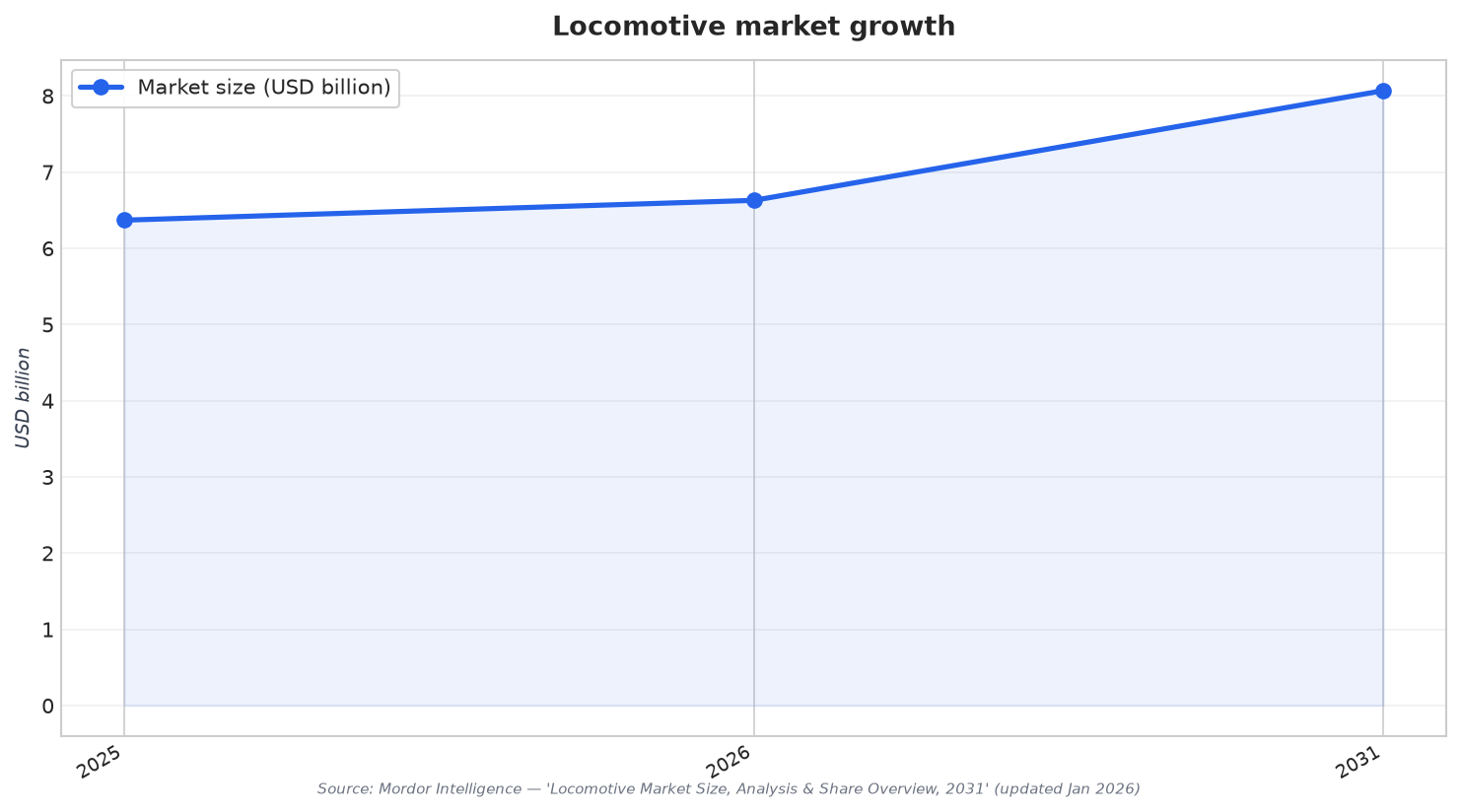
The market context also signals why predictive care is becoming a default expectation, not an experiment. Mordor Intelligence forecasts the locomotive market to grow from USD 6.37 billion in 2025 to USD 6.63 billion in 2026, reaching USD 8.07 billion by 2031 at a 4.01% CAGR over 2026–2031, while freight units account for 66.31% of locomotive market share in 2025. Verified Market Reports sizes the global locomotive services and solutions market at USD 6.83 billion in 2025, with a forecast of USD 9.86 billion by 2033 at a 4.7% CAGR from 2026 to 2033, describing predictive maintenance and digital diagnostics as part of the modernization toolkit. Together, these figures underline a simple point for Saudi freight operations: higher availability will increasingly be won through digital service models that prevent failures, shorten troubleshooting, and make maintenance windows predictable.
How does predictive maintenance support locomotive availability on Saudi freight rail?
What digital technologies are becoming standard in rail freight operations?
What signals that Saudi Arabia is moving from reactive to predictive maintenance regimes?
Which suppliers are emphasizing AI-driven predictive maintenance for freight rail operators?
How large are the locomotive and locomotive-services markets in the sources?