Road safety budgets are shifting toward tools that can show progress in simple, comparable metrics. That is where iRAP Star Ratings fit: iRAP assesses safety from 0-star (least safe) to 5-star (safest) and links design features to expected risk. The UN Global Plan’s road-safety performance targets include a clear infrastructure objective: by 2030, all new roads should meet technical standards for all road users or achieve a three-star rating or better (UN Target 3). This framing matters for markets pursuing national transformation agendas, including Saudi Arabia under Vision 2030, because it creates an investment language that connects design standards, upgrade programs, and outcomes.
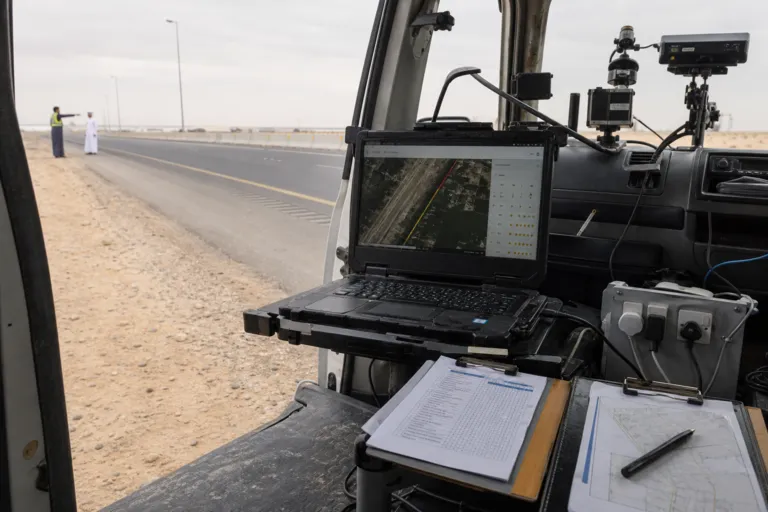
The core investment argument behind star ratings is the risk gradient. iRAP states that each additional star approximately halves the risk of fatal and serious injuries. AusRAP, using a one to five-star system, makes a similar point: each one-star improvement is estimated to halve the risk of a fatal or serious injury crash. Importantly, iRAP also notes that Star Ratings can be applied without needing crash data, which can be valuable where crash data is sparse. In practice, this supports a portfolio approach: rate roads, identify lower-star sections, and target treatments such as median separation, safe crossings, footpaths, cycle lanes, and traffic calming.
Why 3-Star-or-Better Becomes a Bankable Target
Evidence from outside Saudi Arabia shows how a “three stars or better” metric can guide spending decisions and communicate results. In South Australia, AusRAP results reported that the length of high-speed roads rated three stars or higher increased by 54% since 2014. The same update said more than 3,000 km of the regional road network received improved safety ratings since the first assessment, with more than 1,500 km now achieving a three-star or higher rating. It also reported that 55% of travel on the state’s regional road network now occurs on roads rated three stars or better. The investments cited included a $168 million National Road Safety Program, plus a $10 million Regional Road Safety Infrastructure Program and a $150 million Adelaide Hills Productivity and Road Safety Package.
For Saudi decision-makers, the point is not to import South Australia’s figures as local results, but to borrow the investment logic. Vision-led targets need measurement systems that can scale across corridor upgrades and new construction. UN Target 3 sets a clear bar for new roads, while UN Target 4 adds an operational benchmark: by 2030, more than 75% of travel on existing roads should be on roads that meet technical standards for all road users, for example through a three-star-or-better pathway. This is where a Saudi road safety star rating iRAP approach can help prioritize upgrades and create a consistent story for performance tracking.
The broader market context also supports sustained funding. One industry report estimated the road safety market at USD 5.82 billion in 2025 and projected 9.8% CAGR between 2026 and 2035. Another projected global road safety market growth from USD 6.69 billion in 2025 to USD 12.39 billion by 2030 at a CAGR of 13.1%. Separately, the World Health Organization is cited as estimating that road crashes impose costs equivalent to about 3% of GDP in many countries, and that more than 90% of fatalities occur in low- and middle-income economies despite those markets accounting for less than 60% of the global vehicle fleet. Together, these figures reinforce why measurable infrastructure upgrades and technology adoption are treated as long-term investment themes.
What does iRAP mean by a 3-star road target for 2030?
How do star ratings connect to reductions in fatal and serious injuries?
Why can a Saudi Arabia road-safety star rating approach work even with limited crash data?
What real-world example shows how the “three stars or better” metric can guide investment?
What do market forecasts say about the scale of road-safety investment globally?