V2X Saudi Arabia is about cars, roads, and cities sharing real-time information. With V2X, a vehicle can connect to other vehicles and to road infrastructure. This can support safer driving, better traffic flow, and smarter mobility across the Kingdom.
Market signals show momentum. One report values the Saudi Arabia connected car market at USD 253.22 million in 2024. It expects this market to reach USD 533.02 million by 2030, rising at a CAGR of 13.26%. In a separate but related area, Saudi Arabia’s 5G highway market is set to surge from USD 145.33 million in 2024 to USD 3,240 million by 2033, at a 41.2% CAGR.
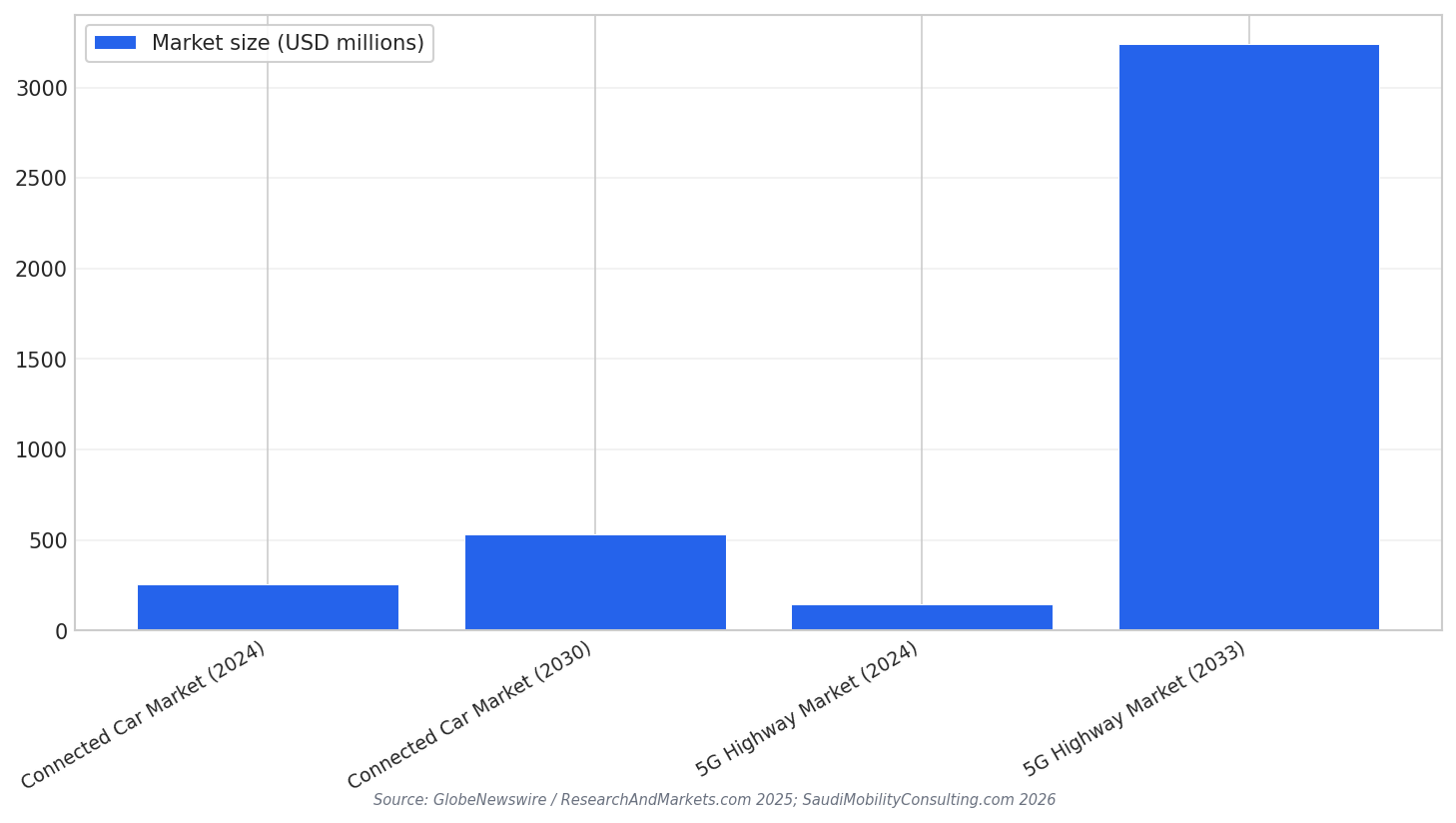
These figures reflect a wider push for smart mobility and digital infrastructure. The connected car market report links growth to rapid telecom advancements and 5G deployment. It also points to smart mobility solutions that support safety, navigation, entertainment, and real-time vehicle diagnostics. It says V2X communication is part of this connected services layer.
How V2X Works on Saudi Roads
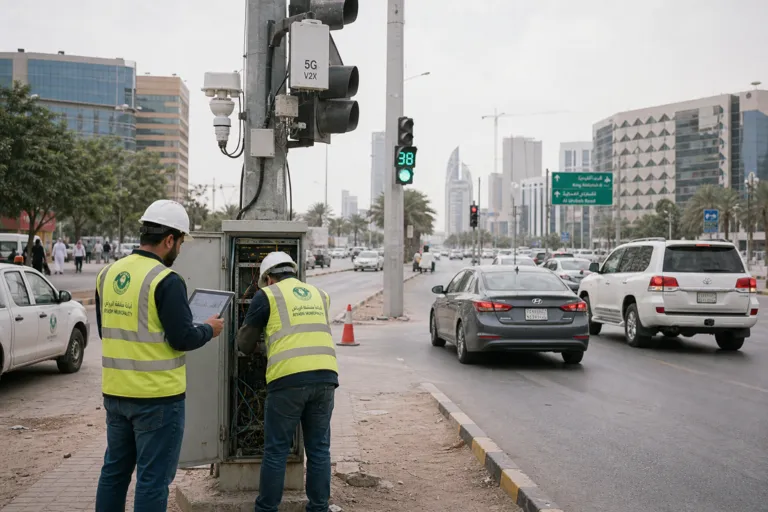
On smart highways, V2X is presented as the backbone of intelligent roads. 5G-V2X allows vehicles to communicate with surrounding infrastructure. Traffic lights can send warnings, and guardrails can transmit hazard alerts. This real-time data sharing can reduce reaction times and support traffic management systems that respond instantly.
Spectrum planning is also part of readiness. Saudi Arabia’s Communications, Space & Technology Commission (CST) released a 5.9 GHz band roadmap dedicated to V2X. The connected car market report also notes network strength, stating that CST reports approximately 98% of the population is covered by 4G, while 5G coverage is rapidly expanding across key urban centers.
Smart city projects are tied to deployment. NEOM and The Line are described as receiving focused investments in intelligent transportation systems. Another source adds that over 75% of NEOM’s infrastructure will integrate 5G for real-time data handling, including transportation systems and urban mobility. Saudi Arabia also aims for 15% of public transport vehicles to operate autonomously by 2030, a target linked to connected highways.
Challenges remain, especially cybersecurity and data privacy. The connected car report warns that as vehicles connect to the internet and cloud services, they face cyber threats that can risk user data and passenger safety. It also highlights the lack of unified cybersecurity standards for automotive systems in Saudi Arabia, along with concerns about how driving behavior, location, and personal information are collected and used.
What does V2X Saudi Arabia mean in simple terms?
What market numbers show momentum for V2X-related growth?
What spectrum step supports V2X deployment in Saudi Arabia?
How are smart cities linked to V2X rollout?
What is the biggest risk discussed for connected cars and V2X?