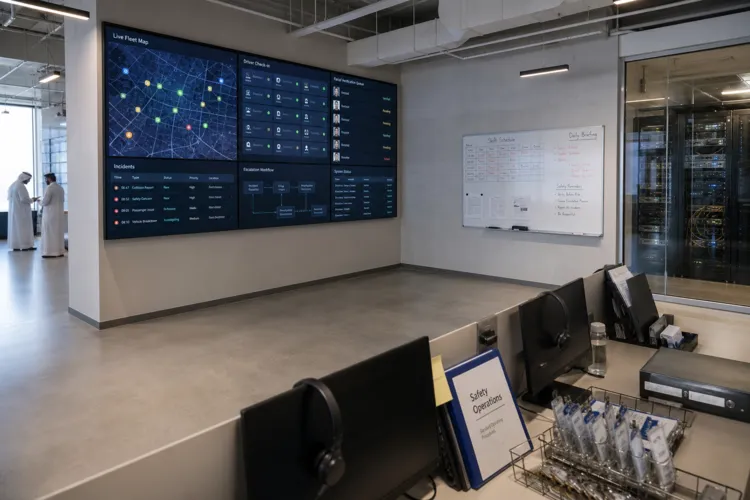

Connected fleets are becoming a practical necessity on Saudi highways, where freight operators face fuel-cost pressure, rising compliance expectations, and congestion on the Riyadh–Dammam–Jeddah triangle. Multiple market reports link this shift to Vision 2030’s focus on smart mobility, logistics modernization, and digital transformation. In Saudi Arabia, the fleet management market size reached USD 281.8 million in 2025, and IMARC Group expects it to reach USD 601.3 million by 2034, with a CAGR of 8.79% during 2026–2034. This demand spans logistics, oil and gas transport, industrial fleets, and last-mile delivery networks, where real-time tracking, route optimization, predictive maintenance, and driver-safety management are core buying drivers.
The public-sector push is a major tailwind for telematics and cloud SaaS adoption. Saudi Arabia has committed SAR 1.5 billion to smart transportation initiatives, and sources describe mandatory vehicle tracking being rolled out across public transport networks. The National Industrial Development and Logistics Program (NIDLP) is also described as channeling over USD 36 billion into modernizing ports, rail, and 59 integrated logistics zones. On the technology supply side, Global Market Insights notes that, in April 2024, Zain KSA launched the first 100% Saudi-made fleet management system for the business sector. Together, these factors reduce barriers to connected-fleet rollout by normalizing digital tracking, strengthening procurement pipelines, and growing local solution availability.
Why Telematics and SaaS Now Matter for Freight Economics
Freight economics in the Kingdom are being reshaped by regulation and network change, and that is where telematics and fleet SaaS can convert data into operating savings. Mordor Intelligence states that mandatory telematics on commercial vehicles from January 2025 create data flows that allow predictive maintenance and drive-time compliance monitoring, lifting overall fleet reliability in the Saudi Arabia road freight transport market. The same source highlights cost pressures such as Saudization wage floors that raise unit costs by double-digit percentages versus expatriate drivers. In this environment, fleet platforms that improve utilization, prevent avoidable downtime, and support compliance can protect margins even when labor and operating constraints tighten.
Demand signals from commerce also support the business case for connected fleets. One Futurism report notes Saudi Arabia’s e-commerce sector recorded 10% year-on-year growth in Q4 2024, reaching over 40,950 registered businesses, while the logistics sector surged 82% in new registrations during the same period. Another Futurism report describes the logistics sector growing at roughly 5.5% annually and being expected to contribute SAR 100 billion to national GDP. As delivery networks expand, operators need routing discipline, real-time visibility, and tighter maintenance planning to reduce idle time and improve route efficiency—capabilities typically delivered through telematics data paired with cloud-based fleet management software.
Connected fleets also align with Saudi Arabia’s broader logistics modernization agenda. Mordor Intelligence notes that the Landbridge cuts Red Sea-to-Gulf transit by 72 hours, encouraging reload from ship to rail to road within inland dry ports designed for double-stack containers. It also notes that customs process digitalization accelerates border clearances, while inland free zones attract inventory re-exports to Africa. In practical terms, these shifts favor carriers that can prove compliance and reliability, and that can coordinate drayage and long-haul movements with consistent tracking. That is the operational context where Saudi fleet telematics management and fleet-management SaaS become strategic infrastructure, not just IT.
What is driving fleet telematics adoption in Saudi Arabia?
When did telematics become mandatory for commercial vehicles in Saudi Arabia?
How fast is the Saudi Arabia fleet management market expected to grow?
What signals show rising delivery demand in Saudi Arabia?
How does Saudi fleet telematics management support freight operators on major corridors?