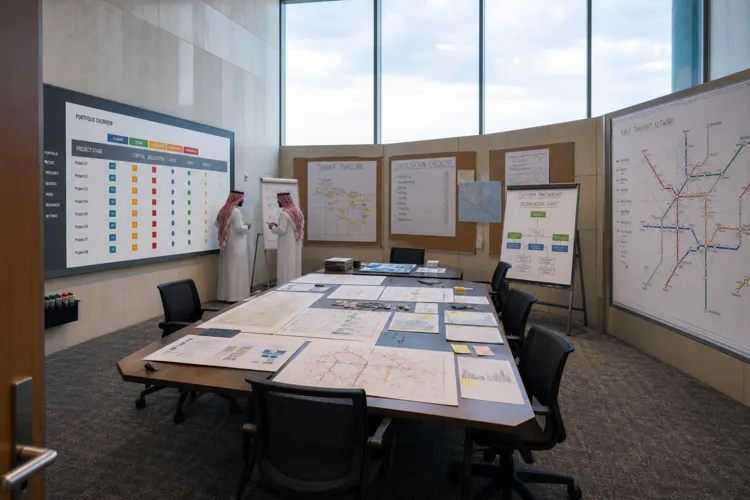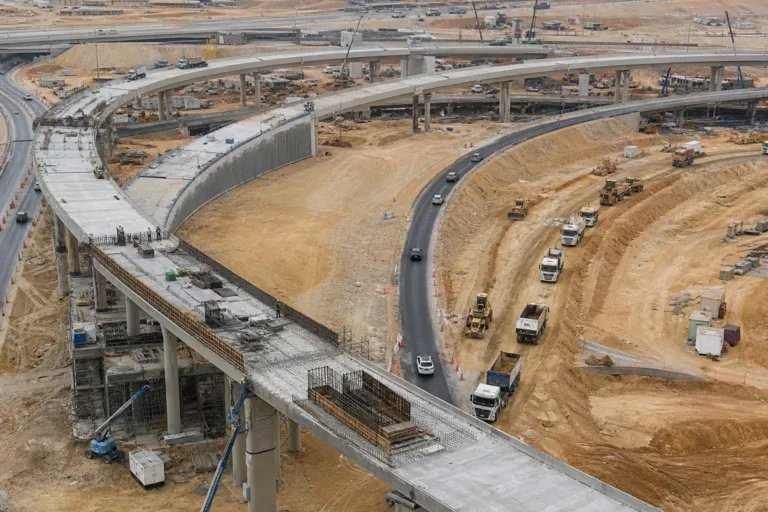
Riyadh’s growth is putting constant pressure on the road network, and the Royal Commission for Riyadh City (RCRC) is responding with a large, corridor-by-corridor upgrade plan. Reported sources describe the Main and Ring Road Axes Development Programme as spanning more than 500 km of Riyadh’s road network, with an objective to upgrade existing routes, create new corridors, and establish an integrated and efficient system by 2030. Another market-focused source also references more than 500 km of infrastructure improvements, alongside 32 new bridges and several tunnels. Taken together, the stated scope and structural works show that the program is not a single project, but a coordinated pipeline intended to keep the city moving as travel demand rises.
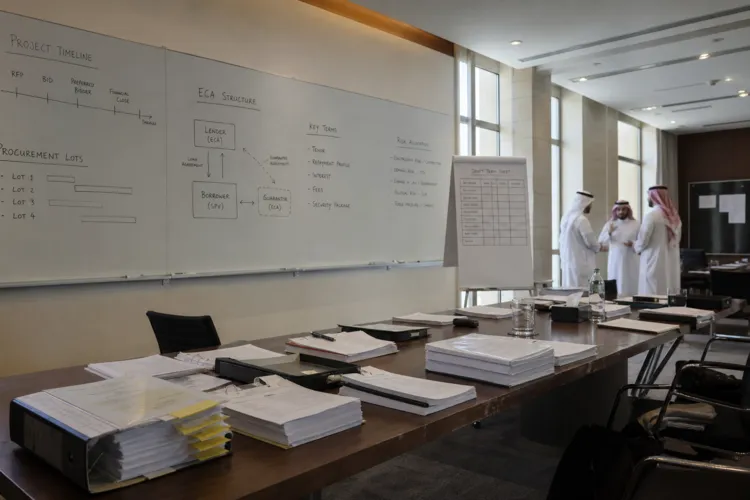
The program’s delivery model is packaged in phases and budgets, with individual corridors carrying quantified capacity targets. RCRC announced Package 3 as six major projects with a total budget of more than SAR 8 billion, framed as an effort to expand transport infrastructure and enhance connectivity in line with Saudi Vision 2030. Earlier steps are also specified: Package 1 was launched in August 2024 with four projects totaling SAR 13 billion, and Package 2 followed in February 2025 with eight projects exceeding SAR 8 billion. On the engineering side, selected corridor upgrades come with bridges, tunnels, and lane additions, and the announcements repeatedly tie those works to measurable vehicle-per-day throughput goals.
Phase Four: A High-Capacity Test of Execution Speed
Phase Four is a clear snapshot of how the plan translates into near-term construction and operational capacity. According to Saudi Gazette, Phase Four comprises four projects totaling 40 km and valued at SR 9.8 billion, and it is expected to accommodate up to 950,000 vehicles per day across the phase. A separate report on the same phase cites an investment of SR 9.8 billion ($2.6 billion) and says the work enhances four principal highway corridors extending over 40 km. It also provides an example of what “capacity” looks like in design terms: the southern section of Sheikh Jaber Al-Sabah Road stretches 12 km and is planned to include six main intersections, 22 bridges, and three tunnels, with capacity for 350,000 vehicles per day.
Earlier package details illustrate how different segments are being tuned for different flows. In Package 3 announcements, RCRC described corridor projects with major structures such as bridges and tunnels, and it attached headline capacities of up to 200,000 vehicles per day on some segments. For the King Abdulaziz Road Development Project (Northern Section), the stated scope includes 4.7 km with four bridges, four main lanes, and one tunnel, with capacity up to 450,000 vehicles per day. The Othman bin Affan Road Development Project (Northern Section) is described as 4.3 km with seven bridges and upgraded areas, with capacity up to 500,000 vehicles per day. These figures show that “keeping pace” is not only about kilometers delivered, but also about whether bottlenecks are removed where volumes are highest.
Beyond traffic flow, the program’s scale also intersects with the broader road safety supply chain. A market outlook focused on Saudi Arabia’s roadside safety barriers construction notes continuous investment in intercity highways, urban roads, and expressways as a growth driver, and it explicitly references the Riyadh program’s 500+ km of improvements alongside 32 new bridges and several tunnels. In that same Saudi Arabia market context, metal guardrails accounted for 55.4% of the roadside safety barriers construction market in 2025, and local hot-dip galvanizing facilities met 69% of domestic demand in 2023, while cable barrier systems are forecast at a 7.98% compound annual growth rate through 2031. For Riyadh’s ring-road-and-axes pipeline, these figures suggest that delivery pace depends not just on roadworks sequencing, but on the availability of compliant safety systems across many simultaneous sites.
What is the overall scope of the Riyadh ring road axes development program?
How large is Phase Four and what capacity is it expected to handle?
What works are planned on the Sheikh Jaber Al-Sabah Road segment in Phase Four?
What budgets have been announced for earlier packages of the program?
How do safety barriers and related supply factors appear in the program’s context?