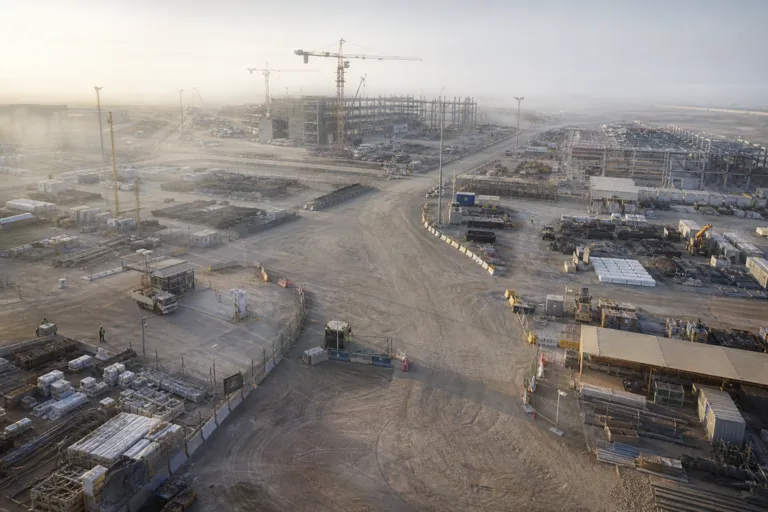
Riyadh won the right to host Expo 2030 after the Bureau International des Expositions (BIE) awarded the event on November 28, 2023, with 119 of 165 votes. The World Expo is scheduled to run from October 1 to March 31, 2031, under the theme “The Era of Change: Together for a Foresighted Tomorrow.” Preparation is centred on a 6.1 million square metre site in northern Riyadh along the King Salman Road corridor, about 25 kilometres from the current city centre. Sources describing the programme estimate total investment, including direct Expo costs and associated infrastructure, at $7.8 billion. With the site already under active construction and enabling works described as substantially underway, time-driven planning is now the key constraint.
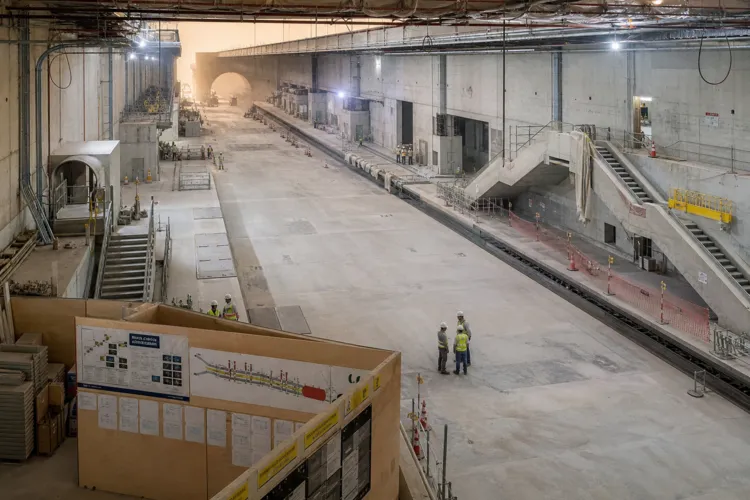
For construction logistics and site access, the site’s scale is not abstract. The masterplan is organised around a central “Wadi” that links three thematic zones: Nature, Tomorrow, and People. It is also designed to accommodate peak daily attendance of 300,000 to 400,000 visitors, which feeds back into how roads, staging, and delivery corridors must be kept clear as work advances. The Expo plot is described as the largest World Expo footprint in history at 610 hectares, exceeding Dubai’s Expo 2020 site of 438 hectares by 39%. That footprint creates both opportunity and risk: there is space for laydown areas and segregated access routes, but the number of interfaces rises sharply when multiple districts and pavilion clusters are live at the same time.
The Parallel Build Window That Shapes All Site-Access Decisions
The tightest period for Expo 2030 Riyadh construction logistics is defined by the pavilion calendar. Across all pavilions, the heaviest construction activity concentrates in the 18 months before opening, from April 2029 to September 2030. During that window, hundreds of contractors are simultaneously on site building pavilions whose final designs were locked in 2027 to 2028. The host, identified as the Expo 2030 Riyadh Company, coordinates site logistics, crane access, and material-delivery scheduling so parallel projects do not interfere. The final two months before opening day—August and September 2030—are typically reserved for testing, commissioning, content programming, accreditation, and dress rehearsals, and sources warn that pavilions that miss this window risk opening with degraded experiences.
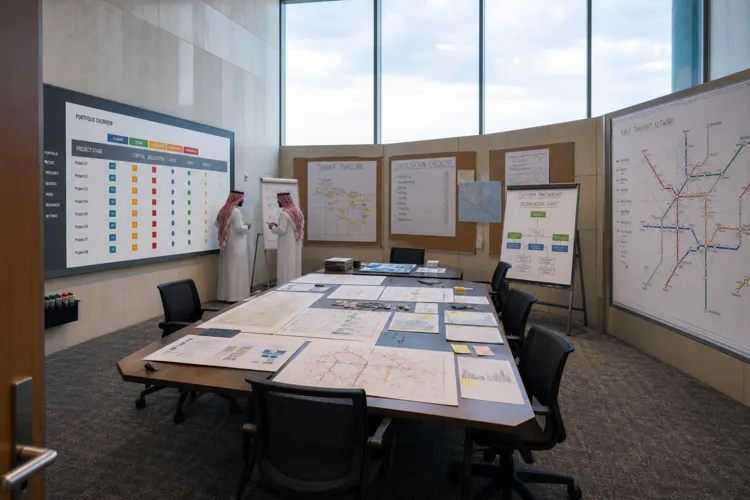
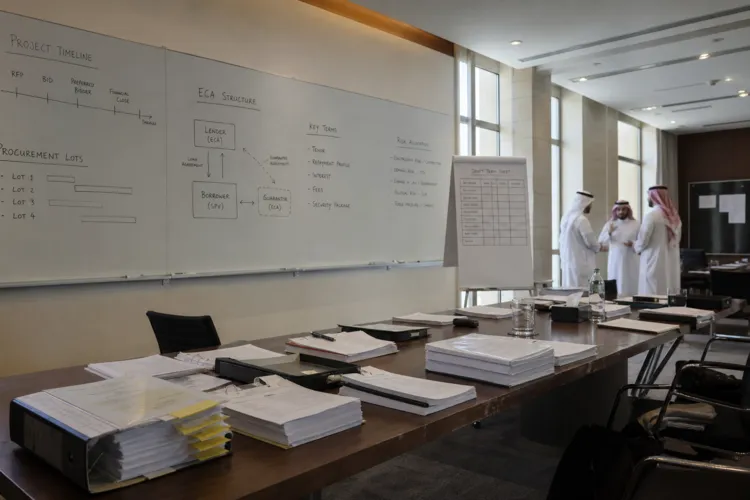
This is not a single-contractor build. Sources state that pavilions are not built by the host country; each participating nation runs its own procurement, design, and construction programme against the fixed October 1, 2030 opening milestone referenced in the pavilion timeline briefings. That procurement reality pushes the logistics plan toward strict rules for delivery slots, access control, and shared lifting capacity, because different national teams arrive with different contractors, sequences, and supply chains. MEED reports that construction activity at the Expo site is accelerating, with Expo Riyadh 2030 Company (ERC) moving to award first major vertical contracts while advancing infrastructure works across a programme that will eventually require between 50,000 and 70,000 workers at peak. In that context, ERC also reports that tenders issued to date have attracted healthy numbers of qualified bids.
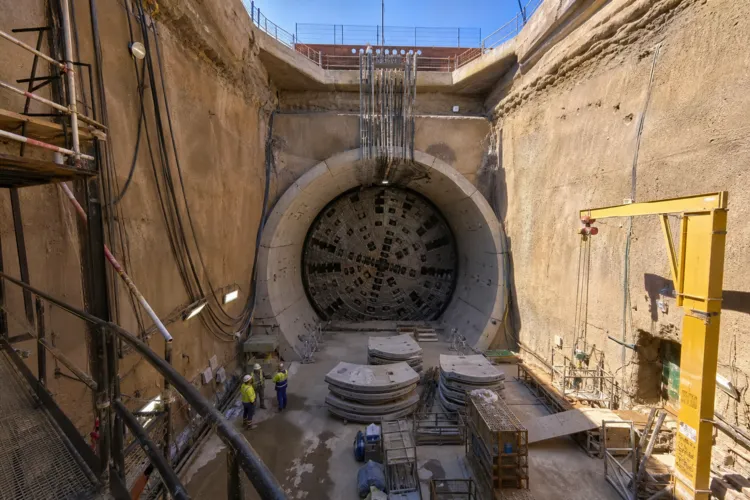
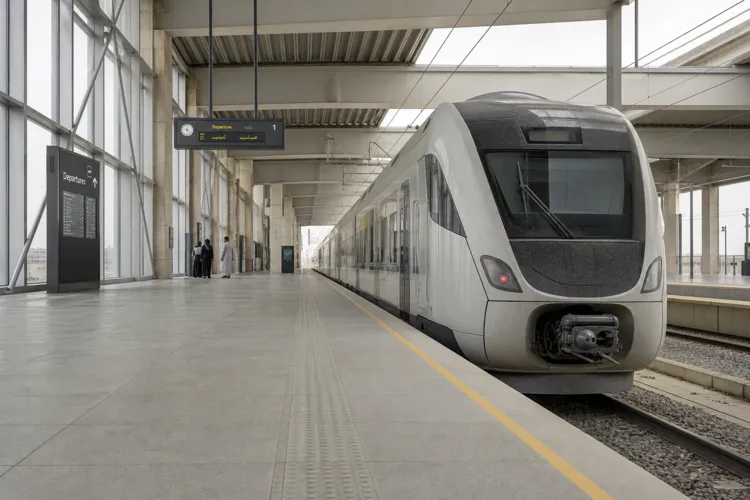
Access planning also relies on the site’s position in the wider Riyadh transport map. One source places the Expo site to the north of Riyadh near King Khalid International Airport (KKIA), with plans to potentially extend the Riyadh Metro, including a dedicated station to serve the Expo and improve connectivity with KKIA. The same source describes Expo 2030 as acting as a “hard deadline” for major infrastructure and says it is accelerating expansion of the Riyadh Metro and King Salman International Airport. On the delivery side, the build includes high-profile vertical assets that influence sequencing. The Saudi Arabia Pavilion is described as the largest national pavilion in World Expo history, at approximately 35,000 square metres, while MEED notes enabling and substructure works are already in the market, with nine tier-one contractors invited to bid for the main contract. Together, these elements frame how the site-access plan must protect critical paths while keeping parallel pavilion builds moving.
When is the busiest period for pavilion construction on the Expo 2030 site?
Who coordinates crane access and delivery scheduling across multiple pavilion projects?
How large is the Expo 2030 Riyadh site and where is it located?
What does the programme suggest about peak labour needs on site?
What is the plan behind Expo 2030 Riyadh construction logistics during the final pre-opening months?