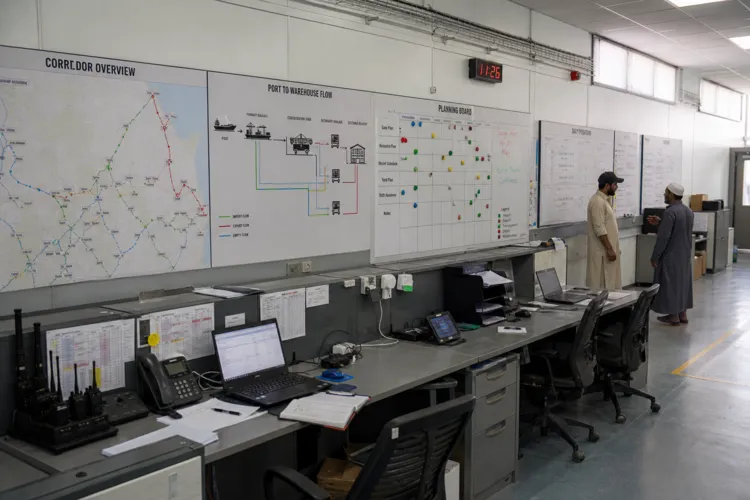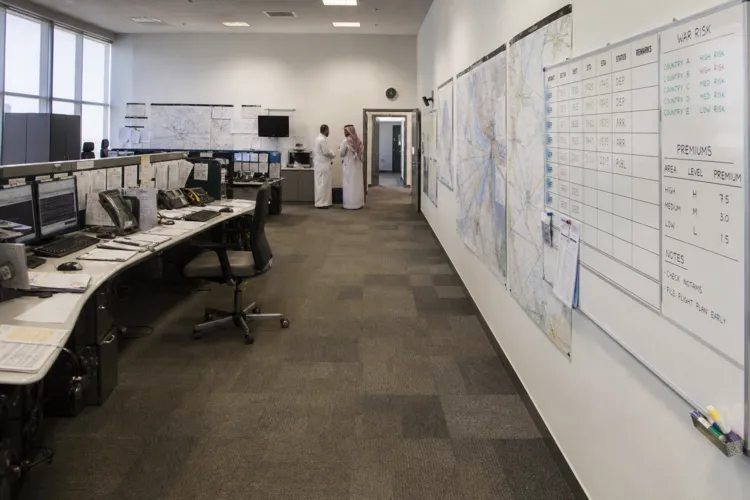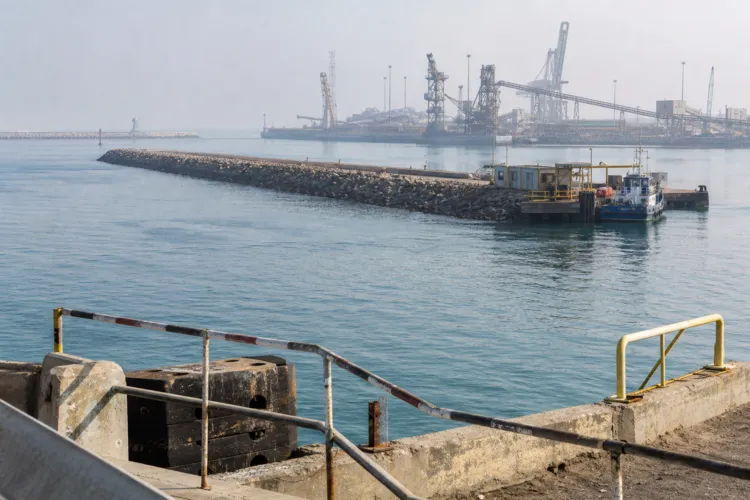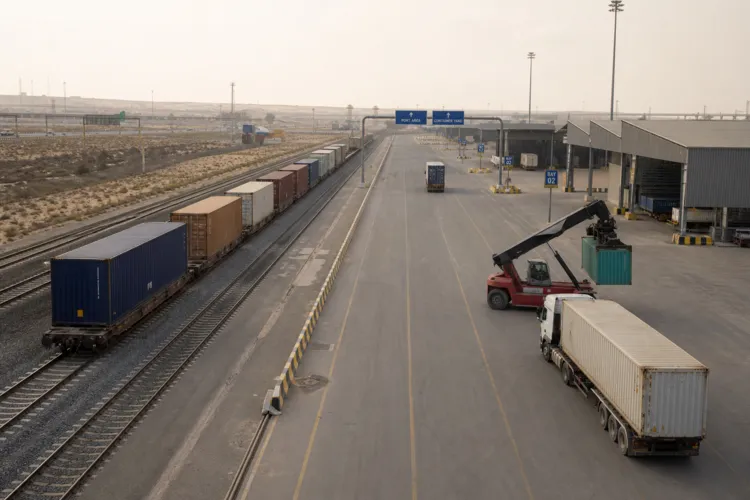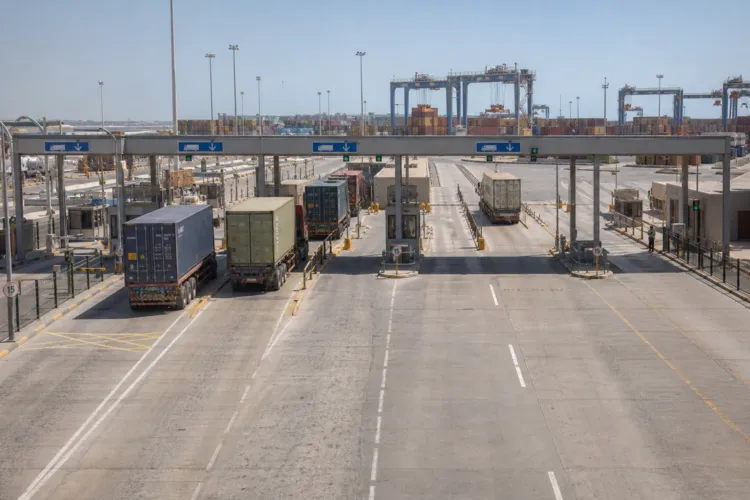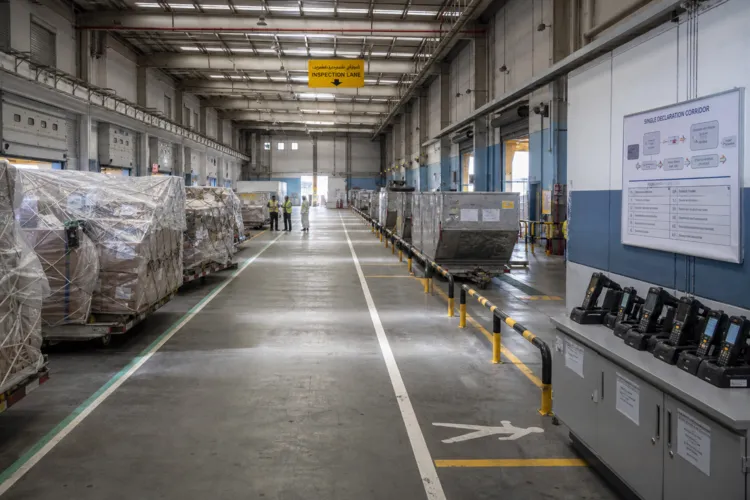
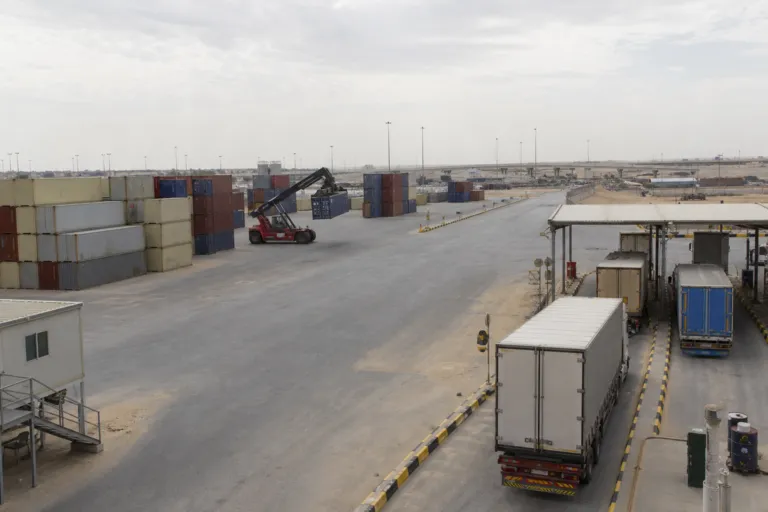
When the Strait of Hormuz becomes constrained, supply chains in the Gulf do not simply pause. They re-route. In 2026, carriers and logistics planners increasingly leaned on an overland alternative that links Red Sea ports to the Arabian Gulf through Saudi Arabia. One widely cited example is MSC’s shift to a combined port–road–port solution: containers arrive at Jeddah, move by truck across the country, then re-enter maritime networks from Dammam on feeder vessels bound for Gulf ports such as Abu Dhabi and Jebel Ali. This approach replaces a vulnerable sea leg with inland road freight, reflecting a region that is increasingly operating as connected sea–land corridors rather than isolated transshipment hubs.
The backbone is the Jeddah–Dammam trucking run, described as roughly 1,300 kilometres and routed via Riyadh. Reporting on the corridor notes it is emerging as one of the region’s main container lanes, absorbing flows that previously moved directly through Hormuz. The same coverage frames the pivot as a response to restrictions affecting Hormuz passage, a chokepoint that, before the crisis escalated, carried around 20% of global oil and gas supplies. In the wider GCC freight market, road transport accounts for roughly 39% of freight-transport revenue, which helps explain why trucks can scale quickly when the usual sea routes are unreliable or effectively unavailable.
From Emergency Detour to Structured Corridor
Saudi Arabia’s corridor strategy is not limited to one carrier. After disruption to Hormuz transits earlier in 2026, a new Europe-to-Gulf service launched on 10 May 2026 that calls at Jeddah Islamic Port and King Abdullah Port, then trucks containers roughly 1,300 kilometres overland to King Abdulaziz Port in Dammam for onward feeder distribution across the Gulf. Other carriers, including Hapag-Lloyd and Maersk, have introduced comparable land-bridge concepts. Think-tank analysis also describes GCC states activating inland logistics corridors under bonded-transit regimes, with designated Saudi trucking routes linking Red Sea ports such as Jeddah and King Abdullah to neighbouring states including Kuwait, Bahrain, Qatar, the UAE, Oman, Iraq, Jordan, and Yemen to bypass threatened sea lanes.
This is where the longer-term “landbridge” idea meets today’s trucking reality. Multiple sources describe a domestic rail project connecting Jeddah Islamic Port to Dammam across approximately 1,300 kilometres, backed by an estimated USD 7 billion investment, while another overview places the total route length at approximately 1,000 to 1,300 kilometres depending on final alignment. One report says rail would let cargo traverse the peninsula in under 12 hours instead of 5 to 7 days by sea. Separate logistics-zone coverage also cites expectations of up to 3 million TEUs annually and suggests the Red Sea-to-Gulf transfer could be compressed to under 48 hours, reinforcing the business case for intermodal hubs in both Jeddah and Dammam.
Capacity and real estate constraints add urgency to building smoother transfer points for this Saudi landbridge trucking Hormuz bypass model. A market update says Jeddah’s total warehouse supply was approximately 18 million square metres and ran at 97% occupancy in 2024, with annual growth of 4.8%. It also notes a SAR 650 million (USD 173 million) Missan Logistics Opportunity Fund tied to adding supply on a 320,000-square-metre logistics city site in Jeddah’s Al-Kawthar district, expected to meet around 5% of the city’s warehouse market demand. In the east, lease rates in the Dammam Metropolitan Area increased 9% year on year. At the network level, one cited assessment references a 73,000 km highway grid while also highlighting congestion across the Riyadh–Dammam–Jeddah triangle as an operating challenge that better rail-road coordination is meant to ease.
What is the Jeddah-to-Dammam overland corridor, and why does it matter during Hormuz disruption?
How are carriers using the Saudi landbridge trucking approach as a Hormuz bypass?
How long could rail take between Jeddah and Dammam compared with sea routes?
What scale is the planned Saudi Landbridge rail project?
What signals rising pressure on logistics capacity around Jeddah and Dammam?