
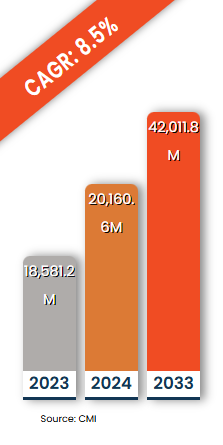
Saudi Arabia’s mobility sector is growing rapidly, driven by Vision 2030 reforms, urbanization, and digital transformation. The market, valued at USD 42.5 billion in 2024, is expected to reach USD 85 billion by 2033, growing at a robust 8% CAGR. However, these opportunities come with their own set of challenges. Geopolitical risks, especially in the Middle East, are causing disruptions in aviation, logistics, and urban mobility planning. Despite these challenges, the Kingdom is poised to be a central player in regional mobility, bolstering both its economic resilience and global strategic role.
Source: Custom Market Insights
Saudi Mobility Market Growth
Saudi Arabia's mobility sector is thriving under the Vision 2030 initiative, which is fostering the development of smart cities and a more connected transportation infrastructure. One of the most significant areas of growth is Mobility-as-a-Service (MaaS). The MaaS market, worth USD 66.82 million in 2024, is expected to grow exponentially, reaching USD 527.29 million by 2033, with a CAGR of 25.80%. This shift towards integrated, app-based mobility solutions is a clear signal of the Kingdom’s growing digital mobility ecosystem.
The broader business mobility market is experiencing a steady upward trajectory, expected to double in value by 2033. As urbanization accelerates and the demand for smart mobility solutions increases, companies that invest in this space today will likely be best positioned for future growth.
Geopolitical Tensions Impact on Logistics and Aviation
While Saudi Arabia’s mobility market is expanding, regional geopolitical risks, especially around the Strait of Hormuz, continue to create uncertainty in the logistics and aviation sectors. The tension has led to disruptions in regional airfreight, with Saudi east–west corridors operating at near full capacity, causing mounting delays. These delays not only increase operational costs for airlines but also contribute to inefficiencies, as flights must adjust routes, leading to more fuel consumption and less efficient aircraft rotation.
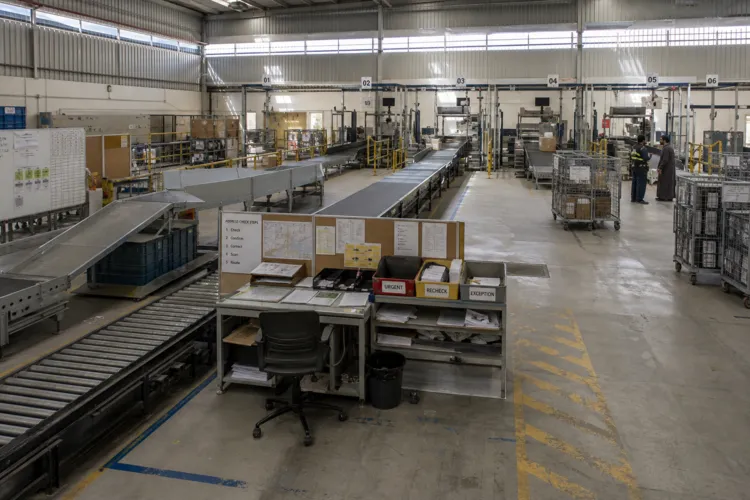
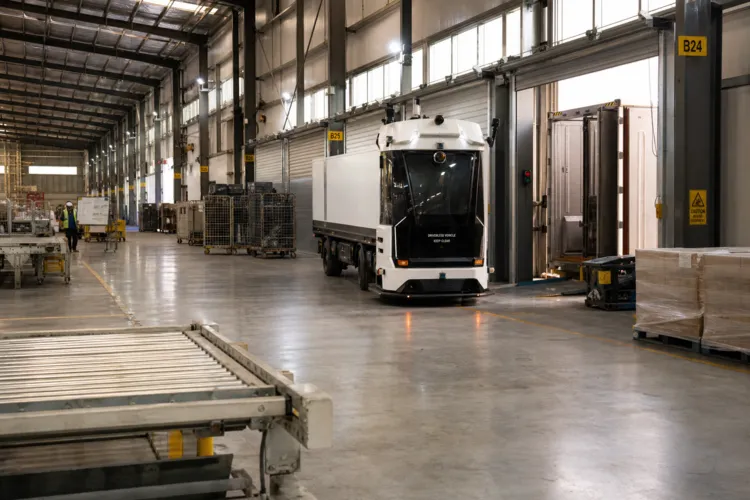
The air cargo sector has also faced significant challenges, with airfreight capacity constrained due to security concerns, and shipping routes experiencing delays due to port congestion and rerouting. As a result, Saudi Arabia has become a critical land corridor for regional cargo movements, further emphasizing its strategic role in global logistics networks. With Saudi ports like Jeddah Port serving as key transit points, this shift underscores the Kingdom’s increasing importance as both a logistical hub and a target for geopolitical disruption.
Rising Operational Costs & Airline Strain
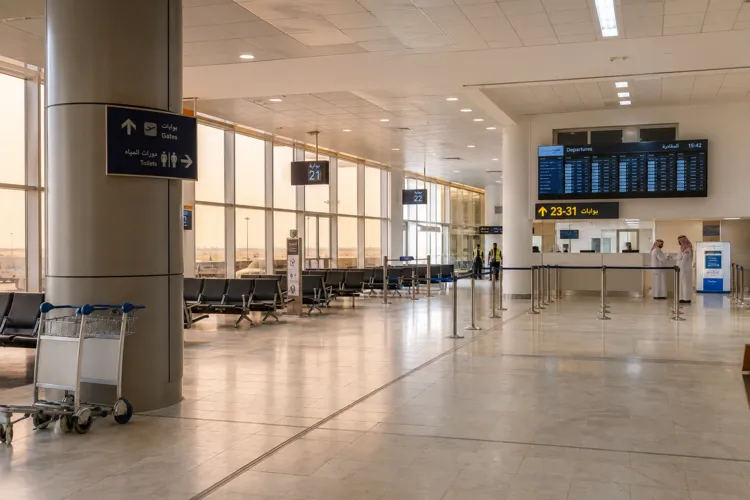
A major fallout from the ongoing geopolitical instability is the fuel price shock affecting airlines globally. In particular, Saudi Arabia’s aviation sector has been hit by rising fuel costs, forcing airlines to raise fares. For example, Qantas has warned of a near $1 billion loss due to the impact of fuel price hikes driven by Middle Eastern conflicts. These increases not only raise operating expenses for airlines but also directly affect consumers, with passengers transiting through Riyadh, Jeddah, and Dammam facing delays, last-minute gate changes, and cancellations.
The cumulative effect of these disruptions on Saudi airlines is significant. As the country grows into a regional mobility hub, its airlines and logistics networks must adapt to shifting geopolitical realities and prepare for the operational costs associated with them. Companies that can develop resilience strategies and adapt their operations accordingly will be better positioned to navigate the storm.
Future of Saudi Mobility Amidst Geopolitical Challenges
Despite the challenges posed by geopolitical tensions, Saudi Arabia’s mobility sector continues to show tremendous potential. Vision 2030 reforms, urbanization, and the shift to sustainable, smart mobility solutions will drive market growth, but the kingdom will need to reinforce its infrastructure and operational resilience. Strategic investments in digital mobility platforms, such as MaaS, will be crucial in capturing future demand as the mobility market expands.
Moreover, as geopolitical risks continue to affect airfreight and ocean freight stability, Saudi Arabia’s logistical corridors will remain vital for regional cargo movements. The Kingdom’s efforts to enhance its transportation infrastructure will not only reduce the impact of these disruptions but also strengthen its position as a key player in regional and global trade.
Conclusion
Saudi Arabia’s mobility sector is poised for tremendous growth. However, the impact of geopolitical risks cannot be ignored. The Kingdom must continue to adapt to the changing dynamics of regional conflicts while embracing smart mobility solutions. By doing so, Saudi Arabia will maintain its strategic importance and ensure that its mobility and transportation networks remain resilient in the face of future challenges.
Read more: Modernizing Public Transport Systems in Saudi Arabia