Riyadh Air has formally launched a freight operation under the new brand, Riyadh Cargo. The company says it is taking a “deliberate, phased approach” to build an integrated cargo business at its hub in the Saudi capital. Riyadh Air’s global head of cargo, Pravin Singh, calls the brand launch a “foundational step” for the business. He says that launching “within a live environment” lets the team test, learn, and refine operations while delivering value to customers from the start.
The operating concept is clear. Riyadh Cargo will utilise capacity on Riyadh Air’s widebody aircraft fleet. FlightGlobal reports the fleet will comprise up to 122 Boeing 787s and Airbus A350-1000s. In parallel reporting, Travel Weekly describes Riyadh Air’s firm order book of 124 planes, including 39 787-9s, 25 Airbus A350-1000s, and 60 Airbus A321neo narrowbodies. Taken together, the message is that the cargo division is being built to scale with widebody belly capacity as Riyadh Air’s network expands.
From Proving Flights to Freight Processes
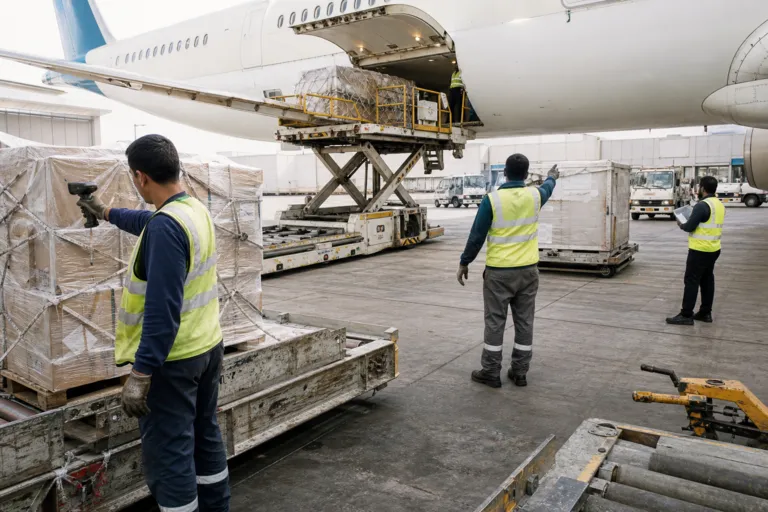
Riyadh Cargo is not starting from a blank page. FlightGlobal says operations have been carried out on the Riyadh–London Heathrow route, moving a diverse range of freight including time-sensitive and perishable goods. Aviation Week adds that Riyadh Air has been conducting limited proving flights between Riyadh and London Heathrow since late 2025 using a leased Boeing 787-9. Access has been restricted to employees and partners as part of its “Pathway to Perfect” testing program, linking cargo learning cycles to broader operational readiness work.
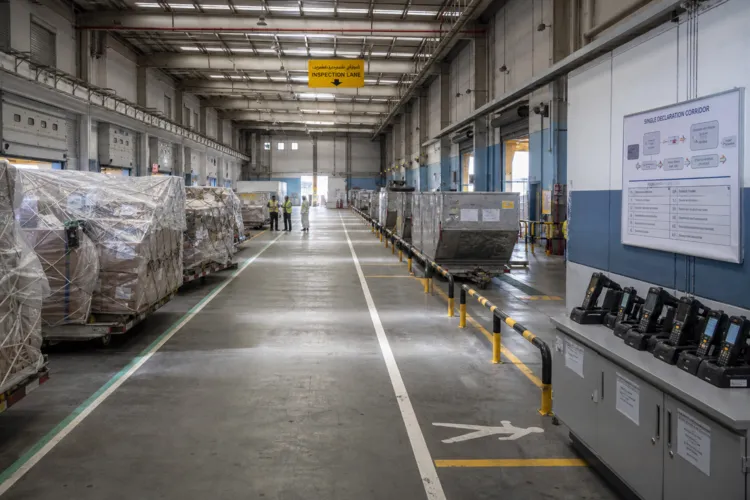
Digital execution is positioned as a core differentiator. FlightGlobal states the operation is built around digital capabilities including centralised airway bill control and data visibility to reinforce freight management. It also says the division is using “best-in-class” digitally-tracked lightweight load containers. These details matter for customers moving high-priority shipments, because they speak to trackability and control in day-to-day handling. The approach aligns with Riyadh Air’s broader emphasis on “industry leading digital features and connectivity,” as described by Travel Weekly.
The Riyadh Cargo push sits inside a national strategy. Aviation Week describes Riyadh Air as established in 2023 as part of the Kingdom’s Vision 2030 strategy to diversify the economy and position Riyadh as a global aviation hub, and notes the airline is wholly owned by Saudi Arabia’s Public Investment Fund. Separately, Saudi aviation authorities have approved new national carriers, including Riyadh Air, while licensing major global companies such as FedEx and Swissport, according to Aviation Week. This wider opening of the market shapes the competitive context for any new cargo proposition.
Connectivity is also shifting around Riyadh. Aviation Week reports Delta Air Lines will launch direct nonstop flights between Atlanta and Riyadh beginning in October 2026, operating three times a week with Airbus A350-900s, and notes this follows a strategic partnership between Delta and Riyadh Air announced in July 2024. Meanwhile, Riyadh Air is seeking approval to begin operations to the U.S. once aircraft deliveries and final regulatory clearances are in place, Aviation Week reports. For Riyadh Cargo, the bet is that new long-haul links, a phased build, and widebody capacity can compound into a durable freight business.
What is Riyadh Cargo?
How does the Riyadh Cargo airline freighter fleet plan work?
Which route has Riyadh Cargo already operated?
What digital capabilities does Riyadh Cargo highlight?
How is this linked to Vision 2030?