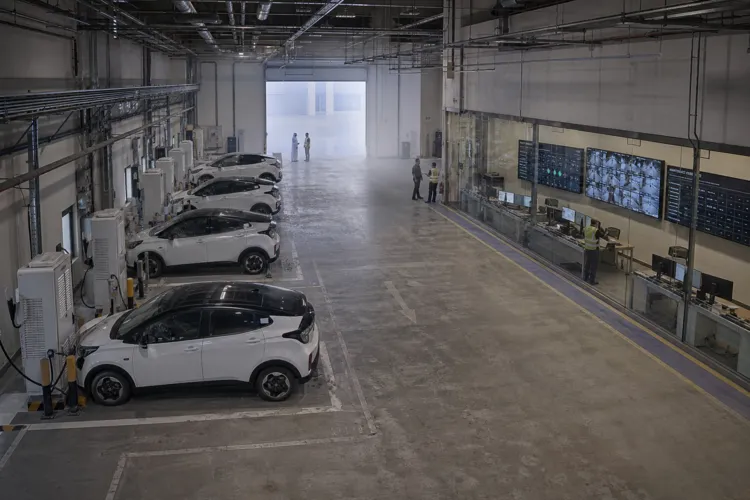
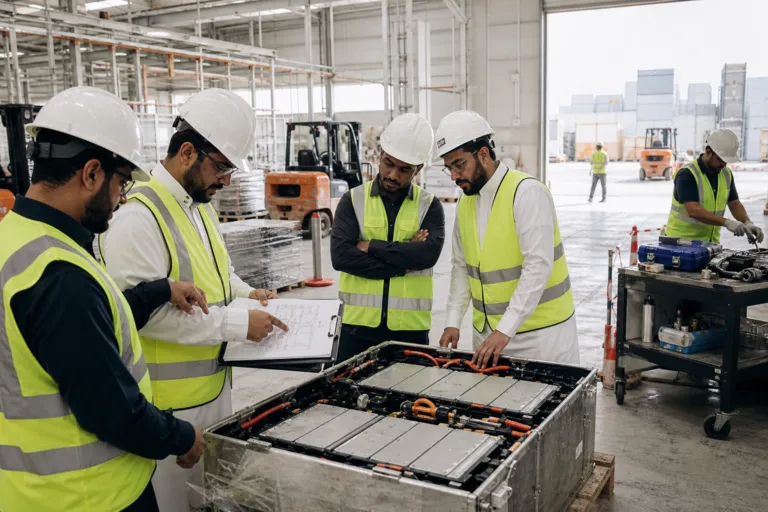
The idea of a Saudi battery gigafactory is not only about cars. It is also about grid stability and renewable growth. Saudi Arabia has connected large battery energy storage systems (BESS) to the transmission network, and it also has more storage under development. At the same time, sources describe planned gigafactories as future major consumers of battery materials, even though cell production is limited as of 2026.
Recent projects show how quickly grid storage is moving. Saudi Arabia completed grid connection of a 7.8 GWh BESS across three sites: Najran, Khamis Mushait, and Madaya. Each site is 2.6 GWh and connects at 380 kV. The system is designed as grid-forming and can support black-start, virtual inertia, fast frequency response, and voltage support.
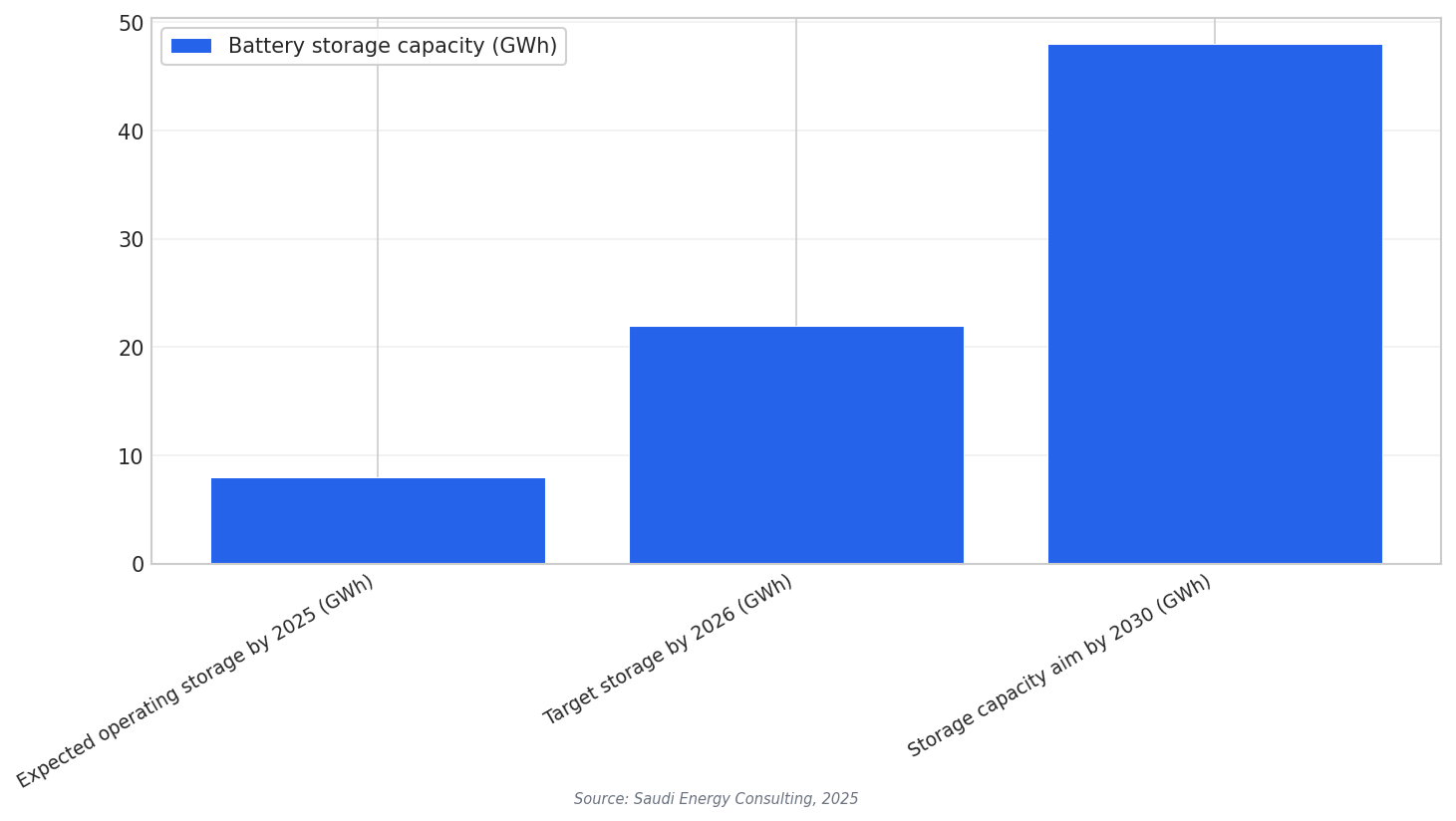
There are also clear storage milestones in the sources. One source states Saudi Arabia expects to operate 8 GWh by 2025 and 22 GWh by 2026, with a longer-term aim of 48 GWh by 2030. It also says 26 GWh worth of projects have been tendered. These figures help explain why the Saudi battery gigafactory story is tied to energy policy, not just manufacturing.
Why Gigafactories Matter for EVs and the Grid
Demand signals are coming from both EVs and stationary storage. An IndexBox report says EV and stationary energy storage together account for over 70% of projected lithium-ion battery material demand by 2030. The same report says that, as of 2026, Saudi Arabia has limited cell production, but planned gigafactories will become the largest material consumers. In simple terms, factories at scale would pull in more materials, and they need stable supply and consistent quality.
The EV battery market outlook in one source is also steep. It cites IMARC Group research that the Saudi Arabia electric vehicle battery market size reached USD 895.8 Million in 2025. The same source projects it will reach USD 6,540.3 Million by 2034, with a CAGR of 24.72% during 2026-2034. For a Saudi battery gigafactory, this kind of market curve signals why local production is being discussed so often.
EV manufacturing plans and grid projects appear side by side in the sources. One source says the Public Investment Fund has committed over USD 50 billion toward building an integrated EV ecosystem, with battery production as the cornerstone. Another source describes a contract reported at 15.1 GWh between BYD Energy Storage and Saudi Electricity Company (SEC) for a grid-scale battery project. Separately, a lithium-ion market article notes a 500 MW / 2,000 MWh facility in Bisha, Asir province, connected in January 2025, using lithium iron phosphate modules.
What is driving the push for a Saudi battery gigafactory?
How big is Saudi Arabia’s EV battery market, according to the sources?
What battery storage targets are stated for Saudi Arabia?
What was included in the 7.8 GWh grid-connected storage project?