Hydrogen mobility Saudi Arabia is no longer just a future idea. Real trials are already happening in demanding places, from mountain roads in NEOM to city routes in Makkah. These early steps matter because they test how hydrogen vehicles perform, how fast they can refuel, and what kind of support systems are needed on the ground.
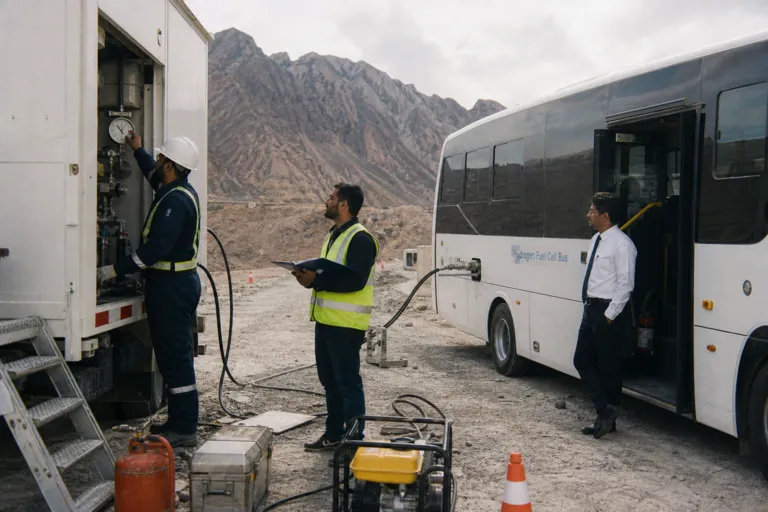
One clear sign is the Hyundai Motor Group trial in Trojena, the mountains of NEOM, done with Enowa, NEOM’s energy and water subsidiary. Hyundai operated its UNIVERSE hydrogen fuel cell electric coach bus on a route that reached elevations of up to 2,080 meters and gradients of 24 percent. The route simulated passenger transport between NEOM’s future core business district and Trojena. The goal was to check performance and the practicality of hydrogen in high-altitude conditions.
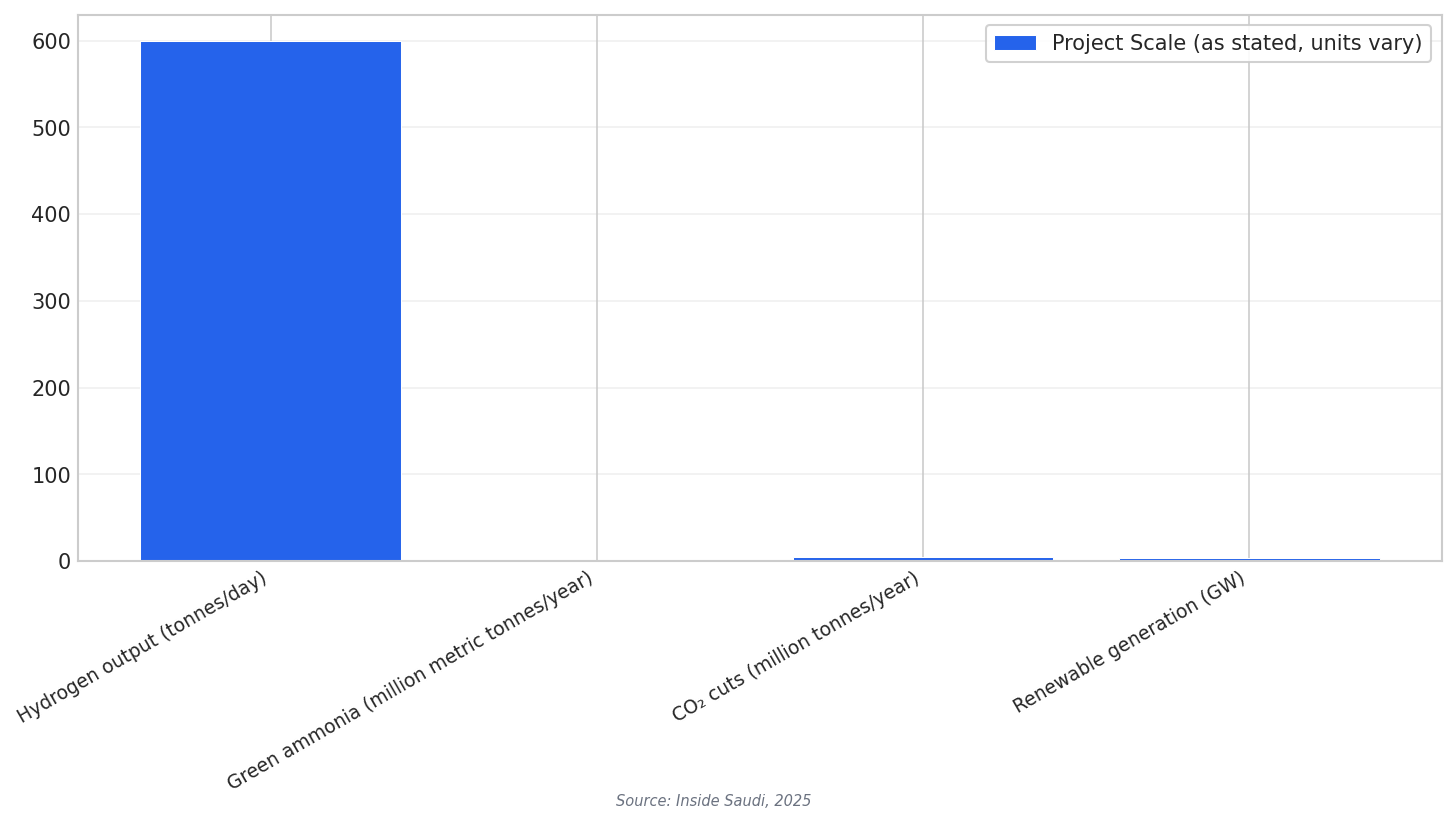
On the supply side, one project described as NGHC is presented with several scale indicators: 600 tonnes a day (described as enough to power 20,000 hydrogen-fuelled buses), conversion into 1.2 million metric tonnes of green ammonia each year, and renewable generation supported by 5.5 million solar panels and more than 250 wind turbines, totaling 4 GW. It is also expected to cut up to 5 million tonnes of CO₂ emissions every year.
From Trials to Daily Operations: What’s Already Working
In NEOM, Enowa “recently installed” the region’s first hydrogen refuelling station, and this helped make the trial possible. It also enabled the UNIVERSE Fuel Cell bus to run as a VIP transport service from October to December 2024. The NEOM work builds on a memorandum of understanding signed with NEOM’s Mobility sector in September 2024 to explore next-generation zero-emission mobility solutions.
Makkah is also seeing hydrogen bus activity. Abdul Latif Jameel Motors, Toyota Motor Corporation, and supporting entities participated in the second hydrogen fuel cell bus trial across Makkah. The initiative was launched by the Royal Commission for Makkah City and Holy Sites in collaboration with the Ministry of Energy and other entities. Abdul Latif Jameel Motors supported the trial by providing the Caetano H2.City Gold bus and training the fire department on safe operation and handling of hydrogen technology.
The Caetano H2.City Gold uses Toyota’s emissions-free hydrogen fuel cell stack. It is stated to have 400 km of autonomy under the weather conditions of the region, after a single refuel of under 10 minutes. This type of refuelling speed can be important for commercial buses with high operating rates, because it reduces downtime between trips.
What is Hydrogen mobility Saudi Arabia focusing on right now?
How tough were the NEOM hydrogen bus test conditions?
How fast can the hydrogen bus in Makkah refuel, and how far can it go?
What infrastructure step supported hydrogen transport in NEOM?