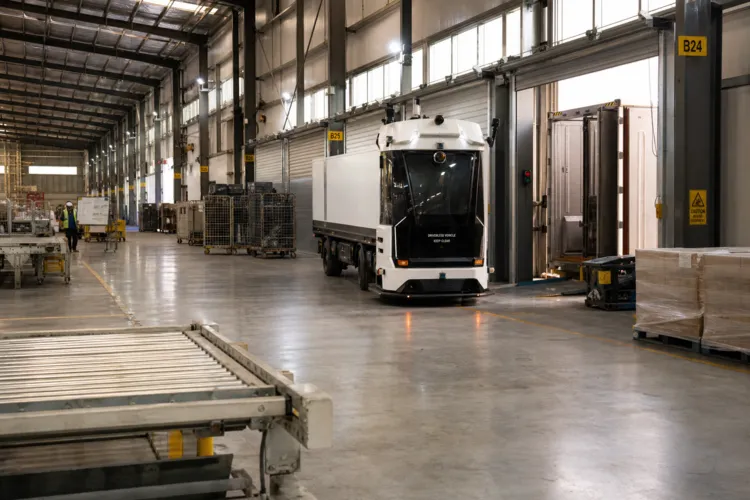
Saudi Arabia has launched its first self-driving vehicle trial in Riyadh under Vision 2030. The test is described as a cross-government collaboration. The participants named include the Ministry of Interior, the digital economy and innovation ecosystem, the Saudi Authority for Data and Artificial Intelligence (SDAIA), the General Authority for Survey and Geospatial Information, and the Saudi Standards, Metrology and Quality Organisation. The trial was inaugurated in the presence of the Minister of Transport and Logistics, Saleh bin Nasser Al-Jasser, who also chairs the Public Transport Authority. He said the initiative reflects an ambition to build a fully integrated transport sector that supports economic growth and enhances quality of life.
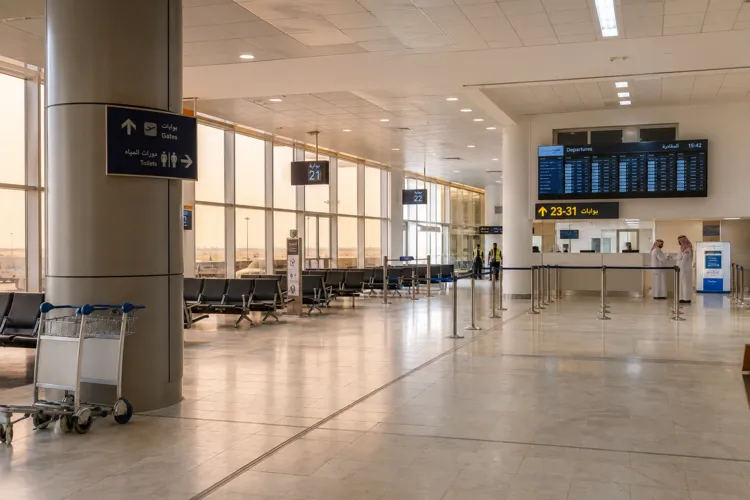
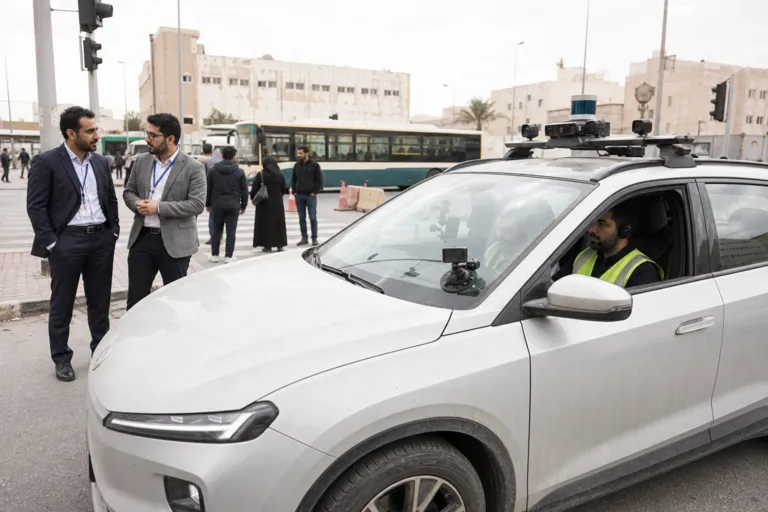
For readers looking for what a TGA regulatory sandbox autonomous approach would mean in practice, the Riyadh trial shows the core idea: controlled public-road testing with clear oversight. The autonomous vehicles are being tested in real-world environments. The locations named include King Khalid International Airport, key highways, and selected areas in central Riyadh. The on-road model is not described as “driverless.” Each vehicle carries a safety operator onboard to ensure maximum safety. Performance of the intelligent systems is closely monitored by the Public Transport Authority, according to the report describing the pilot.
The program is also presented as a governance-heavy deployment, not only a technology demo. The same report positions the trial as a “pioneering example” of public-private partnership in embracing AI and home-grown innovation. That matters for who gets access to public roads. The trial’s design suggests that the gate is not just technical capability. It also depends on alignment with public-sector stakeholders that can support mapping, standards, and safety processes. In other words, access flows to teams that can operate within a monitored framework and accept safety-operator requirements while performance is being evaluated.
How the Region Is Defining “Allowed to Test”
Across the wider region, regulators are formalising who can test and under what mechanisms. In Dubai, the Roads and Transport Authority granted the first autonomous driving test permits to Baidu’s Apollo Go, WeRide, and Pony.ai, enabling on-road vehicle testing across urban Dubai. Gulf News also lists these same firms as permitted testers and notes trials in Jumeirah, Umm Suqeim, and Dubai Silicon Oasis, with Baidu’s Apollo RT6 vehicles running pilot routes in Jumeirah. In Abu Dhabi, the Integrated Transport Centre announced AViTOMS, a digital platform it describes as managing everything from initial registration through commercial operations for robotaxis and self-driving commercial vehicles, and requiring autonomy players to conduct testing through it.
Outside the Gulf, Singapore provides another illustration of strict testing gates before broad road access. A report said the Centre of Excellence for Testing and Research of Autonomous Vehicles at Nanyang Technological University had completed 104 assessments under the Land Transport Authority’s testing framework. It also said over 50 AVs have been authorised to operate on public roads. The same report describes an early test stage called “Milestone One,” focused on basic manoeuvres, reactions to stationary and moving obstacles, and emergency stops. In Saudi Arabia’s Riyadh trial, the safety operator and Public Transport Authority monitoring play a similar role in keeping public-road testing bounded and observable.
One more clue about what regulators permit comes from the US example of Zoox. The National Highway Traffic Safety Administration granted a demonstration exemption from certain safety standards, allowing testing without traditional manual driving controls like steering wheels and brake pedals. But that exemption did not allow commercial operation and covered 64 existing vehicles operating on public roads. Taken together with Riyadh’s monitored trial model, the message is consistent: sandboxes can open public roads to testing, but they typically do so with explicit limits, close supervision, and a clear separation between demonstration testing and full commercial scale.
What does “TGA regulatory sandbox autonomous” look like on Saudi roads?
Which government bodies are named as part of the Riyadh pilot collaboration?
Where are autonomous vehicles being tested in Riyadh according to the sources?
Who monitors the performance of the intelligent systems during the Riyadh trial?
How are other Gulf cities controlling who can test autonomous vehicles?